Mind Protocols
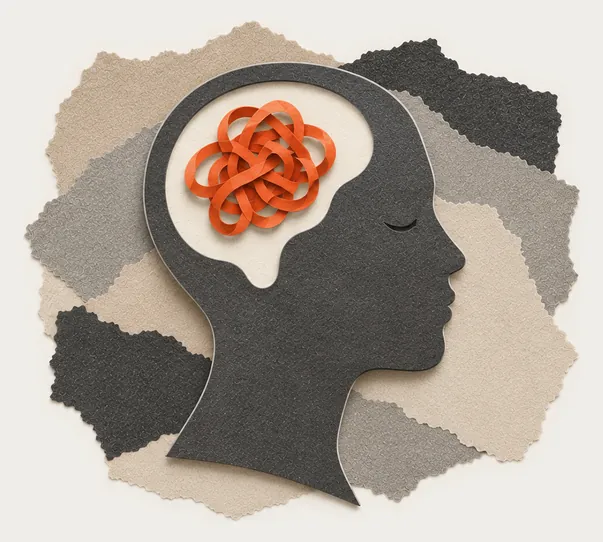
When stress, mental clutter, overthinking, and too much input worsen brain fog, these small practices help calm your mind and make thinking a little easier.

Breathing
Slow, intentional breathing can calm you when stress is making thinking harder.

Meditation
A few quiet minutes can reduce mental chatter and make it easier to return to one thing.

Grounding
Notice what's around you when stress has pulled your attention everywhere at once.

Journaling
Write your thoughts out to clear your head and turn them into something you can see.

Digital Quiet
Reduce input, close the tabs, and protect a small piece of your attention.

Nature Reset
A short spell outside can lower stress and leave you with fewer distractions.

Thought list
Dump racing thoughts onto paper so your brain doesn't have to keep holding them.
CHOOSE ONE
Pick the practice that fits the moment
Try one practice and see whether it helps with what you're doing today.
Breathing
Use this when your thoughts are racing, your chest feels tight, or you've been running at full speed all day.
Try this
- Sit or stand somewhere comfortable.
- Breathe in gently through the nose.
- Let the exhale run a little longer than the inhale.
- Keep it easy for 2–5 minutes. If you feel light-headed, stop.
Why try it?
Breathe slowly and let each exhale take a little longer. A randomized study found five minutes of daily structured breathing improved mood and calmed the body over one month.
Balban et al., 2023 · PMID 36630953 ↗Meditation
Use this when your attention keeps wandering or you feel mentally crowded but not physically exhausted.
Try this
- Set a timer for 3–5 minutes.
- Put your attention on one ordinary thing: breathing, sound, or the feeling of your feet.
- When your mind wanders, notice it and come back. That return is the practice.
- If sitting still irritates you, try a guided non-sleep deep rest or Yoga Nidra track instead.
Why try it?
Meditation gives you practice at noticing distraction and returning your attention. The Hölzel 2011 study linked here measured grey-matter changes on MRI after an eight-week mindfulness course. It looked at brain scans, not attention. The reason to try meditation is simpler: it can make you react less to stress and, for some people, improve attention. You'll only know if you try it for a week.
Hölzel et al., 2011 · PMID 21071182 ↗Grounding
Use this when you feel scattered, unreal, overstimulated, or mentally far away from the room you're actually in.
Try this
- Put both feet on the floor.
- Name five things you can see.
- Notice three physical sensations: pressure, temperature, texture.
- Pick one sound and follow it for ten seconds.
Why try it?
Grounding directs your attention to what you can see, hear and feel around you. You can switch senses if one feels uncomfortable.
Journaling
Use this when the same thoughts keep circulating or you're trying to remember too many things at once.
Try this
- Set a five-minute timer.
- Write without organizing or editing.
- When the timer ends, circle one thing you can act on.
- Leave the rest on the page.
Why try it?
Across repeated sessions, expressive writing has shown small benefits for stress, anxiety, and depressive symptoms in meta-analysis.
Guo, 2023 · PMID 36536513 ↗Digital Quiet
Use this when you've been bouncing between messages, tabs, news, feeds, and half-finished tasks.
Try this
- Put the phone in another room for 25 minutes.
- Close every tab except the one you need.
- Turn off notifications for those 25 minutes.
- Do one task until the timer ends.
Why try it?
One well-known experiment (Ward 2017) found that having your own smartphone nearby reduced performance on tasks that need a lot of mental effort, even when the phone wasn't in use. Later studies (Böttger 2023, Skowronek 2023) found that the size and consistency of that effect depend on the study and the task. Treat it as a reason to run the experiment on yourself, not as a settled fact.
Ward et al., 2017 · DOI 10.1086/691462 ↗Nature Reset
Use this when the room, screen, noise, or workload itself feels like part of the problem.
Try this
- Go outside for 10–20 minutes if you can.
- Leave the phone in a pocket or bag.
- Walk slowly or sit somewhere with trees, sky, water, or open space.
- Exercise is optional.
Why try it?
Small field studies have found reductions in stress biomarkers during ordinary nature exposure. A park, garden, waterfront, or quiet street can still change the sensory load.
Hunter et al., 2019 · PMID 31019479 ↗Thought list
Use this when you're rehearsing worries, decisions, reminders, or worst-case scenarios over and over.
Try this
- Write every repeating thought as a short line.
- Mark each one: act now, later, or can't control.
- Give the “later” pile a real time to revisit.
- For the rest of the day, send repeat worries back to the page.
Why try it?
This borrows from CBT-style worry scheduling and cognitive defusion. Writing a worry down lets you set it aside and return to it at a chosen time.
What helped
- Short, repeatable practices, even 2–5 minutes.
- Longer, easier exhales when your body is keyed up.
- Being outside and moving gently.
- Writing things down instead of carrying them mentally.
- Protecting quiet time and limiting digital distractions.
What didn't help
- Pushing through when you're already overstimulated.
- Multitasking and constant task-switching.
- Overconsuming news, feeds, and notifications.
- Skipping breaks and then trying to force clarity.
- Starting seven practices at once and keeping none of them.
QUICK QUESTIONS
Mind protocols & brain fog
Can meditation actually help brain fog?
It can help when stress, distraction, hypervigilance, or mental overload are making concentration worse. Start small. The useful test is whether you can return to a task more easily after interruptions, not whether you feel perfectly calm.
What should I try first when my mind feels overloaded?
Start with the smallest change to your surroundings: take three slow breaths, put the phone away, write the thoughts down, or step outside. Pick one. You can always add another later.
What if these practices don't help?
The WBF cause and rule-out guides cover other reasons for thinking problems, including sleep problems, medication effects, hormones and pain. If worry, low mood or trauma is affecting your days, our anxiety, depression and PTSD guides also cover support options.