Dysautonomia and brain fog: what helps and what to test
Brain fog can be the first sign that standing is costing your body more than it should. You get through a shower, queue, meal, or conversation, then your head goes thick, your heart pounds, and lying down becomes the fastest way back.
That's a different problem from feeling keyed up while sitting still. Both can involve the autonomic nervous system. They don't need the same first move.
The autonomic nervous system runs what your body normally handles on its own: heart rate, blood pressure, blood-vessel tightening, sweating, digestion, temperature, pupils, and bladder function. Dysautonomia means some part of that automatic control isn't working normally. POTS (postural orthostatic tachycardia syndrome) is only one form.
A
When standing changes your thinking
Brain fog gets heavier upright. Heat, showers, queues, cooking, large meals, and standing still make it worse. You may also notice palpitations, head pressure, visual dimming, nausea, weakness, or a strong need to lie down.
The first question:
Does your thinking come back faster when you lie down, cool off, drink water, or move your leg muscles?
B
When the body is overactivated
You feel wired, shaky, breathless, tense, or unable to settle even when your posture hasn't changed. A stress surge may narrow attention and make speech or decision-making harder without that clear link to posture.
The first question:
Does quiet, slow breathing reduce the overactivation, or does your thinking stay exactly the same until your posture changes?
In daily life
Dysautonomia goes beyond dizziness
The shower takes the morning. You wash your hair standing up and need to lie down before you can get dressed.
You go blank in queues. You know what you came to buy, then the lights, heat, standing, and conversation arrive together and the plan disappears.
Desk work becomes positional. Sitting still can feel worse than walking because the leg muscles are no longer helping move blood upward.
A meal changes the next two hours. You finish eating, your heart starts working harder, and an ordinary email becomes too difficult to answer clearly.
You can look fine while your body is working hard. Someone sees you sitting quietly. They don't see the effort it takes to stay upright, follow the conversation, and find the words to answer.
You can do less. Driving, cooking, bathing, commuting, shopping, work calls, and social plans all depend on how long you can stay upright.
Upright symptoms
What helps upright brain fog
When your vision is dimming and your thinking is going, the immediate job is to sit or lie down. The longer job is finding out why standing keeps doing this.
01
When symptoms are hitting now
Sit or lie down before you try to push through
If your vision is narrowing, your head feels heavy, or you're close to fainting, lying down isn't giving in. It reduces the work of staying upright. Raising your legs may help blood return toward the heart while the episode settles.
02
Drinking water
See whether water changes the same upright spell
A small study in neuropathic POTS found that water drinking reduced symptoms and brain fog alongside changes in autonomic arousal. One response can’t prove POTS, but a repeatable change after water is more useful than assuming all brain fog spells are alike.
Cross your legs, squeeze your thighs, tighten your stomach, do calf raises, or squat briefly to push more blood back toward your heart. These moves help when symptoms hit while you're standing.
Knee-high socks may miss much of the blood pooling. Abdominal or waist-high compression can support the areas where blood collects when you stand. A 2026 paper found that an off-the-shelf abdominal garment lowered standing heart rate and improved symptoms in people with POTS.
Heat widens blood vessels. Standing still adds another demand. So a hot shower, hair drying, cooking over a stove, a summer queue, or a crowded train can leave someone unable to think clearly before they feel close to fainting. Cooler water, a shower seat, ventilation, and shorter standing blocks reduce that combined load.
06
After eating
A large meal can make staying upright harder
Digestion redirects blood toward the gut. In a small POTS study, an oral glucose challenge increased upright heart rate and reduced upright stroke volume in participants who already reported worse symptoms after meals. Smaller meals may be easier for some people, especially when thinking problems and palpitations start together.
Salt is a clinical strategy, not a universal brain-fog tip
Salt and fluid plans can help certain people raise blood volume. The amount depends on the diagnosis, blood pressure, medications, kidney function, heart function, and the type of dysautonomia. Agree on the amount with a clinician, and skip generic online targets.
Exercise position can matter as much as exercise type
Starting upright can punish someone whose symptoms come from standing. Recumbent cycling, rowing, swimming, and supported strength work reduce the postural demand while capacity is rebuilt. Exercise may help POTS, but if effort leaves you worse later, pacing has to come first.
Slow, quiet breaths can calm you and help when breathing itself has become strained or inefficient. HRV biofeedback turns that idea into a structured practice, often near an individual resonance frequency. That can be useful when the body is overactivated.
It isn't proof that the vagus nerve has been “reset,” and it doesn't replace circulation support or autonomic testing when standing is the trigger. The best recent comparisons of breathing and ear-based vagus stimulation tested healthy adults, not people with dysautonomia brain fog.
Let the exhale run slightly longer than the inhale for a few minutes.
If you become lightheaded, tingly, or more breathless, stop.
Notice whether the racing, tension, or air hunger changes.
The body during paced breathing
What HRV biofeedback is actually measuring
Heart rate normally speeds up during inhalation and slows during exhalation. Biofeedback makes that breathing-linked variation visible while a person tries different breathing rates.
1Paced breathing
The breathing rate is tested rather than assumed.
↔
2Heart-rate wave
Beat-to-beat timing changes with each breath.
↔
3Blood-pressure reflex
Blood-pressure sensors feed back to the brainstem.
What the trace does not prove
A larger breathing-linked wave during practice doesn't prove permanently “high HRV,” normal brain blood flow, or successful treatment of dysautonomia. A consumer wearable can't diagnose POTS.
What has not earned top billing
Generic “vagal toning”
Humming, singing, gargling, and cold water on the face may change breathing, attention, or heart rate. Direct evidence that these practices treat dysautonomia brain fog is weak.
Cold exposure
Cold face stimulation and full-body cold exposure aren't the same thing. Cold showers can trigger marked heart-rate and blood-pressure changes and are a poor default for someone with fainting, heart disease, Raynaud’s, or temperature intolerance.
Earthing or grounding
Time outside may help mood, light exposure, or stress. Claims that contact with the ground directly corrects dysautonomia or brain fog have not earned a place beside compression, water, posture, or structured rehabilitation.
Cranial nerve X
Where the vagus nerve actually travels
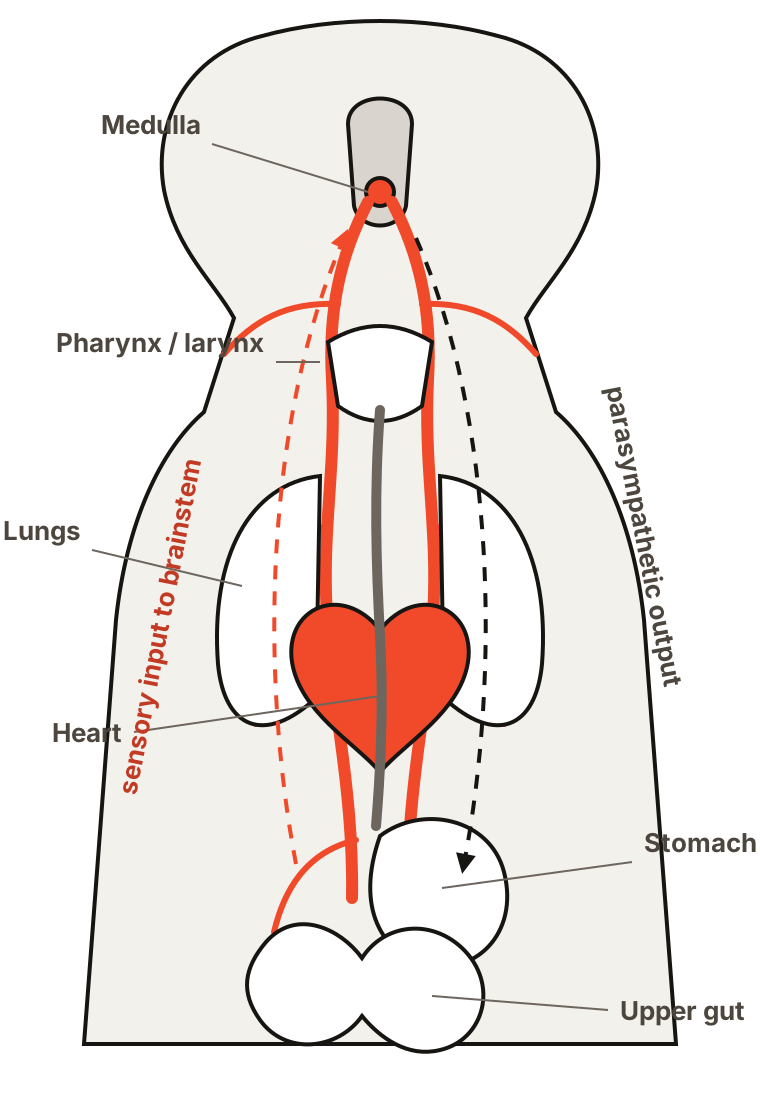
A simplified pathway from the medulla through the neck, chest, and upper abdomen. Not to scale.
Origin
The nerve emerges from nuclei in the medulla and exits the skull through the jugular foramen.
Neck
Throat and voice-box branches support swallowing, voice, cough, and sensation.
Chest
Cardiac, pulmonary, and esophageal branches join organ plexuses rather than acting as one simple wire.
Abdomen
Vagal trunks continue through the diaphragm toward the stomach and much of the upper digestive tract.
Mostly sensory
Most fibers carry sensory information from the body toward the brainstem.
Outgoing signals
Parasympathetic signals travel back toward selected organs.
The vagus is one part of autonomic control. Symptoms involving the heart, lungs, throat, or gut don't by themselves prove vagal dysfunction, and no home exercise can simply “switch it on.”
Research update
What 2024-2026 dysautonomia research adds
Recent studies help explain why one POTS plan can help one person and miss another. The same diagnosis can involve different problems with blood volume, blood-vessel control, breathing, post-viral illness, or exercise tolerance.
2026
Diagnosing POTS should begin with what standing does
An American Academy of Neurology clinical review defines POTS by chronic symptoms brought on upright and relieved by lying down, plus an excessive heart-rate rise on standing. The definition excludes orthostatic hypotension and, within reason, other causes such as dehydration, anemia, or hyperthyroidism.
A recent review describes three POTS types: low blood volume, nerve damage and high adrenaline. The two can overlap. So treating blood volume, blood vessels or heart rate, or exercising, won't help everyone equally.
Lost fitness alone doesn't explain exercise intolerance
A systematic review found lower exercise capacity across many POTS studies, but the gap was less consistent in fitness-matched studies. Less blood pumped per beat and an unusually fast rise toward peak heart rate were recurring findings.
Long COVID can involve both thinking problems and autonomic problems
A review of Long COVID brain fog and POTS describes major effects on quality of life and return to work. It also makes an important distinction: treating the orthostatic part may reduce some symptoms without explaining every part of the cognitive illness.
Write down what happened before you collect numbers. How long were you upright? Did it follow a shower or meal? How did your heart feel, what happened to vision or speech, and how fast did lying down help? Then choose a test that can help explain what happened.
Orthostatic vitals
Heart rate and blood pressure are checked after resting and again while standing. Both numbers matter. A larger pulse increase, a blood-pressure fall, or strong symptoms without either can lead to different questions.
A structured standing screen can capture what happens over ten minutes. It can strengthen a clinical conversation, but it does not replace a full history, medication review, or formal testing when the result is unclear.
A tilt table controls the change from horizontal to upright while heart rate and blood pressure are monitored. It may help when office measurements miss the problem or the diagnosis remains uncertain.
Depending on the symptoms, a specialist may assess breathing responses, sweating, small-fibre nerves, or other parts of autonomic control. These tests answer different questions and aren't one universal dysautonomia panel.
Related conditions
POTS, migraine, EDS, and Long COVID can overlap
A correct diagnosis can still miss another condition. These pages cover the overlaps that most often change what comes next.
“I have brain fog” tells a clinician little. “After eight minutes standing in the shower, my vision dimmed, my heart raced, and I couldn't finish getting dressed until I lay down” tells them far more. Bring the event, the timing, your medication list, and any careful heart-rate or blood-pressure readings you already have.
Ask what needs ruling out
Dehydration, anemia, thyroid disease, medication effects, infection, arrhythmia, orthostatic hypotension, and other conditions can resemble or worsen POTS.
Ask what each autonomic test checks
A tilt table, active stand, breathing challenge, sweat assessment, skin biopsy, and blood work each examine a different part of the problem.
Ask whether the treatment fits your case
Low blood volume, poor blood-vessel tightening, high-adrenaline symptoms, post-viral illness, neuropathy, migraine, and delayed crashes may need different plans.
When to get urgent care
Seek urgent care after fainting with an injury, or for chest pain, severe shortness of breath, an unfamiliar irregular heartbeat, sudden confusion, one-sided weakness, loss of speech or vision, or a severe headache unlike your usual headaches. Even after years of dysautonomia, a sudden symptom can have another cause.
Questions people ask
Dysautonomia and brain fog FAQ
Can dysautonomia cause brain fog?
Yes. Dysautonomia can affect heart rate, blood pressure, blood-vessel control, sweating, digestion, temperature, and other automatic functions. Brain fog is common in POTS and other forms of standing (orthostatic) intolerance, but dysautonomia isn't the only possible explanation for thinking problems.
How can I tell if standing affects my brain fog?
Look at the whole episode. Upright brain fog often happens alongside head pressure, visual dimming, palpitations, weakness, heat intolerance, nausea, or a need to sit or lie down. If lying down repeatedly brings your thinking back faster, mention posture when you give your medical history.
Can I have upright (orthostatic) brain fog without a dramatic heart-rate change?
Yes. POTS is only one form of orthostatic intolerance. Blood-pressure changes, hypocapnia, medication effects, low circulating volume, and other autonomic problems can produce upright symptoms. A normal home reading doesn't settle every case, especially if the symptoms are strong or inconsistent.
Why can meals make dysautonomia brain fog worse?
Digestion pulls more blood toward the gut. Large or carbohydrate-heavy meals can increase upright symptoms in some people with POTS. The timing matters: brain fog, palpitations, nausea, or faintness arriving together after eating says more than food symptoms alone.
Do breathing exercises treat dysautonomia?
Slow breathing may reduce hyperarousal, improve dysfunctional breathing, and support HRV training. It doesn't correct every cause of poor blood-vessel control, low blood volume, autonomic nerve damage, or orthostatic intolerance. If gravity is the trigger, you still need a standing (orthostatic) evaluation.
Who should be careful with salt or compression?
Get personal salt advice if you're pregnant or have high blood pressure, heart failure, kidney disease, swelling, or medicines that change blood pressure or body salts. Also be careful using compression with significant blood vessel disease, skin injury, nerve damage, or doubts about fit and pressure.
References
Sources used for this guide
This guide combines recent clinical reviews, treatment studies, our research on causes, and guidance for patients. The source buttons lead to the paper or clinical guide behind the claim.