WBF What is
brain fog?
Support WBF Take quiz

What helps

How to get rid of brain fog

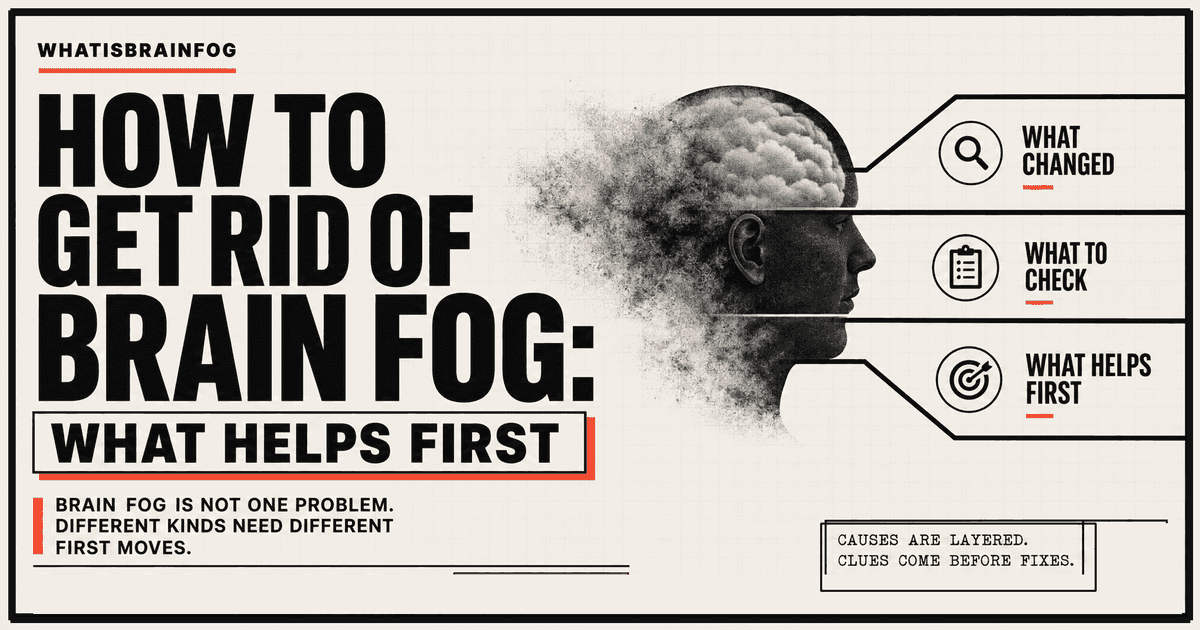
How to get rid of brain fog: what helps first.

Most brain fog advice fails because it assumes there is one problem to fix. If you want to clear brain fog, the first useful move depends on which kind you have. Many things can play a part. These include sleep, blood sugar, hormones, inflammation, infection, medicines, pain, trauma, migraine, gut problems, low nutrients and problems with heart rate and blood pressure control. That is why WBF separates causes and contributors.

01 Sleep and energy Bad sleep, sleep apnea, digital overload, chronic sinus problems, burnout, Long COVID/ME/CFS, and post-exertion crashes can all feel like “I just cannot think.” 02 Food, gut, and nutrients Meal crashes, anemia, B12, ferritin, vitamin D, celiac, SIBO, histamine, MCAS, alcohol, and gut inflammation can all involve food or digestion. The mistake is treating them all like one diet problem. 03 Hormones and metabolism Thyroid disease, diabetes, menopause, PMDD, PCOS and other hormone or metabolic conditions can belong in the same investigation, but they do not all affect thinking in the same way. 04 Blood flow and nerves POTS, hypoperfusion, migraine, concussion, cervical problems, MS, neuropathic pain, and neurological red flags can make your thinking depend on posture, attacks, injury, pain, or warning signs. 05 Immune and infection Autoimmune disease, lupus, EBV, Lyme, Bartonella, Long COVID/ME/CFS, neuroinflammation, mold, and MCAS can make brain fog one part of a wider inflammatory or post-infectious illness. 06 Medication and exposure Prescription effects, dose stacking, antihistamines, sedatives, alcohol, nicotine, caffeine, heavy metals, pesticides, mold, smoke, scents, and indoor air can all cause brain fog from outside the body. 07 Mind, trauma, and neurodivergence ADHD, autism, anxiety, depression, trauma, PTSD, social overload, and chronic stress can affect attention, memory, language, and shutdown in very different ways. 08 Life stage and recovery Pregnancy, postpartum, menopause, post-surgical recovery, chemo brain, endometriosis, PMDD, and long recoveries can affect thinking through timing, hormones, inflammation, pain, and the work of healing.

Start where it shows up

A few ways to tell which kind of brain fog you have

The library has many reviewed starting points, but causes can combine, some are rare, and your situation matters. Your brain fog can have different causes on different days.

Indoor air quality and ventilation visual.

Worse in one room

Start with air quality

Bedroom air, CO2, PM2.5, scents, damp, heat, and closed windows can quickly change how clearly you think. A room comparison helps you avoid buying the wrong fix. Compare the room
Symbolic scene for brain fog after eating.

Worse after food

Start with meal timing

A heavy or drugged crash after food is different from brain fog that lasts all day. Timing tells you whether food is really involved before you cut half your diet. Check the food window
Symbolic morning brain fog scene.

On waking

Start with sleep quality

Brain fog in the morning can come from broken sleep, sleep apnea, alcohol, reflux, bedroom air quality, pain, or medication hangover. Enough hours is not the same as restored sleep. Look at the morning
Medical testing and nutrient-related brain fog visual.

Nothing obvious changes

Start with testable medical issues

If brain fog is steady, worsening, or hard to connect to sleep, food, rooms, posture, alcohol, or medication timing, basic labs and sleep review may be the better first move. See useful labs

Not sure where you fit?

Answer 13 questions before you guess.

If none of the sections above feels obvious, use the Brain Fog Check. It does not diagnose you. It helps rule out the wrong starting points and gives you a small My Fog panel to save what still fits.

Start Brain Fog Check

The part most pages miss

Why brain fog does not always clear all at once

You can have more than one problem at once, so the right fix may clear only part of your brain fog.

A small improvement can still be real

If one change makes you 20 percent clearer, that doesn't mean the answer failed. Keep any change that helps, even a little.

Recovery can move in waves

A good afternoon can be real progress, even if the problem isn’t all gone. A bad day can still happen while you’re getting better. Ups and downs show up in slow-moving or flare-prone conditions, nervous-system strain, migraine, post-illness recovery, hormone changes, pain, and fatigue.

If you already have a diagnosis

A diagnosis can be true and still not explain all of your brain fog. ADHD, Long COVID, menopause, PTSD, thyroid disease, migraine, lupus, POTS, burnout, medication effects, and deficiency states can overlap. The danger is blaming everything on the first label and missing whatever else is still contributing.

Research points the same way

Recent studies describe brain fog in many long-term conditions, including Long COVID and ME/CFS, POTS, menopause, migraine and PTSD. These conditions all strain thinking, the body and the nervous system.

When the cause is still unclear

Useful labs to discuss

These common tests check for medical causes.

Lab Why it matters Helpful context
TSH + Free T4 Thyroid dysfunction can look like slow thinking, fatigue, low mood, cold intolerance, constipation, and poor concentration. TSH is the usual starting point, but Free T4 adds context. If results are borderline or symptoms strongly fit, ask whether to test thyroid antibodies or Free T3 too.
Ferritin Ferritin reflects iron storage. You can have normal hemoglobin while iron stores are low. Ask specifically for ferritin if fatigue, restless legs, heavy periods, or hair shedding fit.
Vitamin B12 Essential for myelin maintenance and neurotransmitter synthesis. Common deficiency in vegetarians, vegans, older adults, and people on PPIs or metformin. If B12 is low-normal (200-400 pg/mL), a methylmalonic acid (MMA) test is more sensitive. Blood B12 can look normal while your cells lack it.
Vitamin D Brain areas that handle focus, memory, and executive function have many vitamin D receptors. Low levels are common in northern latitudes, darker skin, indoor work, and older age. Discuss testing before guessing. Winter levels can be lower than summer levels.
Fasting glucose / HbA1c Screens for diabetes and prediabetes. If results are normal but you still crash after meals, timing may matter more than the average. A continuous glucose monitor can give you more detail, but it isn't the first step everyone needs.
Complete blood count (CBC) Screens for anemia, infection markers, and basic blood health. It catches obvious problems that could be contributing. Useful as part of a basic medical screen when symptoms are persistent or worsening.

Latest research

What changed recently

Sleep apnea remains one of the clearest treatment paths. Recent CPAP research links treatment with less daytime sleepiness, quicker thinking, and better scores on some tests, especially with confirmed sleep apnea and regular use.

Menopause brain fog is becoming a serious research topic. New 2026 studies measure symptoms and test scores separately. What you feel can be real even when a short thinking test looks normal.

Air quality is no longer vague wellness advice. New 2026 work links PM2.5 and other air-pollution measures with cognition, while HEPA trial data suggests filtration may help in the right exposure setting.

Medication review deserves more attention. New research on anticholinergic drugs and benzodiazepines keeps linking a heavy drug load to thinking problems in some groups.

Long-COVID research still matters because it has the most direct brain-fog trials. But the evidence is mixed. Small cognitive-rehab studies look promising, while the larger RECOVER-NEURO trial didn't find one remote treatment clearly beating the comparison groups.

Supplement research, including a 2026 brain fog study where people knew what they took, isn't strong enough to make this guide a supplement plan.

Keep it simple

What to do instead

The wrong move can waste weeks.

Pass on supplement stacks from social media. Try one change at a time and give it at least two weeks. If you start five things at once, you won't know which one helped.

Get a basic checkup before settling on one explanation.

Check the simple things even when they feel boring. Sleep, hydration, blood sugar, movement, and air quality can blur everything else.

If it's affecting your work, relationships, or quality of life, it's already worth looking into.

Maybe it's just stress. It might also be thyroid disease, anemia, sleep apnea, medication effects, or blood sugar instability.