Lyme and Brain Fog
Reader modes
Choose where you are now
Evidence consensus
Established guidelines cover acute Lyme diagnosis and treatment; evidence for prolonged antibiotics after recommended treatment remains disputed
IDSA and ILADS both publish Lyme guidelines, and they disagree on chronic Lyme. A 2025 mechanism finding may have changed the question. The page covers all three views.
Evidence and recovery context
Quick answer
Could This Be Lyme? When the Story Fits but the Test Doesn't
You probably came here because the story fits but the test doesn't. Your test came back negative. Your symptoms haven't cleared. And you quietly worry you're imagining the link between the tick exposure and what's been happening since.
That mismatch is real. Standard two-tier testing is known to miss Lyme in the first weeks of infection, when antibodies haven't fully developed. A negative test that early can't rule Lyme out. It's a timing problem. After treatment, the question changes. Persistent symptoms don't automatically prove ongoing active infection, but they don't prove it's gone either. Look at what changed since the antibiotics. If symptoms fully cleared, that suggests the infection caused them and is now gone. Partial improvement often points to post-treatment Lyme disease syndrome (PTLDS) or an untreated co-infection. No change at all means the diagnosis itself may need re-checking.
Break "could this be Lyme?" into three questions. Does Lyme belong on the short list? Was the test timed right? What changed after treatment?
Lyme usually makes the most sense when your thinking got worse after a tick exposure, rash, or flu-like illness and never really recovered. Joint pain, nerve symptoms, and a clear before-and-after timeline matter more than generic fatigue alone.
Investigating: I think Lyme is causing my fog
Start with exposure, symptoms, and testing limits
Use timing and test context before treating one symptom, band, or diagnosis story as proof.
Managing: I've had Lyme treatment and still have brain fog
Treatment happened, but the brain fog is still unexplained
Use the treatment, support, flare-caveat, comparison, and evidence sections without assuming persistent symptoms prove one mechanism.
Supporter: I'm helping someone
Support the person without forcing certainty
Get caregiver guidance, what to say, safety information and sources, so you can help without dismissing symptoms or settling on a diagnosis.
Key takeaways
Lyme is worth checking if brain fog started after possible tick exposure or illness, along with symptoms like a rash, joint pain, facial weakness or nerve symptoms.
When you test matters. Antibody tests can miss Lyme in the first 4 to 6 weeks after infection, so an early negative result doesn't rule it out on its own.
Some people still have fatigue, pain, or difficulty thinking after recommended treatment. Those symptoms are real, but they do not by themselves show why they are continuing.
A 2022 study followed people treated promptly for early Lyme, and 14% met its criteria for post-treatment Lyme disease.
When the exposure story, symptoms, and testing do not line up, Lyme should not become the only explanation. Sleep, medication effects, pain, post-viral illness, and other medical causes can also affect thinking.
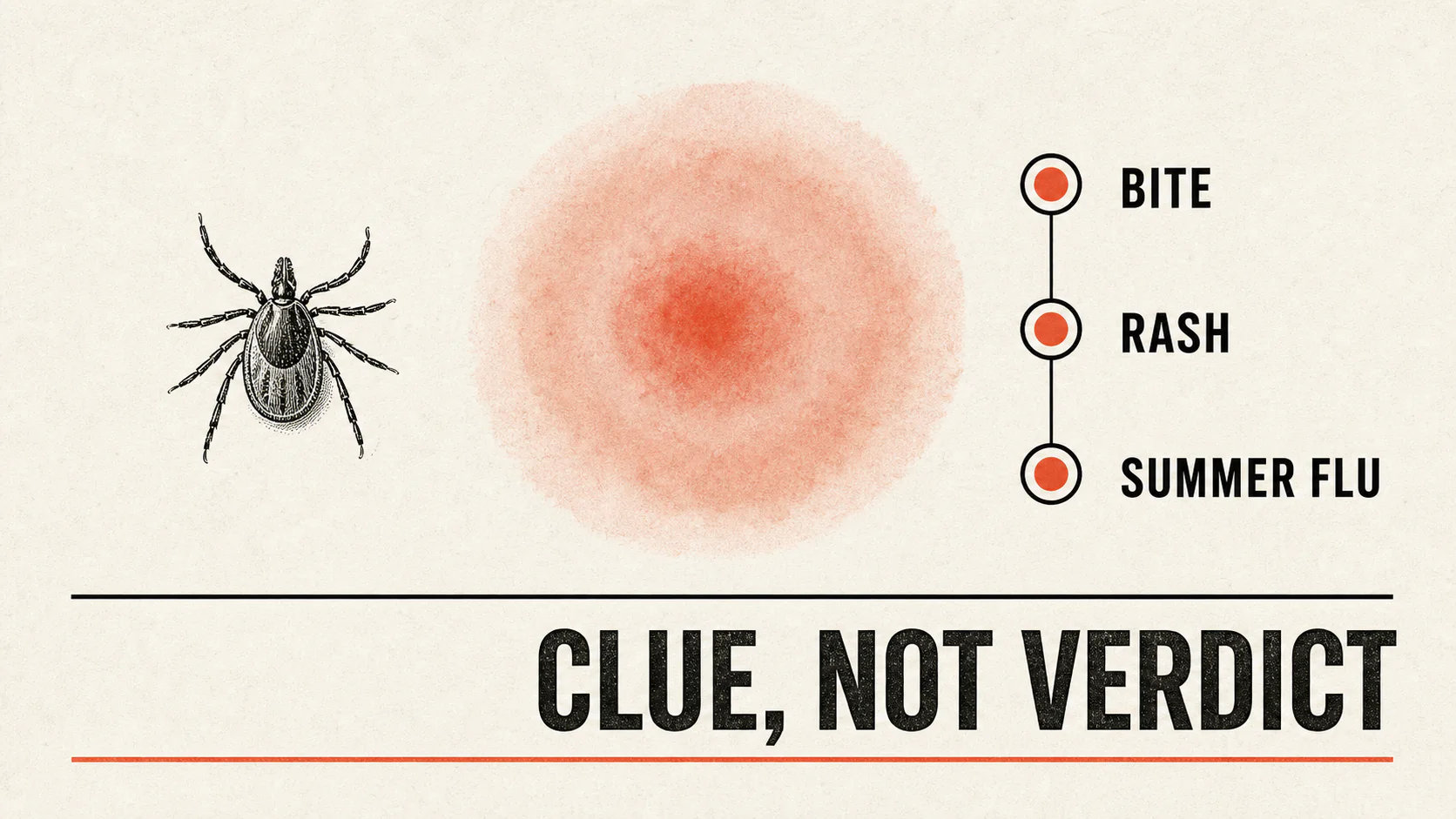
Interpret Tests As Context, Not A Verdict
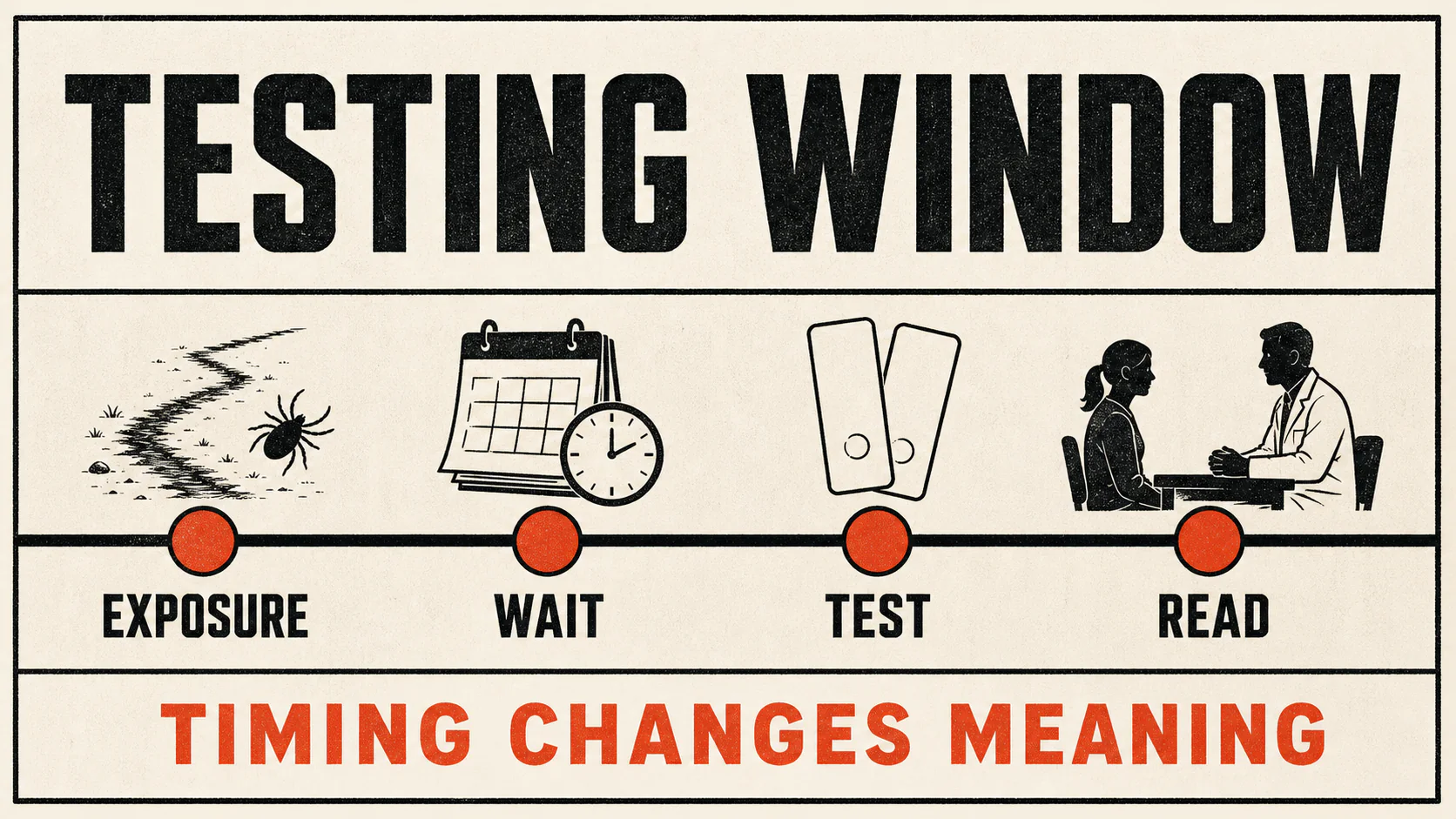
Testing sequence
Timing changes what a result means
Standard Lyme testing depends on timing, antibody development, and which confirmatory test was actually run. A negative early test can be a timing problem. A positive result can also need context, especially after treatment.
Timing first
Antibodies need time
Exposure story
Early negative serology can be a timing problem. Start with tick exposure, rash or summer-flu history, symptom onset, and treatment history before reading the result.
Standard pathway
Two-tier tests carry the most weight
ELISA + confirm
A positive screen plus confirming Lyme immunoblot, the standard sequence, gives strong evidence. IgM and IgG mean different things depending on symptom timing.
Neuro context
Spinal-fluid tests answer a narrower question
Specific context
A high spinal-fluid antibody index can help when your doctor suspects neurological Lyme, but a specialist must read it with your symptoms.
After treatment
Persistent brain fog doesn't prove active infection
Claim limit
PTLDS and prolonged-antibiotic claims sit in a different evidence zone. In one ideally treated early-Lyme cohort, 13.7% met PTLD criteria compared with 4.1% of controls. That makes the symptoms visible without proving ongoing active infection.
Confidence bands
Test results make Lyme more or less likely, not certain.
Stronger signal
High context
Compatible exposure or rash history plus standard two-tier positivity, especially when timing fits antibody development. Early rash treatment may be clinical; later uncertainty needs the actual report and timing.
Narrower signal
Specialist read
Neurological symptoms with CSF antibody-index context and a clinician deciding whether neuroborreliosis is plausible.
Contested zone
Do not overread
PTLDS, chronic-treatment debates, and prolonged antibiotics need separate evidence handling from acute Lyme diagnosis. Persistent symptoms deserve care, but they are not the same thing as proof that more antibiotics will clear brain fog.
Do this next
Tell your doctor where you lived or traveled, when you were outdoors, whether a tick attached, when you removed it and how long it may have been on.
Testing guidance: CDC Clinical Testing and Diagnosis for Lyme Disease.
Current clinical boundary
CDC recommends a two-step process using FDA-cleared blood antibody tests (serology). Early tests can miss Lyme before antibodies develop, but nonstandard specialty tests shouldn't replace the recommended steps.
Symptoms that last after treatment can be real without proving active infection. Current IDSA/AAN/ACR guidance recommends against more antibiotics for lasting, nonspecific symptoms when there's no objective evidence of reinfection or treatment failure.
CDC testing guidance / IDSA/AAN/ACR guideline (PMID 33417672) / 2024 treatment review (PMID 38606630)
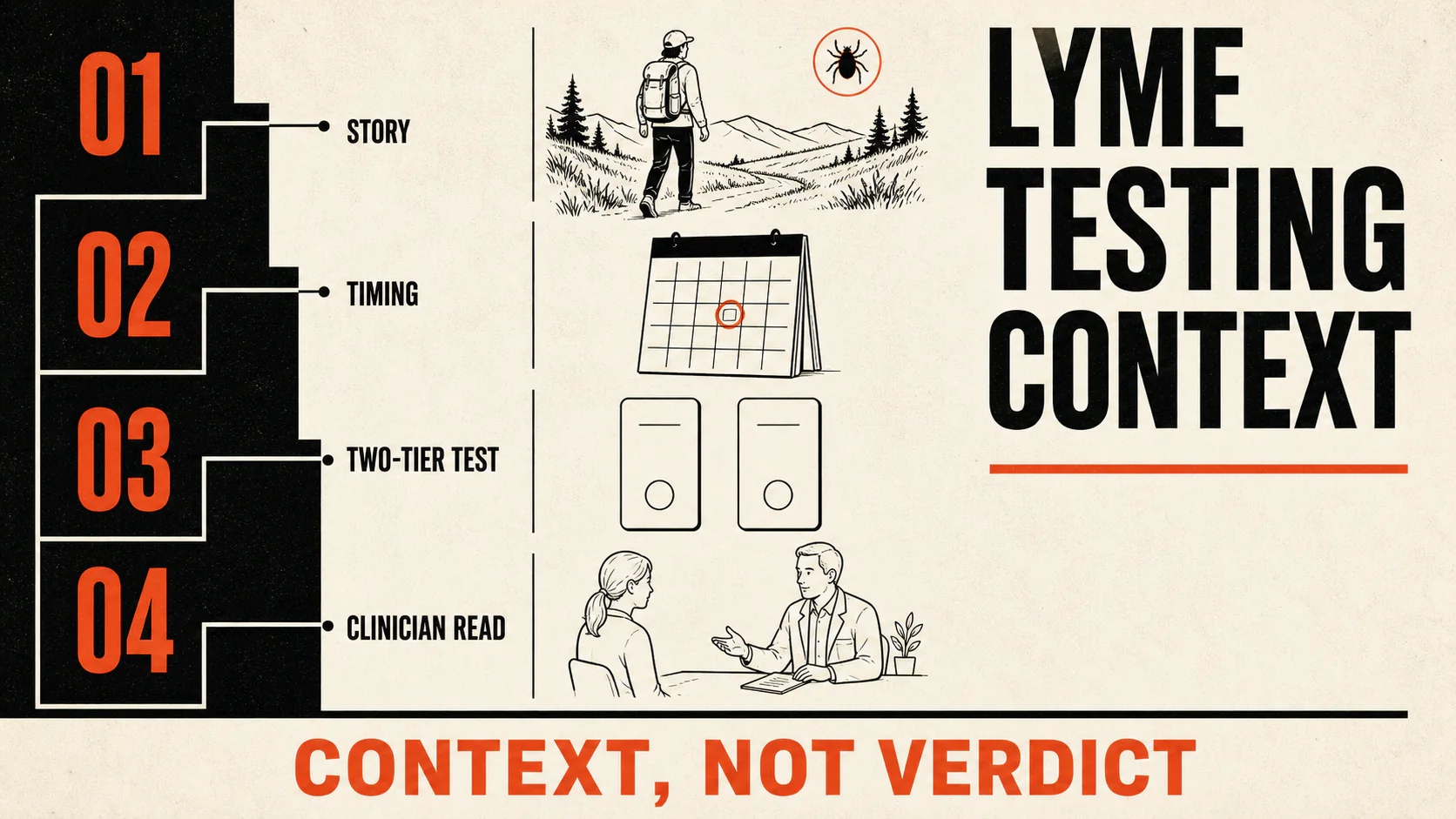
Look for an infection-linked symptom cluster
Sequence, not proof
Follow the evidence without overstating it
This map checks Lyme brain fog in order: exposure or infection, immune load, body symptoms, then thinking problems. Symptoms that follow this order don't prove ongoing active infection.
Exposure or infection context
A plausible trigger starts the question
Context
Tick bite, rash, outdoor exposure, summer illness, or an infection story can make Lyme worth checking. That history is context, not proof by itself.
Immune and inflammatory load
Immune activity can keep going after the infection
Load
Lyme-related brain fog can involve immune activation and post-infectious debris. This map doesn't assume live bacteria are still present.
Body symptoms, sleep, and pain
The body findings raise or lower the fit
Body
Joint pain, headaches, nerve symptoms, fatigue, sleep disruption, and delayed crashes matter because thinking often gets worse during the wider flare.
Brain fog
The brain symptoms are weighed with the rest
Fog
Slow thinking, word-finding trouble, short-term memory slips and on-and-off focus count for more when they change with your other symptoms.
Use it when
Exposure story, body symptoms, timing, and guideline-aware testing point in the same direction.
Do not overread
PTLDS and chronic Lyme treatment claims need separate evidence handling from acute Lyme or neuroborreliosis.
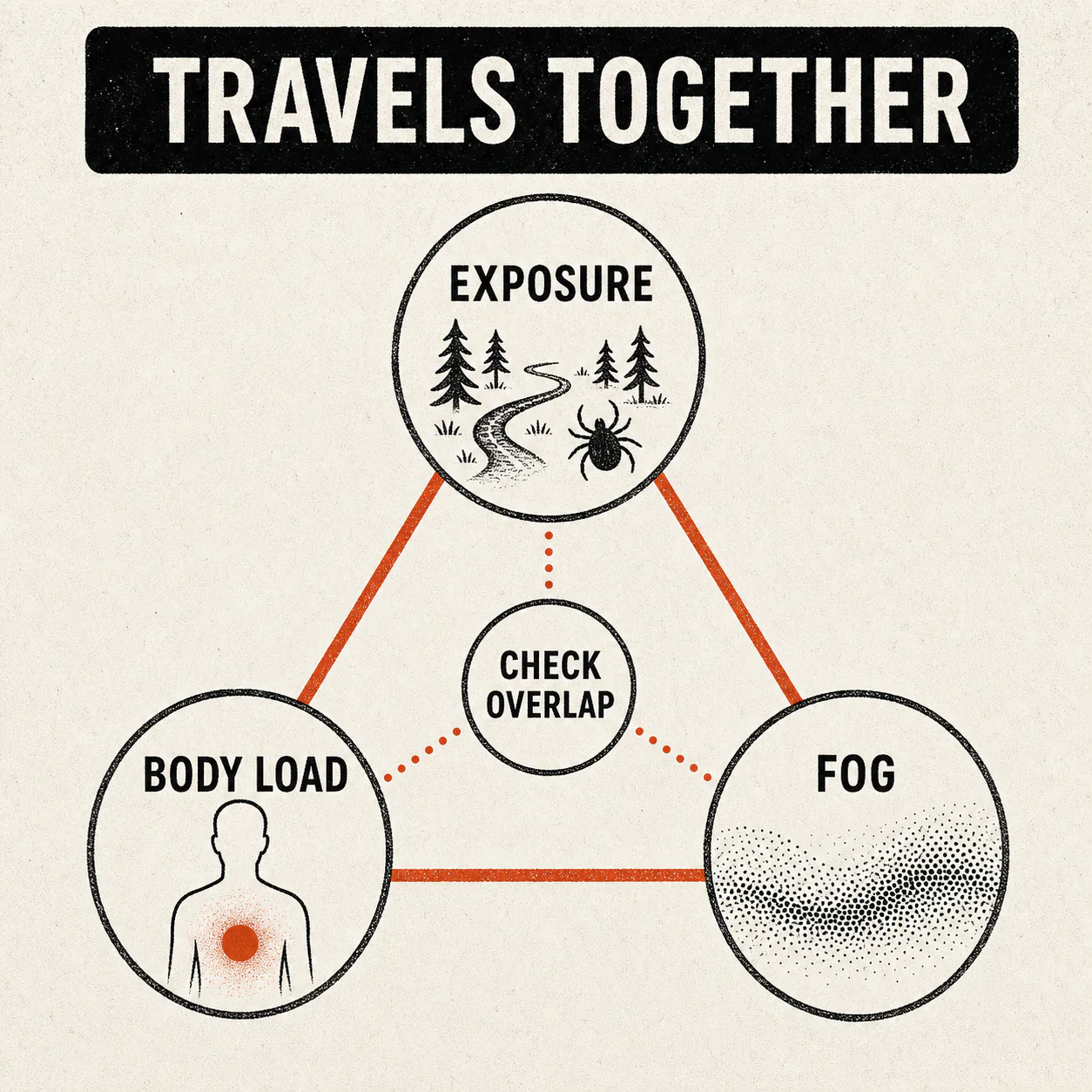
People may describe slow thinking, poor attention, trouble finding words, memory lapses or mental fatigue. These can happen during neurological Lyme disease or last after treatment, but none proves Lyme on its own.
- Processing speed: routine reading, planning, or conversation may take more effort.
- Attention: pain, poor sleep, fatigue, or illness can make sustained focus difficult.
- Word retrieval and memory: some people report losing words or steps in a task.
- Function: how do symptoms affect work, study, driving, and daily life?
- Course: timing and related signs outweigh any single description of brain fog.
Misdiagnosis can run in both directions. A clinician should weigh Lyme evidence and credible alternatives, not treat brain fog as a stand-alone test.
CDC and IDSA/AAN/ACR diagnostic guidance.
Symptom
Brain fog appears alongside pain, fatigue and neurologic symptoms.
Timing
Symptoms come in waves and can feel worse than the day would explain.
Trigger
There's a bite, rash, outdoor exposure, or infection story that still feels relevant.
Symptom
My head is not the only thing involved. Brain fog moves with the joint pain. When my body acts up, my brain follows.
Patient language retained from the Lyme source
These phrases describe lived experience; none confirms Lyme disease or ongoing infection.
Patient description 1
It feels like the brain just stopped working properly after an infection or tick exposure.
Patient description 2
Word-finding gets worse and concentration takes real effort, often alongside joint pain, headaches, or nerve symptoms.
Patient description 3
The main thing is the timeline: there was a plausible trigger, and thinking never really got back to normal.
Source-page symptom prompts
These are our prompts to help sort questions, not validated diagnostic criteria.
Evidence to bring
- Document plausible tick exposure, an expanding rash if present, compatible illness, and when cognitive symptoms began.
- Bring the complete report so both steps, timing, and the laboratory interpretation can be reviewed.
Evidence boundary
- Fatigue and brain fog alone do not diagnose Lyme disease.
- Symptoms after treatment do not by themselves prove active infection or identify one treatment.
Metabolic and autonomic overlap
Energy swings can reflect sleep, pain, autonomic symptoms, nutrition, medicines, mood, or post-infectious illness, and they aren't specific to Lyme.
- Day-to-day cognitive stamina can vary.
- Activity-related worsening needs its own timing history.
- Sleep, post-viral, pain, and autonomic causes may overlap.
When symptoms get worse
Cyclical
Lyme brain fog often moves in waves, not by the clock. Many patients notice it rises with joint pain flares. When the pain moves to a new joint, their thinking gets much worse within hours. One explanation is that cytokines, which are inflammatory chemicals, move through the body and inflame several tissues at once. The randomness is part of the illness.
Post Meal
Lyme often disrupts gut function. Heavy meals and inflammatory foods (sugar, processed carbs, alcohol) become an additional inflammatory load on top of the infection. Your body is already running an immune fight, and digesting a heavy meal asks it to run two at once.
Post Exertional
Lyme inflammation and autonomic dysfunction limit how well your brain handles increased metabolic demand. Push through a good day and brain fog can come back worse 12-72 hours later. Many patients learn the cost is delayed, and learn to pace before they feel they need to.
How Lyme Can Affect Cognition
Several things may affect thinking. Which ones matter depends on your situation: a new infection, Lyme in the nervous system, recovery after treatment, or another condition too.
Pathway 1
Active neurological Lyme can affect the nervous system and requires clinician-led diagnosis and guideline-based treatment.
Pathway 2
Pain, fatigue, disrupted sleep, inflammation, and autonomic symptoms can each reduce cognitive capacity.
Pathway 3
Guidelines accept that symptoms can outlast recommended treatment. The cause is still uncertain and may not be live bacteria.
Pathway 4
Imaging and biomarker studies are research tools; they do not provide a routine individual test for Lyme-related brain fog.
Make uncertainty visible
Lyme Brain Fog vs Nearby Look-Alikes
The same cognitive symptoms can arise from several conditions. Compare timelines and objective findings instead of assuming one symptom identifies the cause.
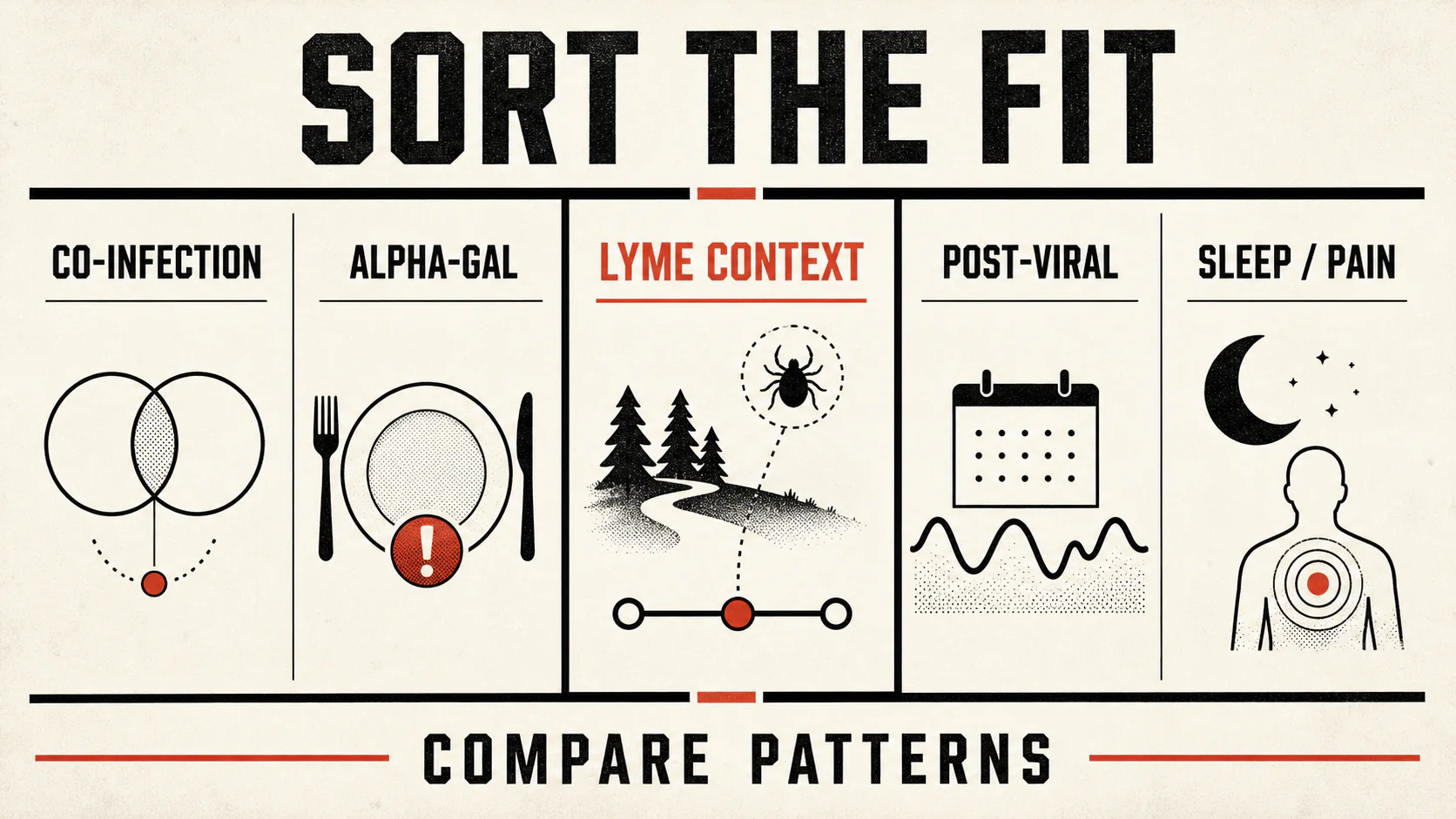
Differential comparison map
Compare the nearby stories before naming Lyme.
Use this map to compare the possible causes. Lyme is one to check. Each section asks what would make Lyme more or less likely, or point to another cause.
Center question
Does the full clinical picture still point toward Lyme after nearby explanations are compared?
Lyme context
Compare: Compare exposure timing, rash or summer-flu history, symptom waves, and two-tier test context together.
Ask about: Ask what changed first, what changed later, and whether the story still fits after checking other common causes.
Guardrail: Lyme is less likely when another cause explains brain fog without Lyme-like timing.
Co-infection questions
Compare: Bartonella, Babesia, Anaplasma and EBV are worth considering only when your history gives a reason to ask.
Ask about: Ask about regional exposure, sudden fevers, sweats, air hunger (breathlessness), nerve pain, or post-viral timing.
Guardrail: Context, not proof: names on a list do not confirm infection or make Lyme the verdict.
Alpha-gal questions
Compare: Keep delayed food reactions separate from Lyme serology, even when the tick-bite context overlaps.
Ask about: Ask about delayed hives, GI distress, or breathing symptoms after mammalian meat, dairy, or gelatin exposure.
Guardrail: Alpha-gal workup is a separate question; it should not be used as a Lyme test result.
Evidence boundary
Compare: Lasting brain fog after treatment can be real, with its mechanism unsettled.
Ask about: Post-infectious context, sleep, pain, medications, autoimmune activity, autonomic symptoms, and mast-cell signs.
Guardrail: Not proof of chronic active infection, and not proof that prolonged antibiotics improve brain fog.
| Comparison | What to compare | Caveat |
|---|---|---|
| Lyme and post-viral illness | Use timing, symptoms, and testing context before deciding. | |
| Lyme and mood symptoms | Use timing, symptoms, and testing context before deciding. | |
| Lyme and sleep disorders | Use timing, symptoms, and testing context before deciding. | |
Tick-bite lookalikes and co-infections retained from Lyme
Alpha-gal syndrome
A different tick-bite outcome can cause delayed allergic reactions to mammalian meat, dairy, or gelatin. It can be confused with Lyme because the bite history overlaps, but the signature is GI distress, hives, or anaphylaxis 2-6 hours after exposure, not a primary cognitive syndrome.
Workup is alpha-gal IgE, not Lyme serology. Source note from the committed Lyme route: CDC Alpha-gal guidance; Commins and Platts-Mills 2013.
Bartonella
Bartonella is a separate infection question. Psychiatric symptoms, a Lyme diagnosis, or a community treatment story aren't enough to assume it.
Exposure and clinical context should determine whether a clinician investigates it.
Babesia
In some regions, the same blacklegged tick can spread Babesia. Babesia can cause a distinct illness with fever or red-blood-cell breakdown.
It requires its own clinical assessment, testing, and treatment plan.
Anaplasma or Ehrlichia
These tick-borne infections can share an exposure setting with Lyme and can change an acute febrile illness picture.
Region, timing, examination, and laboratory findings guide assessment.
EBV and post-viral overlap
EBV and other post-viral illnesses can cause fatigue and thinking problems that look like lasting symptoms blamed on Lyme.
Separate the infection timelines and objective evidence instead of assuming one explains the other.
Permission to revisit
When It Might Not Be Lyme Anymore
After a year of treatment without meaningful improvement, the question changes. The three highest-quality retreatment RCTs (Klempner 2001 NEJM, Krupp 2003 Neurology STOP-LD, Fallon 2008 Neurology) found no durable benefit from extended IV antibiotics over placebo on primary cognitive outcomes. That doesn't mean your symptoms aren't real. It often means the driver has shifted, or was never primarily Lyme to begin with.
Common alternative or co-occurring drivers worth re-checking:
Post-infectious overlap
ME/CFS and long COVID share neuroinflammation pathways with PTLDS and respond to similar pacing strategies, not more antibiotics.
Autonomic / mast cell
Connective tissue
Hypermobile EDS overlap explains why some "treatment-resistant Lyme" patients have always had multisystem fragility.
Environmental / sinus
Chronic sinus colonization and indoor mold exposure can drive cognitive symptoms that look infection-like but aren't.
Ask your doctor to check for other causes before adding more antibiotic time. Continuing antibiotics indefinitely without rechecking other causes has its own risks: C. difficile (a gut infection), gut-bacteria damage, antibiotic resistance, and money and time spent on treatment that may miss the real cause. This isn't "your Lyme isn't real." It's "what else might also be true."
Klempner MS et al., N Engl J Med 2001 (PMID 11450676); Krupp LB et al., Neurology 2003 STOP-LD (PMID 12821734); Fallon BA et al., Neurology 2008 (PMID 17928580); Sébastien P et al., BMC Infect Dis 2023 (PMID 37784031); Palleja A et al., Nat Microbiol 2018 (PMID 30349083); Sébastien P et al., BMC Infect Dis 2023 (PMID 37784031); Palleja A et al., Nat Microbiol 2018 (PMID 30349083)
Co-travelers
Lyme Co-Infections: Babesia, Bartonella, Anaplasma, EBV
Lyme alone rarely causes brain fog. If it lingers while you're treating the infection, one of these is probably adding to it. Co-infections are the most common reason Lyme treatment alone doesn't work.
Bartonella
The co-infection people miss the most. Psychiatric symptoms (panic attacks, rage, anxiety, even psychosis) that get misdiagnosed as bipolar or generalized anxiety. 10-40% co-infection rate in Lyme-endemic ticks. Standard Lyme panels don't test for it. Years of SSRIs can't fix what antibiotics can.
10-40%
Babesia
A malaria-like parasite that co-transmits with Lyme. Night sweats, air hunger, fatigue that feels different from Lyme fatigue. Won't respond to Lyme antibiotics because it isn't a bacterium. Needs its own treatment (atovaquone + azithromycin). If your Lyme treatment isn't working, this is the first thing to check.
Common co-infection
MCAS
Lyme can set off mast cells (allergy cells). If you've had new food sensitivities, heat or chemical reactions, or random flushing and itching since your diagnosis, mast cells may be adding to your brain fog.
Underdiagnosed
Depression
This isn't sadness about being sick. Lyme-driven brain inflammation directly disrupts serotonin and dopamine. 26-66% of late-stage Lyme patients develop depression. A Danish cohort found 42% more mood disorders and higher suicide risk.
26-66%
Sleep disruption
Autonomic dysfunction from Lyme disrupts sleep architecture. You can't think clearly on broken sleep, and broken sleep cranks up neuroinflammation. It's a loop that needs treating separately from the infection itself.
Common
Gut dysbiosis
Long antibiotic courses devastate the microbiome. People often hit a phase where brain fog gets worse before it gets better. The antibiotic is clearing the Lyme bacteria while the gut damage it causes makes thinking harder too. Probiotics aren't optional during Lyme treatment, and 2+ hour separation from antibiotic dosing is the difference between probiotics that survive and probiotics you flushed.
Treatment side effect
Bring Specific Evidence Without Overcalling Lyme
Body load
Choose activity that feels tolerable and stop if it causes concerning or sustained worsening.
Food
Food supports recovery. Regular meals, enough protein, and gut support you tolerate can help when you're dealing with antibiotics, nausea, poor appetite, histamine symptoms, Candida, SIBO, or blood-sugar swings.
Hydration
Drink when thirsty unless your clinician set a different plan. Add electrolytes or salt only when there's a reason.
Environment
Use a lower-stimulation setting when headache, dizziness, or cognitive load is high.
Support
Ask a trusted person to help with notes, transport, or appointment logistics if useful.
Symptom changes
Notice timing, function, sleep, pain, medicines, and new objective signs, without treating them as a diagnosis.
First-week structure from the live page
Step 1
Write a one-page exposure, illness, testing, treatment, and recovery timeline.
Include dates and original laboratory reports where possible.
Step 2
List the cognitive tasks that changed and how they affect daily function.
Function is more useful than one brain fog score.
Step 3
Note sleep, pain, medicines, mood, post-viral illness, and neurological symptoms that may overlap.
More than one contributor can be present.
Step 4
If symptoms worsen during treatment, contact the prescriber. Getting worse doesn't prove treatment is working.
Severe, focal, cardiac, or rapidly progressive symptoms need urgent assessment.
Step 5
Bring focused questions about what the evidence supports, what remains uncertain, and what would change the plan.
Ask your clinician before changing several treatments at once.
Treatment and support options from the live page
Testing and differential
Use the recommended testing pathway
When testing makes sense, use FDA-cleared two-tier antibody tests. Read them with exposure and symptom timing.
An early test can miss Lyme before antibodies develop. If symptoms last, check for other causes before turning to a specialty test.
CDC Clinical Testing and Diagnosis for Lyme Disease, updated May 2024.
Test for co-infections only when the clinical picture supports it
Region, exposure, fever history, blood counts, sweats, air hunger, or other specific signs should guide targeted testing.
Medical treatment
Match treatment to the diagnosed manifestation
When early Lyme, such as the erythema migrans rash, needs treatment, CDC and IDSA/AAN/ACR guidance name doxycycline, amoxicillin, or cefuroxime axetil. Azithromycin is a backup if you can't take those, but CDC notes it's less effective. Your clinician handles neurologic Lyme separately. Facial palsy usually gets oral treatment. Meningitis or radiculoneuritis (inflamed nerve roots) may get oral or IV antibiotics, depending on severity.
For lasting, vague symptoms without objective signs of reinfection or failed treatment, IDSA/AAN/ACR guidance recommends against more antibiotics. Antibiotic choice matters only after your form of Lyme is diagnosed.
CDC erythema migrans treatment guidance; CDC neurologic Lyme treatment guidance; IDSA/AAN/ACR 2020 Lyme disease guideline (PMID 33417672); 2024 treatment review (PMID 38606630).
Supportive recovery
Treat function and overlapping contributors
Review sleep, pain, mood, autonomic symptoms, medication effects, pacing, nutrition, and rehabilitation needs with the relevant clinician.
Symptom support can be appropriate while the cause of persistent symptoms remains uncertain.
Support, food, therapy, and treatment-flare caveats
Overall diet
Easy anti-inflammatory eating
This suits people who are too fatigued, nauseous or overwhelmed for complicated diet changes. It's the smallest step that still helps.
Eat small, simple meals often. Have broth or soup if your appetite is poor. Add ONE portion of oily fish a week, and berries when you can tolerate them. Cut back on ultra-processed food without cutting it out. Stay hydrated. Large meals can wait.
Eat an anti-inflammatory Mediterranean diet while you investigate. Get enough protein for your immune system. Stay well hydrated. No 'Lyme diet' has clinical evidence. Specialized detox protocols waste your money.
Source-page rationale: Pragmatic, based on cancer survivorship nutrition (NCCN), ME/CFS management, and post-surgical recovery guidelines. Low barrier to entry is the point.
If you can barely cook, this is for you. One fish meal a week, some berries, drink water. That's enough to start. You can fine-tune later when you feel better.
Sample day
Breakfast
Toast + peanut butter + banana (whatever you can manage)
Mid Morning
Broth or soup if appetite poor
Lunch
Simple chicken + rice + steamed veg (whatever is easiest)
Snack
Handful berries or a piece of fruit
Dinner
Eggs on toast or tinned salmon + crackers (minimal prep)
If your appetite is very low, anything is better than nothing. An imperfect meal still counts.
Lyme recovery meals
Active or post-treatment Lyme drains protein reserves and stresses the gut. The diet job is calories, protein, and minerals, not detox.
Pick this when fatigue or nausea makes complex meal planning impossible. Aim for something nourishing today, not perfectly balanced meals.
If you're on doxycycline, separate calcium, magnesium, iron, and zinc by 2 hours before or 2-3 hours after dosing. There is no evidence-based 'Lyme diet'. Steer money away from detox protocols and toward consistent protein + electrolytes.
Brain fog diet guide / Gentle anti-inflammatory diet / Probiotics and antibiotic-associated diarrhea review
Low-burden supports
Sleep and pacing support
Use a manageable routine and stop activities that cause concerning worsening.
Support function while diagnosis and treatment questions stay open.
Written plans
Use one-page visit notes, medication lists, and appointment summaries.
External reminders can reduce cognitive load without assuming a cause.
Therapy fit
Counseling or rehabilitation may support coping, sleep, pacing, and function. Using it doesn't mean symptoms are psychological, and it doesn't replace proper medical assessment.
Herxheimer caveat
What the guideline describes
A minority of people treated for early Lyme disease find their symptoms briefly get worse, with or without fever, in the first 24 hours of antibiotics.
What it does not prove
Symptoms that start later in treatment don't count as a Jarisch-Herxheimer-like reaction. A flare does not show microbial burden, confirm the diagnosis, or predict that more treatment will help.
Escalate
Call a clinician for high fever, heart symptoms, new weakness, confusion, much worse neurological symptoms, or symptoms lasting longer than expected.
Source: IDSA/AAN/ACR 2020 Lyme disease guideline.
Full supporter and ex-believer section retained from Paul branch
Understanding
How to Support a Partner or Family Member With Lyme Disease
Persistent fatigue, pain, or cognitive difficulty after treated Lyme disease can be disabling even when the mechanism is uncertain. Support does not require pretending the diagnosis is more certain than it is.
Thinking problems may be invisible from the outside. Word-finding, reading, planning, and conversation can take much more effort, so written information and lower-stimulation plans can help.
Researchers are still studying possible immune, inflammatory, neurological, and non-Lyme causes of lasting symptoms. For now, help with daily life while qualified clinicians recheck what's causing the symptoms.
Communication
What Not to Say to Someone With Chronic Lyme (and Better Alternatives)
"You finished antibiotics, you should be fine"
Some people report lasting symptoms after recommended treatment. Take them seriously and encourage a careful review of recovery, other diagnoses, and any new measurable signs.
"Maybe it's just anxiety"
Anxiety and physical illness can happen together. A clinician should assess new neurological, heart, infection, or daily-function changes before anyone blames anxiety.
"Have you tried just resting more?"
Rest and pacing may help function, but they are not a diagnosis or a complete treatment plan. Ask what kind of practical help is useful today.
"At least it's not cancer"
Minimizing chronic illness is the fastest way to lose someone's trust. Their thinking problems are real and measurable. Comparing suffering helps nobody.
Support
How to Help Someone With Lyme: Practical Caregiver Actions
Believe them
Doctors, friends, and family have likely dismissed them for years. Validation matters more than advice. "I believe you" is the most useful sentence you can say.
Learn the basics
Learn the difference between acute Lyme disease, neuroborreliosis, and PTLDS. Remember a treatment flare doesn't prove infection, and cognitive symptoms don't follow one fixed recovery timeline.
Help with the boring stuff
Grocery runs. Pill organizers. Driving to appointments. Insurance phone calls. Thinking problems make every administrative task feel like a huge effort. Taking one off their plate is more meaningful than any supplement recommendation.
Understand the unpredictability
When they cancel or have a bad thinking day, that's their limit that day. Sleep, pain, medication, autonomic (heart rate, blood pressure) or other factors may affect it too.
Support informed decisions
Help them bring questions, sources, side effects, and goals to a qualified clinician. Support does not mean endorsing a risky or ineffective treatment without understanding the evidence.
By Role
Depends on Who You Are to Them
Partner / Spouse
- Offer to attend clinician appointments and take notes. Two people may remember more than one when processing is difficult.
- A canceled plan says nothing about you. On bad days their brain can't handle socializing.
- Help keep an accurate medication list and follow the prescriber or pharmacist's instructions.
- Notice new symptoms and timing, and contact the prescriber when symptoms worsen after treatment begins or changes.
Parent
- Wait for a proper assessment before deciding the cause is mental or physical. More than one cause is possible.
- Help them handle appointments, records, standard testing, and insurance questions when cognitive work is difficult.
- Skip "but treatment is done." Recovery and diagnostic reassessment can take longer than the prescription.
Friend
- Low-stimulus hangouts: walks, quiet meals, couch time. Not bars, concerts, or crowded restaurants.
- Text instead of calling. Processing spoken language is harder during flares.
- Keep inviting them, even though they'll cancel often. Isolation is already their biggest risk.
Manager / Colleague
- Flexible scheduling helps. Thinking problems vary day to day and even hour to hour.
- Written instructions over verbal. They may forget spoken information during flares.
- Workplace accommodations depend on functional limitations and local law, not on a diagnosis label alone. Occupational health or HR can clarify the process.
- Discuss temporary workload, schedule, or leave needs without asking coworkers to judge the medical cause.
The Diagnostic Odyssey
Supporting a Loved One Through Lyme's Diagnostic Odyssey
Diagnosing Lyme can be stressful. Early blood tests may be negative before antibodies form, and later symptoms look like many other conditions. Keep the timeline and official test reports together.
Conflicting claims about persistent symptoms can be hard to evaluate. Start with current CDC and guideline sources, then ask a qualified clinician to explain where a proposed test or treatment sits relative to them.
Unvalidated testing and treatment outside standard recommendations can create financial and medical risk. Cost, side effects, expected benefit, and stopping rules should be explicit before proceeding.
A supporter's job is not to solve the diagnosis. Listen, help organize the evidence, and make the next safe step easier.
For You
Lyme Caregiver Burnout and Self-Care: When You're the Support System
Caregiving through fluctuating cognitive symptoms can be hard. The person may be clear in the morning and depleted later, and the supporter may absorb scheduling, driving, notes, and insurance work.
Medical uncertainty can isolate both people. Name the workload, share it where possible, and protect time that is not organized around symptoms or appointments.
- Let the prescriber judge a treatment flare. Check the timing and symptoms, then contact them about severe, localized, heart-related or lasting changes.
- Help compare recommendations with current CDC and guideline sources, and seek a second opinion when the diagnosis or treatment plan remains unclear.
- Handle the insurance fights. Prior authorizations, appeal letters, out-of-network claims. Keep a folder. This is boring, thankless work that makes a real difference.
- Your frustration with delayed or fragmented care is valid. Caregiver support or counseling can help when the administrative and emotional load keeps growing.
When You're the One Watching
When your loved one starts doubting the diagnosis
Maybe your partner, parent, child, or friend has been on long-term antibiotics for chronic Lyme. Now they're starting to wonder out loud whether it's helping, or whether it was ever the right diagnosis. That's an exhausting, fragile place to be. They are questioning years of their own narrative. The right move from a supporter is rarely "I told you so" or "see, I knew it wasn't real." Both of those will close the conversation.
What helps:
- Take their symptoms seriously even as the diagnosis is re-examined. Cognitive impairment, joint pain, autonomic problems are real. The question is what's driving them now, not whether they're real.
- Ask about an evidence-based second opinion from whichever clinician suits the unresolved symptoms: infectious disease, neurology, rheumatology, rehabilitation or primary care.
- Help them inventory financial and medical risk. Cost of antibiotics so far, side effects accumulated (C. difficile risk, microbiome damage, antibiotic resistance), and what's been ruled out vs assumed. Numbers help reduce the abstract pull of the chronic-Lyme narrative.
- Ask which common alternatives and overlaps were actually evaluated, such as sleep disorders, anemia, thyroid disease, medication effects, autonomic symptoms, pain, mood, and other post-infectious conditions.
- Look at more than one clinician's view. Ask what evidence would strengthen, weaken or change the current diagnosis and plan.
If they pull back, let them. The biggest risk is switching sides too fast, not going slowly. That means swinging from "Lyme caused everything" to "I was scammed and nothing was real." It leaves them with no explanation for symptoms that may really have started with a tick exposure. The honest middle is hard to land. Help them stay there.
Escalate the right symptoms
Urgent symptoms
Get urgent medical care for thinking problems that begin over hours or days, new weakness or numbness, vision or speech changes, seizures, fever with confusion, or a rapid decline. These can mean a medical emergency, not ongoing brain fog.
I have brain fog. Can we decide whether Lyme disease is worth checking and which other causes we should check? If symptoms continued after treatment, what could explain them and what could help? I wrote where I was and when a possible tick bite or rash happened. I also recorded when the brain fog began; whether I had fever, facial weakness, nerve pain, a swollen joint, headache, fainting, or palpitations; and any earlier Lyme test or antibiotic treatment.
Tests to discuss
- Lyme EIA/ELISA Two-Tier Antibody Test
- Lyme Disease Immunoblot (Western Blot)
- CBC + CMP Blood Test Bundle
- Medication Review
- Brain MRI
- Neuropsychological Evaluation
What would make Lyme less likely
- There was no plausible exposure in a place where Lyme disease occurs and no expanding rash or other specific Lyme finding.
- Brain fog or fatigue is the only symptom. These symptoms have many possible causes and do not make a Lyme antibody result easier to interpret.
- The only result is a first-step antibody screen, one reactive band, or an IgM result after more than 30 days of illness. Another weak result is a test that is not part of an FDA-cleared two-step process.
- The timing better fits poor sleep, medicine effects, anemia, thyroid disease, migraine, diabetes, another infection, depression, pain, menopause or another condition.
- A positive antibody result was already present years ago. Lyme antibodies can remain for months or years and cannot show whether a past infection is active now or whether treatment worked.
- Symptoms continue after recommended Lyme treatment, but there's no objective sign of a new infection or treatment failure. The symptoms still matter.
Urgent signs
- Call emergency services for fainting, severe chest pain, severe breathlessness, a very slow or irregular heartbeat, or new severe weakness.
- Get urgent help for a severe headache with a stiff neck, light sensitivity, fever, repeated vomiting, new confusion, a seizure, or trouble staying awake.
- New facial weakness, spreading numbness or weakness, severe shooting nerve pain, trouble walking, or new bladder or bowel loss needs prompt medical assessment.
- Get prompt care for high fever, shaking chills, yellow skin, dark urine, unusual bleeding, severe weakness or breathing trouble after tick exposure. These may mean another serious tick-borne illness.
- Call emergency services for swelling of the lips or tongue, trouble breathing, collapse, or another severe allergic reaction after a medicine.
- A mild and brief worsening during the first day after starting treatment can occur. New symptoms later, severe symptoms, or symptoms that keep getting worse need medical assessment, even if they seem like a treatment reaction.
Doctor-script content retained as editorial text
I'm here because I don't think this is just stress, but I want to be honest that I haven't been fully believed in a few visits before. What's been bothering me started after [the tick exposure / the summer flu / a stretch of weeks I never came back from]. I have brain fog that doesn't lift, joint pain that moves around, and fatigue that doesn't match what I'm doing. I'm not asking you to label me with chronic Lyme. I'm asking whether two-tier serology (ELISA and Western Blot) and a co-infection panel for Babesia, Bartonella, and Anaplasma make sense given my story. If they don't fit, I'd like to know what alternative explanations you'd want to rule out first. And if any test comes back positive or borderline, I'd like to talk through what's next in the same visit if we can.
- Does my travel or outdoor history make exposure to infected blacklegged ticks plausible?
- Does my rash look like erythema migrans, and should treatment start without waiting for an antibody result?
- If I need blood testing, will the laboratory complete both steps of an FDA-cleared standard or modified two-step process?
- Could the test be too early? If so, when would a repeat sample answer a useful question?
- If an earlier result was positive, does it show past exposure or support this illness? Which part of the report tells us that?
- Do my symptoms suggest facial-nerve disease, meningitis, painful nerve-root disease, Lyme carditis, or Lyme arthritis?
- Is there a specific reason to test for Babesia, Anaplasma, Ehrlichia, or another tick-borne infection? Which symptom, blood result, or travel detail supports that test?
- If I've already had Lyme treatment, does any exam or test show a new infection or that the treatment failed? Or should we check other causes of my ongoing symptoms?
- Could sleep apnea, anemia, thyroid disease, diabetes, migraine, medicine effects, depression, pain, long COVID, or another condition be adding to the brain fog?
- What can help with sleep, pain, fatigue, thinking problems, work, school, or daily tasks while we look for the cause?
Lyme EIA/ELISA Two-Tier Antibody Test
Lyme Disease Immunoblot (Western Blot)
CBC + CMP Blood Test Bundle
Medication Review
Brain MRI
Neuropsychological Evaluation
Safety notes by context
Driving
Let someone else drive when thinking, vision, balance, fainting or other nervous-system symptoms make driving unsafe. Get new or worsening nervous-system symptoms checked.
Safety at work
Ask for work changes that fit your limits, through your workplace's process. Written instructions, flexible hours, a quieter space or temporary workload changes may help during medical checks.
Pregnancy
Possible Lyme disease in pregnancy needs prompt clinician review. Treatment should follow pregnancy guidance and each person's drug risks. This page gives no pregnancy treatment plan.
Testing pathways by country
US
IDSA/AAN/ACR 2020 Lyme Disease Guidelines
- Two-tier testing (ELISA then Western Blot) is standard diagnostic approach
- Doxycycline 10-21 days is standard treatment for early Lyme
- Post-Treatment Lyme Disease Syndrome (PTLDS) recognized but prolonged antibiotics not recommended
- Single-dose doxycycline prophylaxis within 72 hours of tick bite in endemic areas
US clinicians manage Lyme disease in two ways: IDSA-aligned (guideline-based) and ILADS-aligned (based on clinical diagnosis). Both have legitimate arguments and serious critics. Learn both before you pick a clinician.
Clinical Suspicion and Testing
If erythema migrans rash present, treat empirically without waiting for serology. Otherwise: two-tier testing (ELISA + Western Blot if ELISA positive/equivocal). Early testing may be negative. Repeat if clinical suspicion high.
Standard Lyme serology covered. Specialty labs (IGeneX) typically not covered.
Early Lyme Treatment
Doxycycline 100mg BID for 10-21 days (IDSA) or 4-6 weeks (ILADS). Amoxicillin or cefuroxime if doxycycline contraindicated. IDSA/AAN guidelines link early treatment with high response rates.
Antibiotics covered. Extended courses beyond standard guidelines may require justification.
Persistent Symptoms (PTLDS)
If symptoms persist after treatment: reassess for co-infections (Babesia, Bartonella, Anaplasma). IDSA recommends supportive care based on the Klempner 2001, Krupp 2003, and Fallon 2008 RCTs that found no durable benefit from retreatment. ILADS recommends extended treatment based on different outcome measures, patient selection, and clinical experience. This is an area of active medical debate.
Co-infection testing may require prior auth. Insurance may not cover extended antibiotic courses.
Lyme-Literate Specialist (if needed)
The ILADS directory (ilads.org) lists Lyme-literate MDs (LLMDs). Their symptom-based diagnosis and longer antibiotic courses differ from the IDSA 2020 guideline. How they practice varies widely. Some use lab readings the CDC hasn't validated and treatments no guideline recommends. Know what you're choosing.
LLMD consultations often self-pay. IV antibiotics rarely covered without strong justification.
Understanding your Lyme test results
ELISA (EIA) Screening
First-tier screening test. Positive or equivocal → proceed to Western Blot. Negative early in infection (antibodies take weeks to develop).
UK
NICE NG95: Lyme Disease (2018)
- Doctors diagnose from an erythema migrans rash without waiting for blood tests
- Two-tier serology (ELISA + immunoblot) if no rash
- Doxycycline 21 days for erythema migrans; 28 days for neurological Lyme
- Refer to infectious disease or neurology for complex/persistent cases
Lyme disease in the UK is less common than US but increasing. NICE NG95 provides clear pathway. Some patients seek private Lyme-literate care.
GP Assessment
If erythema migrans rash: treat immediately with doxycycline 21 days. No testing needed. If no rash: ELISA serology. Consider Lyme in endemic areas (New Forest, Scottish Highlands, etc.).
GP appointment: 1-3 weeks
Serology via NHS
Two-tier testing through PHE/NHS labs. If ELISA positive/equivocal, immunoblot performed. Early infection may be seronegative. Repeat at 4-6 weeks if clinical suspicion persists.
Results: 1-2 weeks
Treatment
Erythema migrans: doxycycline 21 days. Neurological Lyme: doxycycline 28 days or IV ceftriaxone. Lyme arthritis: doxycycline 28 days.
Prescription same day
Specialist Referral (complex cases)
Ask for an infectious disease or neurology referral for neurological symptoms, heart problems, symptoms lasting after treatment, or an unclear diagnosis.
Specialist: 4-12 weeks
AU
CDNA Guidance on Borrelia burgdorferi sensu lato (Lyme disease) in Australia
- Australian health authorities don't recognise chronic Lyme disease acquired in Australia. This is a contested area
- Standard two-tier serology available through VIDRL (Melbourne) and QIMR (Brisbane) reference labs with GP referral
- For patients with overseas tick exposure or travel history, US/European IDSA criteria apply
- Karl McManus Foundation (karltrust.org.au) provides Australian patient advocacy resources
Experts dispute whether you can catch Lyme in Australia, which complicates testing.
GP: Document Exposure History
Specify clearly: overseas tick exposure, travel history (endemic areas: northeastern US, Europe), or Australian tick exposure. GP can request two-tier Lyme serology through VIDRL or QIMR reference labs.
Standard appointment; serology results in 7-14 days
Infectious Disease Referral
If serology positive or symptoms strongly suggestive with overseas exposure: infectious disease referral. Australian infectious-disease doctors generally follow IDSA guidelines.
2-8 weeks
Treatment if Confirmed
Doxycycline 100mg twice daily for 2-4 weeks for early Lyme. Extended antibiotic courses not standard in Australian practice.
Prescriptions same day if confirmed
Keep the claim caveats visible
Evidence proportionality
Not Every Lyme Claim Carries The Same Weight
Use these bands to keep standard Lyme evidence, PTLDS uncertainty, retreatment trials, and emerging mechanisms from looking equally settled.
This table weighs claims. It doesn't assume active infection is always present, or that prolonged antibiotics are proven to help brain fog.
| Band | Claim area | How to read it | Source lane |
|---|---|---|---|
| Standard | Acute Lyme Stronger when timing and testing align | Acute Lyme evidence sits closest to standard care when exposure history, symptoms, and two-tier testing make the same story. | Guideline-aware diagnosis |
| Narrow | Neuroborreliosis Specialist context | Nervous-system Lyme (neuroborreliosis) needs specific evidence: neurological symptoms, spinal fluid results when appropriate, and specialist review. | Neurologic question |
| Limited | PTLDS Symptoms can persist; cause remains bounded | PTLDS keeps persistent symptoms visible. Aucott 2022 found 13.7% met PTLD criteria after ideally treated early Lyme, compared with 4.1% of controls. That doesn't turn every later cognitive symptom into proof of active infection. | Aucott 2022; CDC |
| Constrained | Retreatment RCTs Do not read as proven brain-fog benefit | After the retreatment trials, it's hard to claim that prolonged antibiotics help thinking. | Klempner, Krupp, Fallon |
| Emerging | Fragments and immune mechanisms Hypothesis-generating, not settled treatment proof | Theories for lasting symptoms include leftover cell-wall fragments (peptidoglycan), activated brain support cells (glia) and immune reactions. | Mechanism notes |
Research update
Experimental rehabilitation research is ongoing
A registered randomized study is testing transcranial direct-current stimulation with cognitive training for lasting thinking problems after Lyme treatment.
This is an experimental research question, not established treatment or evidence that a specific mechanism causes someone's brain fog. Enrollment and locations can change; use the official registry for current status.
ClinicalTrials.gov NCT06915324.
Vaccine and geographic updates retained from Lyme
UK: NICE includes cognitive symptoms in context
NICE lists memory and concentration trouble among possible symptoms, and says tick exposure and other findings matter.
AU: Use Australian epidemiology and guidance
Australian guidance covers disabling symptoms blamed on ticks, plus known local or travel infections. It doesn't assume you caught Lyme locally.
US: CDC separates PTLDS from active infection
CDC recognizes prolonged symptoms after treatment, notes that the cause is unknown, and says additional antibiotics are unlikely to help.
PTLDS research and retreatment evidence retained from the original Lyme page
Peptidoglycan persistence
A 2025 laboratory study reported persistent Borrelia cell-wall material in research samples. It's a lead about the biology, not a clinical test or proof of what causes one person's symptoms.
McClune et al., Sci Transl Med 2025, PMID 40267217; interpret alongside current guidance.
Clinical-trial watch
Non-antibiotic rehabilitation and neuromodulation approaches are being studied for persistent cognitive symptoms.
Experimental studies do not establish benefit until results are available and replicated.
Geography watch
Travel and local epidemiology belong in the exposure history; neither residence nor outdoor activity alone confirms or excludes Lyme disease.
Use current public-health data for the relevant region.
Klempner 2001
Two parallel NEJM trials tested IV ceftriaxone then oral doxycycline against placebo for lasting symptoms after Lyme treatment. Neither trial showed significantly better thinking.
PMID 11450676; PMID 12821733.
Krupp 2003 STOP-LD
IV ceftriaxone improved fatigue in a small trial but not cognition; the cognitive null result is part of the guideline dispute.
PMID 12821734. PMID 23091568. PMID 23091568.
Fallon 2008
Ten weeks of IV ceftriaxone showed short-term cognitive improvement that was not sustained at later follow-up.
PMID 17928580.
Evidence read
The trials and a 2024 systematic review don't support more antibiotics for lasting general symptoms unless an exam or test shows reinfection or treatment failure. Your symptoms are still real. Next comes a fresh assessment, symptom care and checks for other causes.
PMID 38606630; IDSA/AAN/ACR 2020 Lyme disease guideline.
Troubleshooting
Why brain fog can outlast treatment
The source isn't fully resolved.
Borrelia cell wall fragments (peptidoglycan) can persist in joint fluid weeks to months after antibiotics clear the living bacteria. Your immune system may keep firing at molecular debris it can't process. Additional antibiotics may not help if the problem is leftover fragments, not live bacteria. [Jutras 2019; McClune 2025]
Co-infections weren't treated.
This is the most common reason Lyme treatment "fails." Babesia is a parasite that needs antiparasitic drugs, not antibiotics. Bartonella needs its own targeted treatment. Anaplasma/Ehrlichia can co-occur. Standard Lyme testing doesn't check for any of these. Many recovery stories point to co-infection treatment as the actual turning point.
Your gut was destroyed by treatment.
Weeks to months of antibiotics devastate the microbiome. The gut-brain axis means this directly worsens cognitive symptoms. Oddly, the treatment that's clearing the infection is also a new cause of thinking problems. This usually improves with targeted probiotic support, but it takes time.
Recovery and reversibility from the Lyme source
The question keeping you up: is this how my brain is going to feel forever, or does it come back? The answer depends on which stage of the arc you're in. Early-treated Lyme usually clears. Persistent symptoms after standard treatment are more variable. Many people improve gradually over 1 to 2 years, often after a broader co-infection workup. A smaller group lives with it longer. Around 10 to 20% of treated patients develop persistent cognitive symptoms (1). Large-scale population studies show no convincing evidence Lyme increases dementia risk (2). What you have is functional inflammation that can shift. Not structural brain damage that doesn't.
Early Lyme: improvement often within days to weeks of starting antibiotics. PTLDS: symptoms may persist for 6 months or longer; many improve gradually over 1-2 years. Neurological Lyme (Lyme neuroborreliosis) may take longer and require IV antibiotics.
- Stage at diagnosis (early localized Lyme has best outcomes)
- Time to treatment (delays worsen prognosis)
- Presence of co-infections (Babesia, Bartonella, Anaplasma complicate treatment)
- Neurological involvement (CNS Lyme requires more intensive treatment)
- Immune status and inflammatory response
(1) Aucott JN, Yang T, Yoon I, et al. Long-term outcomes after early Lyme disease, Int J Infect Dis 2022, PMID 35066160. (2) Wormser GP, Marques A, Pavia CS, et al. Lack of Convincing Evidence That Borrelia burgdorferi Infection Causes Either Alzheimer Disease or Lewy Body Dementia, Clin Infect Dis 2022, PMID 34849631.
Recovery varies
Many people recover after recommended treatment, while some report prolonged fatigue, pain, or difficulty thinking. The cause and course of persistent symptoms vary, so there's no fixed timeline.
New, worsening, or focal symptoms should prompt reassessment for treatment complications, reinfection, or another cause.
Source: CDC chronic symptoms guidance.
What changes the outlook
- The diagnosed Lyme manifestation and whether treatment matched current guidance.
- Sleep, pain, medicines, mood, neurological signs, and other medical or post-infectious contributors.
- Functional needs, adverse effects, and access to appropriate follow-up or rehabilitation.
Guideline
Current guidance separates acute Lyme diagnosis and treatment from the evaluation of prolonged symptoms after treatment.
CDC; IDSA/AAN/ACR
Persistent symptoms
Some people report prolonged fatigue, pain, or difficulty thinking after recommended treatment; the cause is not currently known.
CDC chronic symptoms guidance
Treatment evidence
Trials and a systematic review don't support more antibiotics for lasting, nonspecific symptoms without objective evidence of reinfection or treatment failure.
PMID 38606630
Community reports and their limits
What can help
Validation, practical support, and a clinician willing to review both Lyme evidence and plausible alternatives.
What can harm
Treating a symptom flare, specialty panel, or community anecdote as proof of active infection.
Uncertainty
People may receive conflicting advice. Ask each clinician which guideline, evidence, risks, and objective findings support the plan.
Community reports can point to questions worth asking, but they don't override guideline-aware testing, safety review, or clinician judgment.
A Brief Evidence Timeline
Selected milestones that changed diagnosis and guidance; research findings are not treated as individual diagnostic tests.
1975
The Connecticut arthritis cluster is investigated
Clinical investigation of a geographic cluster helped define what became known as Lyme disease.
Steere et al. PMID 836338
1982
Borrelia burgdorferi is identified
Researchers linked a tick-borne spirochete to the illness.
Burgdorfer et al. PMID 7043737
2019
Modified two-tier testing is cleared
FDA-cleared two-enzyme-immunoassay algorithms became an alternative to the older immunoblot sequence.
CDC testing guidance
2020
Joint clinical guideline is issued
IDSA, AAN, and ACR published shared prevention, diagnosis, and treatment recommendations.
IDSA/AAN/ACR PMID 33417672
Ongoing
Persistent-symptom research continues
Researchers are studying the immune system, the nervous system, rehabilitation and ways to manage symptoms.
CDC chronic symptoms guidance
Evidence notes from the live page
The original page centered testing uncertainty and persistent symptoms. This version keeps those questions while normalizing testing and treatment claims to current CDC guidance, the IDSA/AAN/ACR guideline, and the cited trials.
Standard Lyme testing misses 30-50% of cases. In early illness, the two-step test (ELISA, then Western blot) misses 50% of cases. If you have symptoms and a negative standard test, you may still have Lyme. Experts widely accept this limit.
Waddell LA et al., PLoS One 2016; PMID 28002488 · Cook MJ, Puri BK, Int J Gen Med 2016; PMID 27920571 DOI
Only 30% of people with Lyme recall a tick bite. Only 70-80% develop the classic bullseye rash. The absence of either doesn't rule out infection. If you have unexplained brain fog, joint pain, and outdoor exposure where Lyme is common, a missing tick memory and missing rash don't rule Lyme out. Your previous doctors may have said otherwise.
CDC Lyme surveillance data
Migratory arthritis is the Lyme signature. Pain that travels from one joint to another over days, knee on Monday, wrist on Wednesday, ankle on Friday, is itself a clinical sign. Pain that stays in one joint can be many things. Pain that moves unpredictably across joints points back to a tick-borne infection.
IDSA/AAN/ACR 2020 guidelines
Lyme neuroborreliosis can infect the brain and spinal cord. Borrelia can reach the nervous system within weeks of infection. It causes meningitis, cranial nerve palsies and, rarely, encephalitis. Brain scans can show changes, so brain fog isn't just anxiety.
Halperin JJ, Expert Rev Anti Infect Ther 2018; PMID 29278020; Rauer S et al., Ger Med Sci 2025; PMID 41195425; Luft BJ et al., JAMA 1992; PMID 1740859; Logigian EL et al., Neurology 1997; PMID 9409364 DOI
Co-infections may cause more symptoms than Lyme alone. Babesia (a malaria-like parasite) and Anaplasma can co-transmit with Borrelia. Treating Lyme alone while Babesia persists? Symptoms can continue. Many people report co-infection treatment was the turning point.
Krause PJ et al., JAMA 1996; PMID 8637139 · Caulfield AJ, Pritt BS, Clin Lab Med 2015; PMID 26593260 DOI
Most people catch Lyme from young ticks (nymphs) the size of a poppy seed, and most never see them. Adult ticks are easier to spot, but CDC data show spring-and-summer nymphs cause most US cases. The bite often isn't felt, and tick saliva may dampen the skin's immune response. Most people with confirmed Lyme never found a tick or remember a bite, so not noticing one doesn't rule Lyme out.
CDC, How Lyme Disease Spreads (cdc.gov/lyme/causes) · Eisen L, Eisen RJ, J Med Entomol 2016; PMID 27330093 · Nadelman RB et al., Am J Med 1996; PMID 8644761 · Glatz M et al., Exp Dermatol 2017; PMID 27623398 DOI
Some people feel worse within a day of starting antibiotics, with fever, chills, aches, tiredness or more trouble thinking. This Herxheimer reaction comes from the body reacting to dying bacteria and usually passes within a day. It doesn't prove the treatment is working. Call your prescriber before stopping, and get help fast for rash, swelling or trouble breathing.
CDC Lyme treatment guidance
The CD57 natural killer cell count was LOW in one chronic Lyme study. This count often isn't checked. There, CD57+ NK cells were depleted before treatment and rose as symptoms improved. It's not diagnostic alone but may help track treatment response. Note: a 2009 NIH study (Marques et al., PMID 19515868) found no significant difference in CD57 NK cell counts between PTLDS patients and healthy controls. CD57 testing remains controversial and is not endorsed by IDSA. Discuss with your doctor before ordering.
Stricker RB, Winger EE, Immunol Lett 2001; PMID 11222912. Counterpoint: Marques et al., Clin Vaccine Immunol 2009; PMID 19515868; Raffetin et al., Clin Microbiol Infect 2019; PMID 31306793; Raffetin et al., Clin Microbiol Infect 2019; PMID 31306793
Depression occurs in 26-66% of patients with late-stage Lyme disease. A Danish cohort study found a 42% higher rate of affective disorders and increased suicidality in Lyme patients. Small studies link Bartonella infection to severe psychiatric symptoms (panic attacks, agitation, anxiety, even psychosis) first treated as psychiatric illness. If your brain fog arrived alongside unexplained psychiatric symptoms and you have any tick exposure history, mention it. Psychiatric-first Lyme is real and routinely missed.
Fallon BA, Nields JA, Am J Psychiatry 1994; PMID 7943444. Fallon et al., Am J Psychiatry 2021; PMID 34315282. Schaller et al., MedGenMed 2007; PMID 18092060. Breitschwerdt et al., J Cent Nerv Syst Dis 2019; PMID 30911227
21 days of doxycycline is insufficient for many chronic cases. IDSA recommends 2-3 weeks. ILADS recommends 4-6 weeks minimum. This is the core disagreement. If symptoms persist after standard treatment, document them and discuss longer courses with a Lyme-literate doctor.
ILADS vs IDSA treatment guidelines
Early treatment has high response rates in many cohorts. If caught within the first few weeks and treated with appropriate antibiotics, outcomes are generally better than delayed treatment. The tragedy is delayed diagnosis. The sooner you treat, the better the outcome.
CDC Lyme treatment data
It's 2am. You've been thinking about whether 21 days was enough. Whether the 6-week course someone on Phoenix Rising mentioned would have done it. Whether asking for IV ceftriaxone next time is the move. Three large trials already asked that question for you. One ran 30 days of IV ceftriaxone, then 60 days of oral doxycycline (1). Another ran 28 days of IV ceftriaxone with cognitive testing (2). The third ran 10 weeks of IV ceftriaxone with deeper neuropsychological measures (3). Brain fog improved briefly in some patients in some studies. None of it lasted. When you wake up tomorrow and the question is still in the room: you didn't do this wrong. The treatment did what it could. What's left has another cause.
(1) Klempner et al., NEJM 2001, PMID 11450676; PMID 12821733. (2) Krupp et al., STOP-LD trial, Neurology 2003, PMID 12821734. (3) Fallon et al., Neurology 2008, PMID 17928580.
Someone in a Lyme Facebook group posted yesterday that disulfiram changed their life. The next reply said it destroyed their liver. You're scrolling, muddled, trying to figure out which one will be you. A small 2025 trial tried to answer that (1). Some patients improved. Several pulled out because their symptoms got worse or their bloodwork went sideways. The drug is also Antabuse, the alcohol-deterrent. A sip of mouthwash can knock you down. If your Lyme-literate doctor brings disulfiram up, the question to ask is who is running your labs and how often. Not where to order it.
(1) Kuvaldina et al., A pilot study of disulfiram for individuals with persistent symptoms despite prior antibiotic treatment for Lyme disease, Front Med 2025, PMID 40265182.
You walk inside from the garden. You feel something on your ankle. You look down. There's a tick. What you do in the next 24 hours matters more than anything you'll do for the next ten years. Borrelia usually needs 24 to 36 hours of attachment to transmit (1). A tick removed inside that first day, with fine-tipped tweezers pulled straight up without twisting, often prevents infection entirely. Drop the tick in a sealed sandwich bag. Write the date on it. Some state public health labs and TickReport.com (UMass Amherst's tick lab) will identify and test the tick itself for Borrelia (2). The tick is faster to test than your antibodies are to develop. This is one of the few moments in the Lyme story where speed is on your side.
(1) CDC Lyme Disease Transmission guidance. (2) TickReport.com, UMass Amherst Laboratory of Medical Zoology, academic tick-testing service.
Key terms
Lyme disease
An infection caused by Borrelia bacteria and transmitted by certain ticks. Diagnosis depends on clinical context and recommended testing.
Neurological Lyme disease
Lyme in the nervous system. It can cause facial palsy, meningitis or radiculoneuritis (inflamed nerve roots) and needs medical assessment.
PTLDS
A term for prolonged symptoms after recommended Lyme treatment. The cause is not known, and the term does not establish ongoing active infection.
Two-tier testing
The recommended antibody-testing process, where both steps are needed and read together.
Common questions
My Lyme test was negative but I have all the symptoms, what else looks like Lyme?
A negative test can miss very recent infection before antibodies develop. CDC guidance says to read FDA-cleared two-tier test results with exposure and symptom timing. If recent infection is a concern, it says retesting after 7 to 14 days is an option. A negative result later in the illness should also prompt a careful review of other possible causes.
I had Lyme years ago and was treated. Is my brain fog from that, or from something new?
Either is possible, and symptoms alone cannot settle it. Bring a dated timeline of the original illness, testing, treatment, recovery, and the newer change. A clinician can then review sleep, pain, medicines, mood, neurological signs, and other medical or post-infectious causes instead of assuming every later symptom is active Lyme disease.
Source note: (1) Kobayashi T et al., Mistaken identity: many diagnoses are frequently misattributed to Lyme disease, Am J Med 2021, PMID 34861197.
I am on treatment for Lyme, how long before the brain fog starts to lift?
Recovery depends on the form of Lyme, how soon treatment started, your other symptoms and any other causes. Tell your prescriber about severe or worsening symptoms, side effects or no improvement. If brain fog lasts after recommended treatment, ask for a reassessment before assuming you need more antibiotics.
When do I need a specialist, and when is it an emergency?
Get emergency care for chest pain, fainting, severe breathlessness, new one-sided weakness, a seizure, severe confusion or a severe headache with neck stiffness. Get checked promptly for new facial weakness, palpitations, worsening numbness or weakness, or other nervous-system symptoms in one body area. For non-urgent, lasting brain fog, start with a clinician who can review your full timeline and decide whether infectious-disease, neurology, cardiology or another referral fits.
I've read that unusual bacterial forms or the Marshall Protocol explain chronic Lyme. Is there evidence?
Major guidelines don't recommend long or unproven antibiotic courses for lasting general symptoms unless an exam or test shows reinfection or treatment failure. Discuss claims, risks and other options with a qualified clinician before changing care.
Source note: Rauer et al., Ger Med Sci 2025 (PMID 41195425); Onwuamaegbu et al., J Int Med Res 2005 (PMID 15651712)
Can lyme cause brain fog?
Lyme can affect thinking and memory, especially when it reaches the nervous system, and some people still report these problems after recommended treatment. Brain fog alone has many causes, so tick exposure, other symptoms, timing and guideline-based testing matter.
Is Lyme brain fog the same as chronic Lyme disease?
No. Post-treatment Lyme disease syndrome, or PTLDS, describes persistent symptoms after recommended treatment. The term chronic Lyme disease is not a single standardized diagnosis and is sometimes used for very different situations, including symptoms without objective evidence of active infection. The difference changes how to weigh testing and treatment claims.
Can you have Lyme disease with a negative blood test?
A negative test can miss very recent infection before antibodies develop. CDC guidance says to read FDA-cleared two-tier test results with exposure and symptom timing. If recent infection is a concern, it says retesting after 7 to 14 days is an option. A negative result later in the illness should also prompt a careful review of other possible causes.
Does Lyme brain fog show up on brain MRI?
Routine brain MRI does not confirm or rule out Lyme-related cognitive symptoms. Studies of treated neuroborreliosis and PTLDS have found normal or nonspecific scans in many participants. MRI is more useful when a clinician needs to investigate focal neurological signs or another diagnosis.
Does Lyme cause permanent brain damage?
Persistent brain fog after Lyme treatment does not automatically mean progressive structural brain damage. Objective cognitive findings vary and are often mild, while symptoms and recovery differ from person to person. New or worsening focal neurological deficits still need prompt medical assessment.
Primary sources
- CDC: Clinical Testing and Diagnosis for Lyme Disease Link
- CDC: Clinical Treatment of Erythema Migrans Rash Link
- CDC: Clinical Care and Treatment of Neurologic Lyme Disease Link
- CDC: Chronic Symptoms and Lyme Disease Link
- IDSA/AAN/ACR 2020 Lyme Disease Guideline Link
- NICE NG95 Lyme Disease Recommendations Link
- Aucott et al. 2022: PTLD risk after ideally treated early Lyme Link
- Systematic review of treatments for post-treatment Lyme disease symptoms Link
- Goodman et al. 2021: probiotics and antibiotic-associated diarrhea Link
Related context
Page tools
Lyme test explainer
ELISA, Western blot, timing limits
Country testing pathways
US, UK, and Australia context
Differential checks
Tick-bite lookalikes and co-infections
Evidence notes
PTLDS, RCTs, source strength
Related causes
Neuroinflammation
Compare the overlap
Bartonella
Compare the overlap
Autoimmune
Compare the overlap
Depression
Compare the overlap
Across the site
Lyme article
Background on Lyme and fog
Related reading
Lyme and Brain Fog
Deep guide that expands the cause page with symptom-feel, differentiation, test triage, and doctor-prep language.
One thing
Look at timing, labs, symptoms and similar causes together before you accept the diagnosis.
Best use: after testing context and comparison.
Before you assume one cause
Separate co-infections, post-viral illness, sleep disruption, pain, autoimmune activity, and medication effects before narrowing.
Nearby causes
Neuroinflammation
Compare timing, objective findings, and the full clinical picture.
Bartonella
Compare timing, objective findings, and the full clinical picture.
Autoimmune
Compare timing, objective findings, and the full clinical picture.
Depression
Compare timing, objective findings, and the full clinical picture.
Sleep
Compare timing, objective findings, and the full clinical picture.
Pain
Compare timing, objective findings, and the full clinical picture.
Review status
Published: 2026-03-19
Reviewed: 2026-05-12
By: Dr. Alexandru-Theodor Amarfei, M.D.
This information is educational, not medical advice. Discuss any medication or supplement changes with your prescribing physician. If you experience red-flag symptoms, seek emergency or urgent medical care immediately.