Brain fog gets worse while you're standing or sitting upright
Notice lightheadedness, a racing heart, dim vision, weakness, or whether lying down brings relief.
Check upright and circulation cluesBrain energy research
Researchers separate blood flow, fuel uptake, cellular conversion and task demand. Brain fog alone can't show which one changed.
The short answer
Brain fog can occur alongside measurable metabolic changes in some conditions. The feeling itself can't tell you whether the change involves circulation, fuel uptake, cell chemistry, sleep, medication, illness or another factor. [1]
Start with what your brain fog does
The timing and symptoms around your brain fog are more useful than guessing your brain is low on fuel.
Notice lightheadedness, a racing heart, dim vision, weakness, or whether lying down brings relief.
Check upright and circulation cluesNotice what you ate, the delay, and any sleepiness, shakiness, flushing, headache, thirst or gut symptoms.
Check meal-linked symptomsNotice whether you get worse later that day or the next day. That's different from feeling tired during the activity.
Understand delayed crashesNotice sleep disruption, hot flashes, cycle timing, migraine, mood, and medication changes instead of assuming you need more ketones.
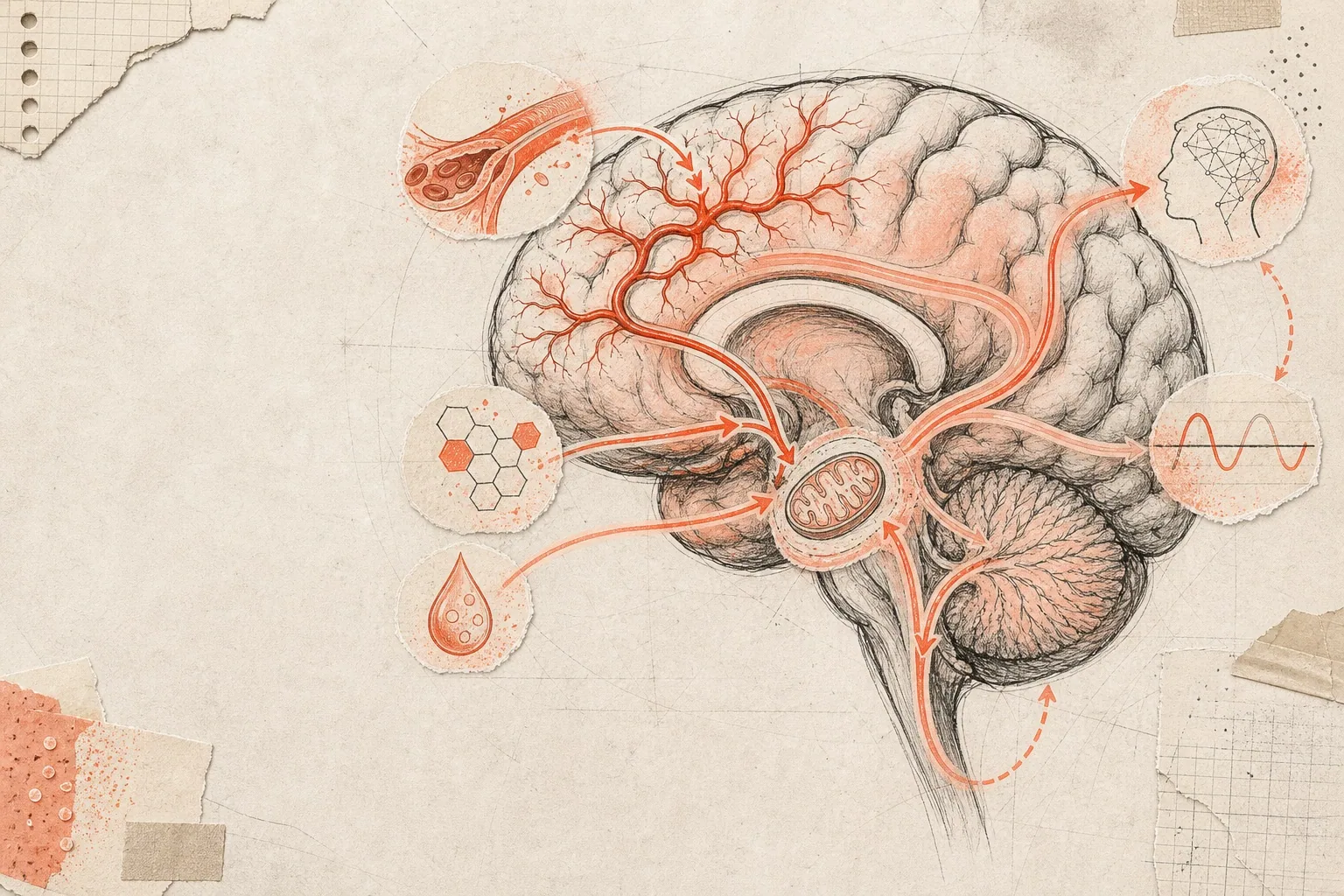
See the menopause guide“Fuel” sounds like one substance in one tank. Brain-energy researchers instead study a sequence of delivery, uptake, conversion and use.
Delivery
Blood vessels adjust flow as brain regions work. A delivery problem isn't the same thing as low blood sugar.
Fuel entry
The brain normally uses a great deal of glucose and can also use ketones. Researchers measure uptake. Symptoms can't show it.
Conversion
Neurons, support cells and mitochondria exchange and convert energy. No single routine test captures the whole process.
Demand and recovery
Mental work changes activity and energy demand. Fatigue researchers also study motivation, performance and recovery.
The studies didn't all find the same thing. Each study measured a particular condition, group and part of brain energy.
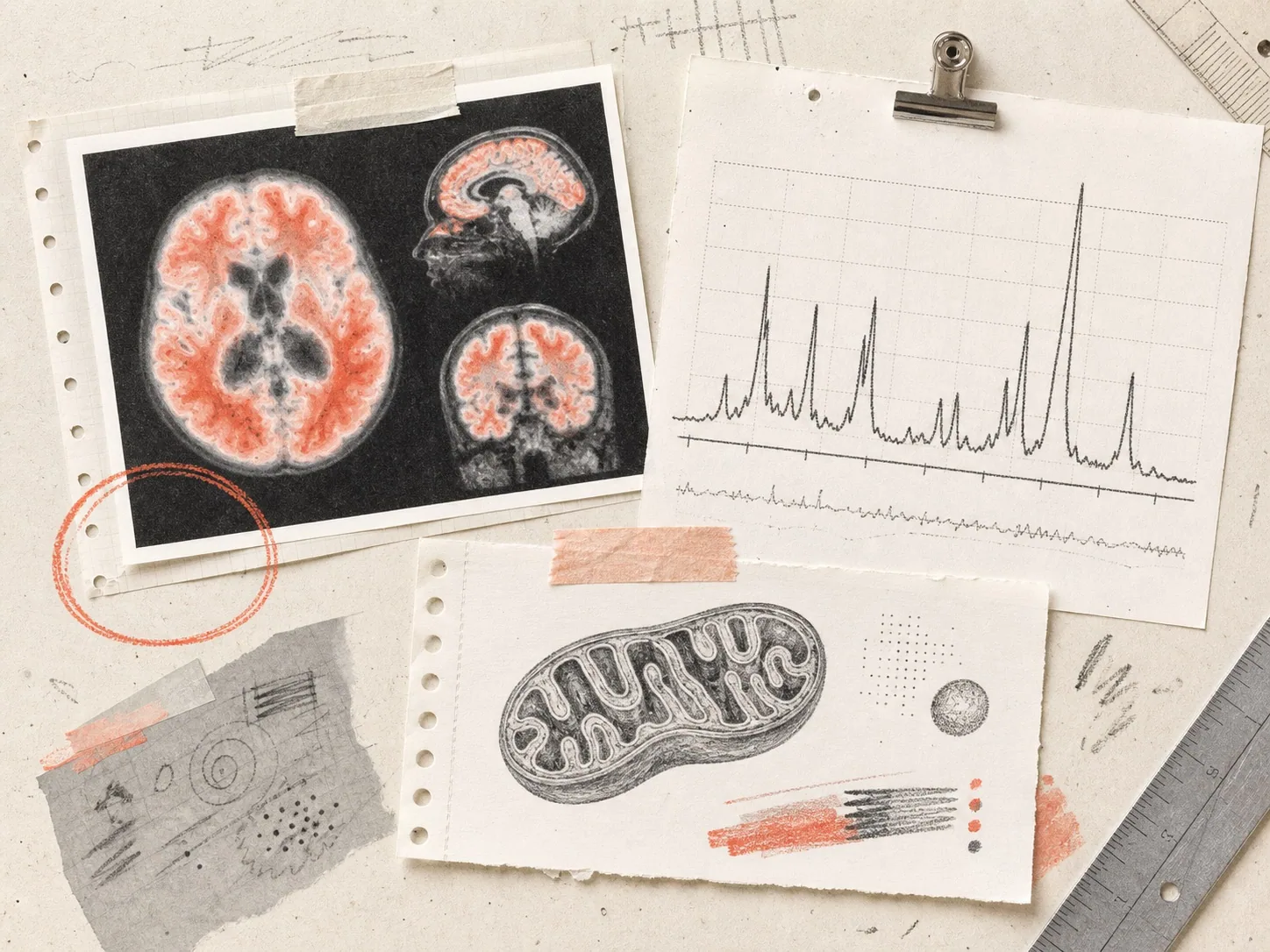
Post-COVID FDG-PET scans
Thirteen of 14 eligible studies reported reduced glucose uptake. The frontal cortex was the most consistent location, but results varied greatly between studies. So it's a hint for research, not for diagnosing one person. [2]
7-tesla spectroscopy
The study found higher brain lactate in its ME/CFS group and lower total choline in its long COVID group. Chemicals in resting muscle weren't significantly different. Similar thinking problems didn't mean identical chemistry. [3]
Menopause imaging
Imaging markers changed across menopause stages and largely stabilized after menopause. The study saw some gray-matter recovery and linked ATP measures in key regions to preserved thinking. [4]
Ketone research
MCTs can raise ketone availability. The unanswered question is whether that improves the particular problem causing a person’s brain fog.
What is established
This is basic physiology. It doesn't show a ketone shortage, a treatment target or a useful home dose for unexplained brain fog.
Mild cognitive impairment
The 280 participants had mild cognitive impairment and received study-specific MCT and DHA interventions. That group can't stand in for people searching for a general brain-fog remedy. [5]
Healthy young adults
The participants were healthy young adults, not patients with persistent brain fog. The study tested one-time and four-week intake under a research protocol. [6]
Possible downsides
MCT products can cause digestive upset and may not fit every medical or dietary situation.
Timing can't diagnose a metabolism problem. It can give you a more useful description to bring to a clinician or use in the right guide below.
Check whether it happens with lightheadedness, a racing heart, dim vision or relief after lying down.
See upright-symptom clues →Notice whether the decline is immediate or delayed until later that day or the next day.
Understand delayed crashes →Look for snoring, breathing pauses, unrefreshing sleep, morning headache or a large difference between rested and unrested days.
Check sleep-related clues →Notice the task, how long clarity lasts, what changes first and how long recovery takes after stopping.
See cognitive rehabilitation options →Not with one standard “brain fuel” test. Doctors usually start with how symptoms behave and common treatable causes.
These tools don't read out a single “brain-energy level,” and they aren't routine tests to request for brain fog.
A clinician can review onset, medications, sleep, nutrition, mood, infections, hormonal changes, neurologic findings and related symptoms. Testing can then follow the history and examination instead of trying to scan every possibility.
Prepare for an appointmentResearch watch
These registered studies show where researchers are looking. A listed trial means researchers are testing a question, not that the treatment works.
Two recruiting studies are testing defined medium-chain-fatty-acid interventions in diagnosed MCI populations.
A RECOVER platform study is testing structured cognitive interventions without assuming one metabolic cause.
A controlled research study is examining brain blood flow during specific physiological challenges. This isn't a do-it-yourself experiment.
No. Brain fog describes symptoms. It doesn't measure brain glucose. Sleep loss, medication effects, illness, blood-flow changes and many other problems can produce similar thinking difficulties.
Yes. The brain can use ketones as an energy source. That fact doesn't show that a person with brain fog needs more ketones or that MCT oil will treat the cause of their symptoms.
Current randomized studies don't show MCT oil works as a general treatment for unexplained brain fog. They've mainly involved mild cognitive impairment or healthy volunteers.
Research tools such as FDG-PET and magnetic resonance spectroscopy can measure selected aspects of metabolism. They aren't routine brain-fog tests and can't by themselves identify why one person has brain fog.
Sources
Every treatment or mechanism statement above is tied to the condition and people actually studied.
Research roadmap covering brain fuel use, neurovascular coupling, neuron-glia metabolism and major unanswered questions.
Systematic review and meta-analysis of 14 post-acute COVID-19 FDG-PET studies, including 584 scans.
7-tesla magnetic resonance spectroscopy study comparing 24 people with ME/CFS, 25 with long COVID and 24 healthy controls.
Brain imaging study across premenopause, perimenopause and postmenopause, including measures related to brain energy metabolism.
Twelve-month randomized study of MCT and DHA interventions in 280 people with mild cognitive impairment.
Randomized crossover work examining one-time and four-week MCT intake in healthy young adults.
Meta-analysis of 30 randomized trials examining linoleic acid intake and inflammatory markers.
Review separating performance, motivation, physiology and neural activity in cognitive fatigue research.
Recruiting study of a ketogenic MCT formulation with B vitamins in mild cognitive impairment.
Recruiting study of medium-chain fatty acids in people with newly diagnosed mild cognitive impairment.
RECOVER cognitive rehabilitation platform study for long COVID cognitive symptoms.
Research study examining cerebral blood-flow responses in people with long COVID brain fog.