The Clarity Code: Your Brain Fog Recovery Protocol
A structured way to identify the likely cause of brain fog, stabilize the basics in one week, and know when to move from self-management to testing.
Prepared by the What Is Brain Fog editorial desk. Clinically reviewed by Dr. Alexandru-Theodor Amarfei, M.D.
Last updated: • Editorial policy • Citation policy
Use pattern recognition first so you stop trying to fix everything at once.
One week of sleep, light, food, and movement changes to make the signal clearer.
Use cause-specific tests and rule-outs when the pattern points beyond lifestyle alone.
Key Takeaways
- • Most brain fog improves fastest when you stop guessing and identify the dominant pattern first.
- • Sleep timing, morning light, protein-forward meals, and post-meal walking are the cleanest first-week tests.
- • Medication effects, sleep apnea, thyroid issues, ferritin depletion, B12 problems, and post-viral syndromes are common misses.
- • If symptoms are sudden, progressive, or paired with neurologic red flags, skip self-experiments and seek urgent care.
What Brain Fog Actually Is
The adult human brain contains about 86 billion neurons. Brain fog is what it feels like when the network is still operating but no longer running efficiently because inflammation, poor energy delivery, sleep disruption, or network overload is interfering with clear signal. Source
Your Brain Is Inflamed
Microglia and cytokines can turn up neural “static,” making concentration, recall, and mental stamina worse after infection, stress, poor sleep, or inflammatory meals.
SourceYour Brain Is Under-Fueled
The brain is metabolically expensive. When glucose handling, oxygen delivery, thyroid signalling, or nutrient status are off, cognition often slows before anything else.
SourceYour Brain Is Behind on Cleanup
Sleep supports waste clearance. The glymphatic system is most active during deep sleep, so chronically shallow or fragmented sleep can leave the brain feeling noisy and slow.
SourceYour Brain Is Poorly Coordinated
Higher-order cognition depends on stable communication between attention, memory, emotional, and autonomic networks. When coordination drops, the work feels heavier.
Source"Fog hits complex thinking before simple tasks because the prefrontal cortex is expensive to run. When sleep, glucose stability, oxygen delivery, or inflammatory load are off, higher-order thinking is usually the first thing to wobble."
Brain Fog vs Normal Forgetfulness
Normal forgetfulness is occasional, usually mild, and does not consistently track with sleep, meals, stress, posture, illness, or medications. Brain fog is more global: slower thinking, worse working memory, lower mental stamina, and a stronger sense that the brain is underpowered. If the pattern is progressive, disruptive, or noticed by others, treat it as a medical question rather than a personality quirk.
The Five Fog Factors
Most cases of brain fog are not random. They usually cluster into one or more buckets. Start with the strongest bucket first instead of launching five different theories at the same time.
Disconnection
Have you become more isolated in the past year?
Social isolation triggers the same inflammatory cascade as a physical wound. Lonely people show hippocampal volume loss and elevated IL-6.
- ☐ You work alone, spend most days on screens, or rarely have meaningful face-to-face contact
- ☐ Stress feels “often on,” even when life looks manageable from the outside
- ☐ The fog gets worse when you feel isolated, overloaded, or emotionally cut off
"Send one text message to someone you haven't spoken to in a week. Social micro-doses reduce inflammatory markers measurably."
Inflammation
Do you feel worse 24–48 hours after certain meals?
Cytokines from gut dysbiosis, food reactions, or chronic infection cross the blood-brain barrier and activate microglia, causing brain-specific inflammation.
- ☐ Fog crashes after processed meals, illness flares, or inflammatory triggers
- ☐ Digestive symptoms, autoimmune symptoms, chronic pain, or post-viral symptoms travel with the fog
- ☐ You feel puffy, hot, wired, or heavy after certain meals or poor sleep
"Run one low-noise meal pattern for a week and note whether post-meal crashes become less predictable."
Depletion
Have you had blood work in the past 12 months?
Low iron (ferritin <30), B12 (<400), vitamin D (<40), and magnesium are the four most common nutritional drivers of brain fog - and standard blood panels often miss them.
- ☐ You are tired even after enough time in bed
- ☐ There is a history of heavy periods, low intake, restrictive dieting, gut malabsorption, or thyroid symptoms
- ☐ Hair thinning, cold intolerance, restless legs, brittle nails, or low stamina fit the story
"Book a blood test today. Request ferritin, B12, vitamin D, and RBC magnesium - the four tests most likely to reveal a correctable cause."
Dysregulation
Do you wake at different times or feel "wired but tired"?
Your glymphatic system only activates during deep sleep, washing away β-amyloid and metabolic waste. Circadian disruption and HPA axis dysfunction prevent this.
- ☐ Wake time drifts, bedtime stretches late, or sleep quality feels shallow
- ☐ You use screens close to bed and rarely get morning light soon after waking
- ☐ You are tired in the morning but wired at night
"Set one alarm - for your wake time, not bedtime. Same time every day, including weekends. This single change anchors your entire cortisol-melatonin rhythm."
Toxicity
Are you taking antihistamines, sleep aids, or antidepressants?
Anticholinergic medications (Benadryl, certain antidepressants), mold exposure, and digital overload are three of the most under-recognised fog triggers.
- ☐ The fog followed a new medication, dose change, sedating antihistamine, or multiple daily meds
- ☐ Water-damaged buildings, fumes, or obvious exposure changes track with symptoms
- ☐ Your non-work hours are full of alerts, multitasking, and screen switching
"Check your medications against the anticholinergic burden scale. Even OTC antihistamines can significantly impair cognition - and your doctor can often suggest alternatives."
Brain Fog Severity Score
Use the Story Analyzer as a structured symptom inventory. It is useful for pattern tracking, but it is not a validated diagnostic scale and should be paired with rule-outs when the pattern is persistent or medical.
Open Story Analyzer →The 7-Day Clarity Reset
One week. One added habit per day. The goal is not perfection. The goal is to make the pattern cleaner so you can tell whether sleep timing, food timing, movement, or recovery load are actually part of the problem.
Anchor your sleep time
DYSREGULATIONSame wake time every day, seven days a week. Wake time is usually more powerful than chasing a perfect bedtime because it anchors your circadian rhythm.
Screens off by 9pm
DYSREGULATIONBlue-enriched light can suppress melatonin and delay sleep onset. Cut phones, tablets, and laptops in the two hours before bed whenever possible.
Morning sunlight, 10 minutes
DYSREGULATION + DEPLETIONGo outside within 30 minutes of waking. Morning light helps set your cortisol rhythm and your melatonin timer for approximately 14 to 16 hours later.
Phase-shifting effects of morning lightProtein-first breakfast
INFLAMMATIONA protein-forward, lower-refined-carb breakfast often smooths post-meal volatility. Keep changes realistic and track how your own pattern responds.
10-minute walk after lunch
INFLAMMATION + DYSREGULATIONWalk at conversational pace after your largest meal. Even short post-meal walks can reduce glucose spikes and make afternoon fog less severe.
Hydration baseline
DEPLETIONUse roughly 2 liters per day as a starting point, then adjust for climate, exercise, body size, salt losses, and clinician guidance.
Reassess and plan week 2
ALL FACTORSScore your symptoms against day 1. Keep what clearly helped, drop what did not, and use the cleaner pattern to choose your next tests or protocols.
What to Expect
Fatigue can feel unchanged or temporarily worse while wake time and light exposure reset.
Mornings often feel sharper first. Afternoon fog may still lag behind.
The pattern usually gets easier to read: fewer crashes, better mornings, or more stable energy.
Guidelines typically recommend know which factor is moving and which problem still needs testing or escalation.
Symptom-Matching Guide
Before you stack supplements or new routines, rule out the common medical misses. Match your strongest symptom pattern to the most likely driver, then take the specific next step.
| Symptom Pattern | Likely Cause | Action This Week | Interlinks |
|---|---|---|---|
| Fog after starting/changing medication | Meds | List all medications and timing changes. Review anticholinergic burden with your clinician/pharmacist. Source | |
| Worst in morning / crashes after meals | Sugar | Use protein-first meals and post-meal walking for 2 weeks, then correlate with glucose-focused testing. Source | |
| Unrefreshed despite 7+ hours in bed | Sleep Apnea | Request formal sleep testing and document daytime impact to support referral. Source | |
| Heart races / fog worsens on standing | Pots | Capture orthostatic pattern data and discuss autonomic evaluation with cardiology/neurology. Source | |
| Lifelong focus difficulty (not recent onset) | ADHD | Run validated ADHD screening and compare with sleep, anxiety, and medication confounders. Source | |
| History of tick bites / joint pain + fog | Lyme | Use guideline-aligned infectious workup with differential checks against post-viral and autoimmune causes. Source | |
| Head injury / contact sports | Pcs | Pair neurocognitive and vestibular assessment with graded return-to-load planning. Source | |
| Female 40+ / cycle changes + fog | Menopause | Discuss perimenopausal pattern tracking and hormone-related differential workup. Source | |
| Post-COVID or post-viral onset | Long COVID / ME/CFS | Evaluate autonomic, inflammatory, and recovery-load contributors rather than a single mechanism. Source | |
| Digestive symptoms alongside fog | Gut | Use structured GI-focused differential and track meal-linked symptom timing. Source | |
| Water-damaged building / musty smells | Mold | Prioritize exposure assessment and moisture-source remediation alongside medical rule-outs. Source | |
| Persistent worry, panic, or low mood alongside fog | Anxiety | Use PHQ-9 and GAD-7 to clarify whether anxiety or depression is amplifying the fog while still checking medical overlaps. Source | |
| Cold intolerance, weight changes, fatigue + fog | Thyroid | Ask for TSH, Free T4, and thyroid-antibody context rather than relying on TSH alone. Source | |
| Fog worsens after processed meals / improves when eating clean | Metabolic Vascular | Track anti-inflammatory meal composition and pair with metabolic lab interpretation. Source |
Suggested first-pass blood panel
A useful first conversation is ferritin, vitamin B12, folate, vitamin D, CBC, TSH, and Free T4, then a fuller thyroid or metabolic workup if the story still points there. Standard lab ranges are built to detect disease, not often to explain why someone feels cognitively flat.
When to See a Doctor
Self-management is reasonable for common patterns such as poor sleep timing, obvious food crashes, or a recent period of overload. It is not enough for red flags, new neurologic symptoms, or a fog pattern that stays stubborn after a few structured weeks.
- • Sudden confusion, facial droop, one-sided weakness, trouble speaking, or a severe new headache
- • Seizures, blackouts, fever with confusion, or rapidly worsening cognition
- • Progressive decline over weeks to months, especially when family members notice clear change
- • Brain fog that does not improve after 4 to 8 weeks of structured sleep, food, and medication review
If self-management has not moved the needle after 4 to 8 weeks, bring a short timeline, medication list, sleep story, meal pattern, and symptom triggers to your clinician. That usually gets you farther than saying only “I have brain fog.”
Can Brain Fog Be Reversed?
Often, yes. Brain fog from sleep debt, nutrient depletion, medication effects, blood sugar volatility, thyroid dysfunction, and some post-infectious states can improve substantially when the cause is identified and addressed.
The main distinction is between reversible bottlenecks and ongoing management problems. Nutrient deficiency, unstable sleep timing, and medication burden often improve relatively quickly. Conditions such as sleep apnea, autoimmune illness, menopause transition, POTS, or Long COVID may still improve, but they usually require longer treatment plans and more clinician involvement.
Progress is rarely a straight line. The first sign is often not “perfect clarity.” It is better mornings, fewer crashes, or a clearer trigger pattern. That still counts as real recovery data.
The Minimalist Supplement Stack
Keep supplements small and boring. Add one at a time. Most people do better with a short, testable stack than with fifteen capsules and no way to tell what changed.
Magnesium L-Threonate
Use if sleep quality, tension, or low magnesium intake are plausible contributors. GI tolerance and kidney disease still matter.
Typical use: Often used at a label-equivalent dose providing about 1.5-2 g Magtein daily, divided.
Omega-3 DHA/EPA
Best fit when inflammatory load or low seafood intake is part of the pattern. Review anticoagulants and bleeding history first.
Typical use: A common starting range is 1-2 g/day combined EPA+DHA with meals.
Methylated B-Complex
Fits best when intake is poor, ferritin/B12/folate are low, or homocysteine is elevated. It should follow labs whenever possible.
Typical use: Use a standard once-daily product unless labs or clinician guidance suggest otherwise.
Why creatine is not in this default stack: the broader supplements guide rates creatine highly, especially for post-viral and brain-energy patterns, but this page keeps the default stack narrower for people starting with sleep, inflammatory load, and nutrient-rule-out overlap.
The Recovery Hierarchy: What to Fix First
Start with the foundations that most often move cognition: sleep, diet, supplements only when justified, movement, autonomic regulation, then mind-level load management.
Sleep Optimization
Common causes: Air, Cortisol, Digital
Anti-Inflammatory Diet
Common causes: Alcohol, Celiac, Diabetes
Strategic Supplementation
Common causes: Alcohol, Anemia, Celiac
Movement & Exercise
Common causes: Caffeine, Depression, Eds
Autonomic Balance
Common causes: Anxiety, Eds, Fibromyalgia
Mind & Meditation
Common causes: Anxiety, Autism, Burnout

Use one distinguishing question to separate overlapping causes before ordering broad tests.
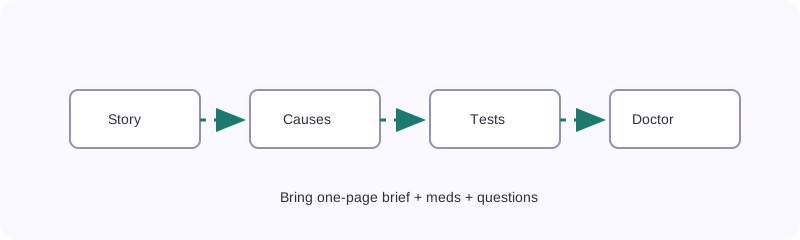
Turn symptom noise into a short, structured conversation for faster clinical decisions.
Frequently Asked Questions About Brain Fog
How long does brain fog usually last?
It depends on the cause. Short-lived fog from sleep loss, medication changes, dehydration, or blood sugar volatility can improve within days to weeks. Layered patterns such as menopause, post-viral illness, thyroid disease, or sleep apnea usually improve more slowly and often need targeted treatment rather than generic lifestyle advice.
What is the fastest way to start clearing brain fog?
Start with the highest-yield basics: a fixed wake time, morning light, lower-refined-carb meals with enough protein, post-meal walking, hydration, and a medication review. Those steps do not solve every case, but they make the pattern easier to read and often improve sleep, glucose stability, and recovery load quickly.
Can brain fog be a sign of something serious?
Yes. Sudden onset, one-sided weakness, facial droop, new speech trouble, seizures, severe headache, rapidly progressive decline, or confusion with fever all need urgent medical evaluation. Even without emergencies, fog that persists despite a few structured weeks of self-management deserves formal rule-outs such as sleep apnea, thyroid disease, nutrient deficiency, infection, or autonomic dysfunction.
Does brain fog show up on a brain scan?
Usually not on routine MRI or CT. Brain fog is often driven by sleep disruption, inflammation, autonomic dysfunction, medication effects, or metabolic patterns that standard imaging does not capture well. A normal scan does not prove that the symptoms are imagined.
Is brain fog the same as dementia?
No. Brain fog usually feels fluctuating, trigger-linked, and reversible once the upstream cause is treated. Dementia is typically progressive, affects function more broadly, and does not improve just because sleep, food timing, or stress load improve. If decline is progressive or others notice major personality or memory changes, escalate promptly.
Which vitamin deficiencies most often contribute to brain fog?
Ferritin depletion, low vitamin B12, low folate, low vitamin D, and sometimes magnesium insufficiency are common contributors. They overlap heavily with thyroid issues, sleep problems, and inflammatory patterns, so they should be interpreted in context rather than as isolated lab numbers.
Brain fog responds better to a clean sequence than to panic. Notice the strongest pattern, test the most plausible bottlenecks first, and let better data narrow the next move.
This information is for educational purposes only. Typically, consult with a qualified healthcare professional.
Related Causes
Clarity code users need high-yield causes that commonly explain broad fog patterns.