The Brain Fog Diet: What to Eat and Avoid for Mental Clarity
This isn't a forever food religion. It's a 21-day testing protocol for people whose fog worsens around meals, crashes,
cravings, gut symptoms, unstable energy, or inflammatory flare patterns. The goal is to remove noise, find your trigger
pattern, and then rebuild toward a broader brain-healthy diet you can actually keep.
Prepared by the editorial desk. Clinically reviewed by Dr. Alexandru-Theodor Amarfei, M.D.
1 Use this as a 21-day testing protocol, not a forever diet identity.
2 Start with the biggest hitters first: sugar, ultra-processed food, alcohol, sugary drinks, and highly refined cooking oils.
3 If your fog is meal-linked, protein-first meals and post-meal walking are the fastest low-risk experiments.
4 After elimination, rebuild toward a MIND-style pattern with fish, olive oil, berries, greens, fiber, and tolerated whole foods.
5 If you have weight loss, GI bleeding, celiac concern, eating-disorder history, or no improvement after a few structured weeks, bring a clinician or dietitian in early.
These aren't diagnoses. They're recurring patterns that help you decide what to test first and which cause page or test
explainer fits the story best. If terms like histamine,
low-FODMAP, or
gut-driven fog are new, use those explainers before you
over-restrict the diet.
Find Your Pattern
6 Brain Fog Food Profiles
Most food-related brain fog falls into one of these patterns. Find yours to know where to start.
Sugar Crasher
Post-meal crashes, energy swings, shaky when hungry
Fog worsens 1-4 hours after sugar or white flour. 'Hungover without drinking' feeling. Recurrent thrush or yeast infections. History of antibiotics or PPIs. Intense sugar cravings.
Best First Move
Test a 72-hour sugar elimination. If fog lifts, continue strict sugar and white flour avoidance for 4-8 weeks.
Stress and brain inflammation also disrupt gut function. Breaking the cycle often requires addressing both ends.
What Can Break This Cycle
GutFix dysbiosis, heal lining
LPSReduce with probiotics, fiber
BBBOmega-3s, sleep, lower stress
BrainAnti-inflammatory support
Caffeine and brain fog
Caffeine is a double-edged tool
Caffeine can improve alertness in the short term, but it can also become the patch for sleep debt, dehydration, and blood
sugar volatility. During Week 1, reduce to one morning dose or swap part of the habit to green tea instead of quitting
abruptly and confusing the experiment with withdrawal headaches.
Repeat the meals that felt safest, aim for a steadier protein and fiber rhythm, add tolerated anti-inflammatory foods, and stop changing variables just because the internet suggested six more.
Watch For
Better mornings, fewer crashes, calmer digestion, and whether the symptom pattern now points more clearly to glucose, gut, histamine, or inflammatory load.
Test one food group at a time with a 72-hour observation window. If a food reproduces the same fog pattern, remove it again and move on instead of arguing with the result.
Watch For
Delayed reactions, sleep disruption, return of bloating or flushing, and whether the effect is strong enough to repeat on re-test.
If food is a real amplifier, the first useful signal often appears inside 5 to 10 days: fewer post-meal crashes, calmer
digestion, or better mornings. The reason to keep going through 21 days is that the first week removes noise, the second
week stabilizes, and the third week tests reintroductions.
If nothing at all changes after a few structured weeks, that is useful information too. It lowers the odds that food is the primary driver and pushes sleep, thyroid, medication, iron,
autonomic dysfunction, or mood higher on the list. At that point, the more useful next click is usually
medical rule-outs or the broader
Clarity Code, not another random food removal.
If this food pattern fits, these are the next tests people usually want
People usually don't want a giant lab directory here. They want the next most plausible test based on the pattern they
just recognized: blood sugar, celiac, histamine, gut, inflammation, or broader rule-outs when the diet signal stays muddy.
If a meal is mostly sugar or refined starch, the brain often pays later. This is the cleanest first removal for people who crash mid-morning or mid-afternoon.
Swap
Use berries, fruit paired with protein, or a protein-first breakfast instead of pastries, cereal, and sweet snacks.
The strongest diet signal in modern nutrition isn't a single villain ingredient. It's the cumulative effect of ultra-processed meals that displace fiber, protein quality, micronutrients, and stable energy.
Swap
Build around simple proteins, vegetables, fruit, legumes if tolerated, oats, potatoes, rice, and olive oil.
This page doesn't treat seed oils as a standalone toxin story. The more defensible move is reducing highly refined oils that travel with ultra-processed food while prioritizing extra virgin olive oil and other less-refined fats.
Swap
Use extra virgin olive oil as the default, with avocado oil or coconut oil when the cooking context fits.
Alcohol can worsen next-day fog through sleep disruption, dehydration, gut irritation, and simple dose-related cognitive drag. During an elimination phase it's noise you don't need.
Swap
Use sparkling water, tea, or a salt-and-citrus mocktail if the ritual matters.
Liquid sugar is the fastest route to a glucose spike, and the stimulant-plus-sugar combination in energy drinks can make symptom tracking nearly impossible.
Swap
Replace with water, unsweetened tea, coffee before noon, or electrolytes when dehydration is part of the story.
Refined carbohydrates eaten alone: white bread, sweet cereal, pastries, crackers, large juice-heavy breakfasts.
Why
This profile is less about “carbs are bad” and more about rapid rises and drops. Pair carbohydrates with protein, fat, and fiber before testing stricter changes.
Stacked inflammatory triggers such as ultra-processed meals, alcohol, clear trigger foods, and in some cases dairy or nightshades if the pattern strongly fits.
Why
This is the broadest profile, but the long-term goal is still a diverse anti-inflammatory food pattern rather than permanent restriction.
The highest-impact food swaps for reducing brain fog. Start here.
Emphasize
Fish & eggsOmega-3s, protein
Olive oil & nutsHealthy fats
Berries & greensAntioxidants
Fiber & fermented*Gut health
Remove First
Sugary drinksGlucose spikes
Ultra-processedAdditives, oils
AlcoholInflammation
Refined oilsInflammatory
*
Skip fermented foods during histamine testing phase
Foods to build around
11 brain-boosting foods to eat regularly
Fatty fish
Salmon, sardines, mackerel
Fish belongs here because it is part of the strongest long-term dietary patterns for brain health, even though supplementation trials alone show mixed cognitive results.
How to use it
Aim for 2 to 3 servings weekly if tolerated and practical.
Berries fit the MIND diet for a reason. They are one of the cleaner whole-food ways to add polyphenols without a sugar load that overwhelms the rest of the meal.
How to use it
Use frozen berries in yogurt, oats, or a protein smoothie.
This is the most defensible primary cooking and dressing fat for a brain-health pattern, especially once highly refined oils and ultra-processed foods are reduced.
How to use it
Use as the default dressing and low-to-medium heat cooking fat.
Curcumin is interesting because the mechanism is plausible and the human evidence is growing, but it is still best treated as a useful layer rather than a miracle food.
How to use it
Use with black pepper and a fat source in meals or lattes.
Artichoke, leek, asparagus, onion, garlic if tolerated
These foods matter because they feed bacteria that produce short-chain fatty acids such as butyrate, which helps connect the gut story to the brain story.
How to use it
Increase gradually, especially if you suspect SIBO or IBS.
Broccoli sprouts are worth calling out because they contain much more sulforaphane precursor than mature broccoli and fit an anti-inflammatory food pattern cleanly.
How to use it
Use raw sprouts in salads or bowls; add mustard powder to cooked crucifers if desired.
Micronutrients that quietly change how this diet works
Food quality matters, but so do the quiet nutrient gaps that make a “healthy” diet feel strangely ineffective. If the
elimination phase lowers noise but energy, focus, or resilience still stay flat, these are the next nutrition angles worth
checking before piling on more restriction. This is where it makes more sense to hand off to
supplements or
rule-outs than to keep tightening the diet.
Choline
Matters for acetylcholine, attention, and memory. This is one of the biggest quiet gaps in lower-protein or egg-free diets.
Food Sources
Eggs, salmon, chicken, soy foods, shiitake, liver if used.
Look Harder Here When
Vegetarian or vegan intake is low, eggs are avoided, or “wired but blank” focus issues persist.
These approaches aren't enemies. The brain fog diet is best understood as a short diagnostic phase that often rebuilds
toward a MIND-style or Mediterranean-style maintenance pattern once personal triggers are clearer. If you already know the
trigger phase matters less than the long-term eating structure, go straight to
the Mediterranean-MIND pattern.
Plan
Best for
Strengths
Caveats
Brain Fog Diet
People who suspect specific trigger foods but still want a structured, evidence-based food base.
Short elimination phase, symptom tracking, reintroduction, profile matching.
More restrictive at the start and easier to overdo without a clear endpoint.
MIND Diet
Long-term cognitive protection and a sustainable maintenance pattern.
Strongest brand recognition for brain-health eating; emphasizes greens, berries, fish, nuts, and olive oil.
Less useful when the immediate question is “which food is triggering my fog right now?”
Mediterranean Diet
General anti-inflammatory and cardiometabolic support with broad evidence.
Flexible, sustainable, and strongly aligned with overall health outcomes.
May not identify individual gluten, histamine, or gut-trigger patterns by itself.
None of these studies replace the core pattern: simplify the diet, stabilize the routine, then reintroduce methodically.
What they do offer is better context for which details are gaining support and which ones still belong in the “interesting,
but secondary” bucket.
Ultra-processed food remains one of the strongest modern diet signals
The 2024 systematic review strengthens the practical case for removing ultra-processed food first, because it captures multiple bad actors at once instead of over-fixating on one ingredient.
Curcumin and sulforaphane are still interesting, but as layers not anchors
The 2025 curcumin meta-analysis and 2025 sulforaphane review make these compelling additions for inflammation-minded readers, but they should sit on top of the core meal pattern, not replace it.
The newer time-restricted eating literature keeps pointing toward better glucose control, circadian alignment, and lower inflammatory load when eating windows are consistent and late-night eating drops.
Fermented foods still deserve a place, with a histamine caveat
The microbiome and inflammation data remain interesting enough to keep fermented foods in the conversation, but only for people who aren't actively testing a histamine-overload pattern.
Use these as templates, not calorie prescriptions. Build the plate around protein, tolerated produce, stable carbs when
needed, and fewer random snack variables.
Day 1
Breakfast
Scrambled eggs (3) with sautéed spinach in olive oil. Black coffee or green tea.
Lunch
Grilled chicken thigh, large green salad (rocket, cucumber, celery, olive oil + lemon dressing). Sweet potato wedges.
Dinner
Baked salmon with roasted broccoli and cauliflower. Brown rice.
Swap: Histamine: use fresh-caught fish only, not leftover.
Turkey and avocado lettuce wraps. Side of carrot sticks.
Swap: Histamine: use fresh turkey, skip avocado, add cucumber.
Dinner
Baked cod with pesto, served with roasted asparagus and brown rice.
Swap: Histamine: make fresh basil + olive oil + pine nut pesto, no parmesan.
Day 7
Breakfast
Full cooked breakfast: eggs, grilled tomato, sautéed mushrooms, wilted spinach, GF toast with butter.
Swap: Histamine/Inflamer: omit tomato. Gut-Wrecked: omit mushrooms. Histamine: use chard.
Lunch
Bone broth with shredded chicken, ginger, and rice noodles. Side of steamed greens.
Dinner
Herb-crusted salmon with roasted sweet potato mash and steamed green beans. Olive oil drizzle.
Swap: Histamine: fresh fish only.
Interactive planner
Calorie and protein planner
This is a rough planning tool, not a medical prescription. Use it to make the meal plan practical enough to follow without under-fueling, especially if you are cutting out default processed calories.
Your planning targets
Calories
1985 kcal
Estimated daily target
Protein
87-116 g
Daily target range
Fiber
25+ g
Minimum daily target
Hydration
2.4 L
Baseline fluid estimate
How to use this with the meal plan
Average about 660 kcal per meal if you eat 3 times daily.
Try to land at 25 g+ of protein by breakfast if blood sugar crashes are part of the pattern.
Keep discretionary snacks around 200 kcal so the elimination phase does not become a grazing phase.
If you feel worse on the protocol, review whether you cut total calories too hard, not just whether a food was “bad.”
Routine
Meal Timing for Brain Fog
Use a consistent eating window, front-load protein earlier in the day, and avoid turning late-night snacking into part of the experiment. Meal timing matters because glucose control and sleep quality are tightly linked.
•Keep caffeine before noon whenever possible.
•Finish the last full meal at least 3 hours before bed.
•Use protein and fiber early in the day if your fog clusters after breakfast or lunch.
Mild dehydration can worsen attention, working memory, and fatigue even before you feel dramatically thirsty. This matters
more during elimination weeks because people often cut sugary drinks and alcohol at the same time. For people who also have
dizziness, orthostatic symptoms, heavy sweating, or diarrhea, hydration and electrolytes can change the reading of the whole
experiment. If the pattern is more dizziness than digestion, jump to
POTS and orthostatic intolerance instead of blaming
food for everything.
Real meal patterns that reduce common brain fog triggers
The goal is not perfection or “clean eating.” It is a repeatable pattern: protein first, lower-glycemic fruit, olive-oil-based meals,
and Mediterranean-style foods that are easier to test and reintroduce without hiding the trigger.
Protein-first meal
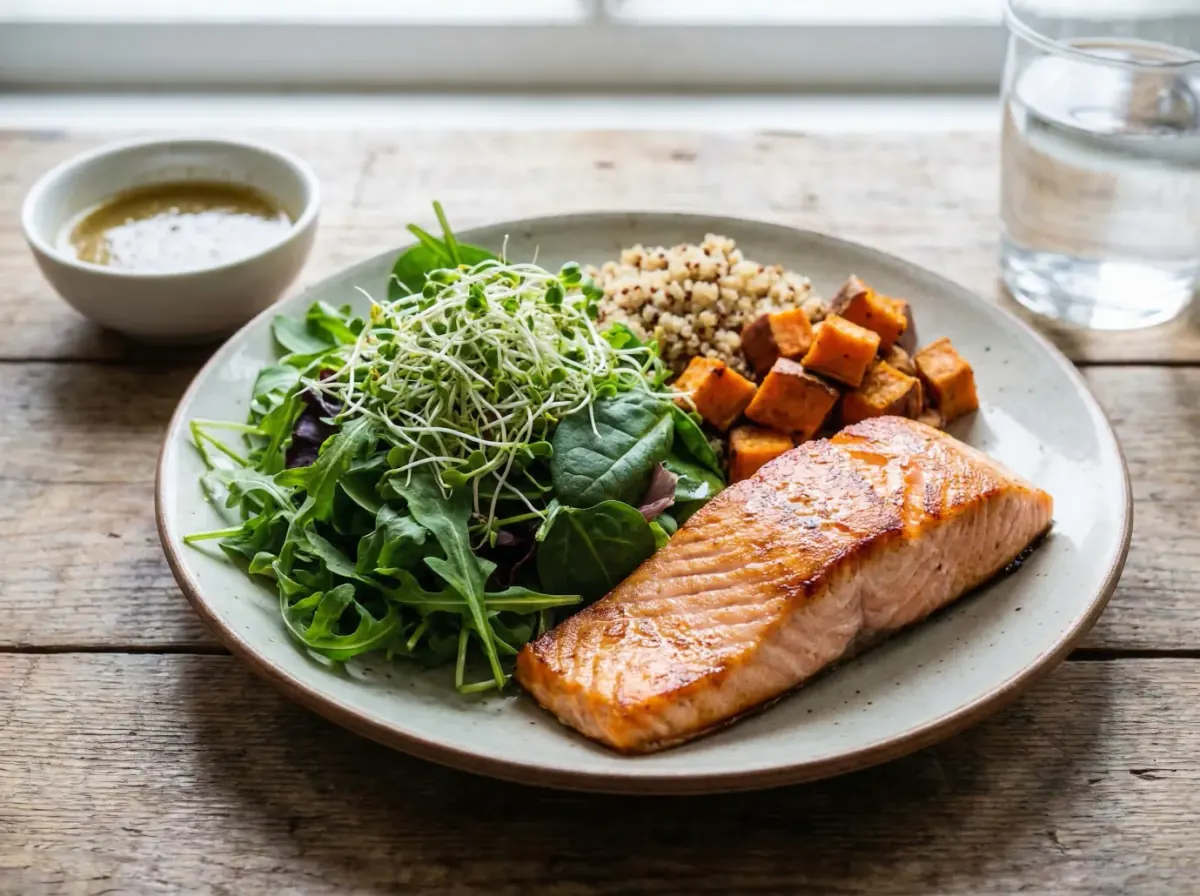
Wild Salmon Clarity Bowl
Salmon, sprouts, greens, and intact carbs in a simple editorial plate shot.
How long does it take for diet changes to help brain fog?
Many people who truly have meal-linked fog notice a cleaner pattern within about 5 to 10 days of removing the biggest triggers and stabilizing protein, fiber, and meal timing. The full 21-day protocol matters because Week 1 reduces noise, Week 2 stabilizes, and Week 3 tests reintroductions instead of guessing.
Sometimes. The most believable pattern isn't “every food is bad,” but a repeatable cluster of fog plus GI symptoms, flushing, headaches, bloating, itching, reflux, or delayed post-meal worsening. That's why the protocol uses short elimination and measured reintroduction instead of permanent restriction.
Is the brain fog diet the same as the Mediterranean or MIND diet?
Not exactly. The maintenance pattern overlaps heavily with both, especially around olive oil, fish, greens, berries, nuts, and minimizing ultra-processed food. The difference is that this page starts with elimination to identify personal triggers and then rebuilds toward a broader Mediterranean or MIND-style pattern.
What should I eat for breakfast if I have brain fog?
A protein-forward breakfast is often the cleanest first test for a meal-linked fog pattern. Eggs, Greek yogurt if tolerated, tofu scramble, chia pudding with added protein, or leftovers plus fruit usually work better than pastries, cereal, or juice alone because they create a slower glucose rise.
For some people, yes, but it should be tested rather than assumed. Dairy can matter through lactose intolerance, casein reactivity, histamine load in aged cheeses, or simply because it travels with other trigger foods. The cleanest method is a short removal followed by a structured reintroduction.
Both are possible. Low-to-moderate caffeine can sharpen attention in the short term, but heavy intake or late-day use can worsen sleep and create the exact next-day fog it is trying to patch over. During Week 1, reduce to one morning dose instead of quitting cold turkey.
Do I need to remove gluten even if I don't have celiac disease?
Not automatically. If the pattern includes bloating, diarrhea, iron deficiency, headaches, or clear worsening after wheat-based meals, a short gluten-free trial may be reasonable, but celiac testing should come before a long-term gluten elimination whenever celiac is plausible.
The evidence is stronger for minimizing highly refined cooking oils and ultra-processed foods than for claiming that seed oils alone are the root cause of brain fog. In practice, prioritizing extra virgin olive oil and reducing ultra-processed intake captures most of the defensible benefit.
The protocol can still work, but protein, iron, B12, zinc, and choline need more deliberate planning. Use tofu, tempeh if tolerated, lentils if tolerated, edamame, pumpkin seeds, algae-based omega-3, and routine B12 supplementation instead of assuming the same plan works unchanged.
Bring one in early if you have unintentional weight loss, GI bleeding, severe food restriction, pregnancy, diabetes medication, eating-disorder history, suspected celiac disease, or no meaningful improvement after a few structured weeks. Restrictive diets are easiest to overdo when the problem is actually sleep apnea, thyroid disease, depression (/causes/depression), or medication burden. The SMILES trial showed dietary improvement can achieve 32% depression remission - but that means 68% need more than diet alone.