Cause #33 - sleep energy
Digital Overload and Brain Fog
Digital-related fog usually feels context-dependent: much worse during screen-heavy, notification-heavy, multitasking days and better when the environment is simplified.
Quick Answer
What's Going On?
Digital-overload fog usually feels overstimulated rather than medically ill. If your attention is shredded after nonstop tabs, notifications, scrolling, and context-switching, the fix starts with reducing input instead of hunting a lab value first.
If you do ONE thing - Free - Immediate
Put your phone in another ROOM for 90 minutes and do one focused task. Not flipped over. Not on silent. Physically absent.
Ward et al. (2017) showed that even a silent, face-down phone reduces available cognitive capacity. A 2025 RCT found that blocking mobile internet improved sustained attention and well-being. The intervention is physical distance, not settings changes. If your thinking feels steadier with the phone gone, that's data.
Self-Check
Your Screen Time Data
Before reading further, open your phone's Screen Time (iPhone) or Digital Wellbeing (Android) right now. Look at two numbers: total daily screen time and total daily pickups. These are your baseline. Most people are surprised by both. The average American checks their phone 96 times per day. Each check costs a context switch - and each context switch costs cognitive energy that does not come back for free.
Interactive
Which Sounds Like You?
Practical Tool
Digital Next-Step Chooser
Pick the version of the story that sounds closest. The goal is to stop guessing whether the problem is the device itself, sleep spillover, a lifelong attention pattern, or compulsive use that needs more support.
That pattern fits digital overload better than a fixed neurological decline. The highest-yield move is not a productivity app. It is changing the environment so the phone is physically absent during focused work.
Best next moves
- Run one 90-minute block with the phone in another room, not face down on the desk.
- If that helps, repeat the experiment for 3 to 5 work blocks before deciding whether the effect is real.
- Track whether the improvement shows up in reading stamina, working memory, and irritability rather than only in productivity.
Best handoff pages
Key Takeaways
The Short Version
- Digital brain fog usually feels context-dependent and mentally fragmented rather than uniformly slow all day.
- Phone proximity alone can reduce available cognitive capacity, and a 2025 trial found that blocking mobile internet improved sustained attention and well-being.
- Notification density may matter as much as total screen hours, which is why a notification audit is often more useful than a generic time limit.
- Late-night screen use can worsen next-day fog by shifting circadian timing and reducing alertness.
- If the pattern is lifelong, cross-setting, and unchanged on low-screen days, screen overload may be an amplifier rather than the primary cause.
- The most useful first experiment is usually not a supplement. It's physical phone distance, fewer notifications, and a screen-light final hour before bed.
Recognition
What This Feels Like
The fog often worsens after long screen stretches, heavy multitasking, or constant interruption rather than after one physical trigger.
People describe a mentally noisy, overstimulated, fragmented kind of fog more than a heavy or slowed one.
If the symptoms are just as bad on low-screen days, look harder at sleep, ADHD, mood, or endocrine causes.
Symptoms
What Digital Brain Fog Usually Feels Like
This section is about the subjective feel of the pattern. The practical timing clues stay in the pattern section below; this part is just about how the fog tends to feel from the inside.
- Attention fragmentation: feeling mentally chopped up instead of steadily slowed down.
- Lower reading stamina: short-form content feels easy, long-form reading feels harder than it used to.
- Reduced working-memory traction: you lose the thread faster after pings, tabs, or app switches.
- Late-screen spillover: the next day feels worse after scrolling, gaming, or laptop work close to bedtime.
- Fast relief with environmental simplification: your head clears more quickly than expected when the phone is physically out of reach.
- Context dependence: the pattern often worsens on high-screen, high-notification days and improves on low-input days.
None of these feelings are unique to digital overload, so compare them against sleep problems, ADHD, depression, migraine, and other nearby causes.
Pattern Signals
Community Clues
trigger - confidence: high
digital_screen_day: The fog is worse on high-screen, high-notification days.
symptom - confidence: medium
digital_attention_scatter: My attention feels chopped into fragments rather than steadily slow.
helped - confidence: high
digital_offscreen_relief: When the phone is gone and the input drops, my head clears faster than I expect.
timing - confidence: medium
digital_sleep_cost: Late scrolling or screen overload bleeds into worse sleep and worse thinking the next day.
Timing
When the Fog Hits
| Pattern | Description | Boost |
|---|---|---|
| cumulative demand | Fog isn'tably worse on days with heavy screen use, high notification load, or sustained multitasking. | 1.15 |
| post sensory | Fog peaks after long passive scrolling or doomscrolling sessions, with a fragmented rather than heavy quality. | 1.12 |
| morning worse | Next-morning fog is worse after late-night screen use, especially emotionally activating content or social media before bed. | 1.1 |
In Their Words
What People Say
doomscroll brain, can not focus unless phone is in another room, attention feels shattered, screen hangover, mind goes blank after hours of scrolling, notification anxiety, phone is the first and last thing I touch every day
common
[Source][Source]High-notification, high-multitasking days tend to feel mentally chopped up rather than uniformly slow.
common
[Source][Source]Clarity often returns faster than expected when the phone is physically absent and mobile internet or notifications are reduced hard.
common
[Source][Source]People often notice that long-form reading, writing, and single-task work feel harder than short, high-switching digital tasks.
common
[Source][Source]If attention problems were clearly lifelong and show up across settings even on low-screen days, ADHD deserves a formal screen instead of assuming the phone explains everything.
less-common
Differential
Digital vs Look-Alikes
vs adhd
Both produce fragmented attention and difficulty sustaining focus. Many people with ADHD blame their phone, and many heavy phone users wonder if they have ADHD.
Were the attention problems there since childhood across all settings, or did they emerge or get dramatically worse with smartphone and social media habits?
vs sleep
Digital overload often disrupts sleep, and sleep deprivation produces attention deficits that look like digital fog. The two frequently stack.
Is the fog worst on waking regardless of screen load, or does it track with high-screen, high-notification days?
vs depression
Passive scrolling and depression can feed each other. Both produce low motivation and mental dullness, but the pattern differs.
Does the fog come with persistent low mood and loss of interest even on low-screen days, or does it lift when screens are removed?
vs anxiety
Doomscrolling is often an anxiety-coping behavior. The phone may be a symptom of anxiety rather than the cause of the fog.
Is the mental noise driven by worry and rumination even when screens are off, or does it spike specifically with notifications, feeds, and checking behavior?
vs burnout
Work-related digital overload (Slack, email, Teams) overlaps heavily with burnout. Notification fatigue and burnout exhaustion can feel identical.
Does the fog persist even on work-free, screen-free days, or does it clearly track with work-notification load and recover on weekends or vacations?
vs cervical
Hours of phone or laptop use can produce neck and upper-back tension that contributes to headache and cognitive dullness via the cervical pathway.
Does the fog come with neck pain, headache, or upper-back tension that tracks with posture, or is it more about attention fragmentation and mental noise?
Compare
Digital Brain Fog vs ADHD, sleep-related fog, and brain rot
Digital vs ADHD
Digital overload is more likely when the fog is tightly linked to screen saturation and improves when the phone is gone. ADHD is more likely when the attention problem was lifelong, cross-setting, and already present before heavy smartphone use.
Was the pattern clearly there before the current device environment took over?
Open ADHDDigital vs Sleep-related fog
Sleep-related fog usually feels heavier and more uniform, especially on waking. Digital fog often has a stronger screen-load relationship and may improve quickly when device rules change.
Does the same heavy fog persist on genuinely low-screen days with better sleep opportunity?
Open SleepDigital vs depression
Depression fog usually travels with low mood, anhedonia, or psychomotor slowing most days. Digital overload is more likely when function breaks mainly during high-scroll, high-interruption periods.
Is the main story mood collapse, or attention fragmentation in a high-input environment?
Open DepressionDigital vs cervical strain
If the fog comes with neck pain, headache, visual strain, or a posture-linked pattern, the phone may still matter but cervical or migraine overlap may be doing more of the work than the apps themselves.
Does head position, neck strain, or migraine biology explain more of the pattern than the notifications do?
Open CervicalDigital brain fog vs brain rot
Brain rot is a narrower, lower-depth passive-consumption pattern most associated with compulsive short-form scrolling and a shrinking tolerance for long-form thinking. Digital brain fog is broader and also includes notification overload, app switching, and sleep spillover.
Is the main problem compulsive low-quality content consumption, or a wider phone-and-notification environment that fragments attention all day?
Stay on DigitalDigital vs Anxiety
Doomscrolling is often an anxiety-coping behavior rather than a primary cause of fog. If the mental noise and worry continue even when screens are off, anxiety may be doing more of the work. If the scattered, overstimulated feeling tracks specifically with notification load and scrolling sessions, digital environment is more likely central.
Does the racing, scattered quality persist on low-screen days, or does it clearly spike with device use?
Open AnxietyDigital vs Burnout
Work-related notification overload (Slack, email, Teams) overlaps heavily with burnout exhaustion. The key difference: burnout fog persists even on vacation and screen-free weekends. Digital fog specifically tracks with notification load and recovers faster when the environment changes.
Does the fog persist on genuinely work-free, screen-free days, or does it clearly track with work-notification volume?
Open BurnoutDigital vs Sedentary
High screen time and low movement often co-occur and reinforce each other. Prolonged sitting reduces cerebral blood flow and glucose handling while screens fragment attention. If the fog improves with movement breaks even when screen time stays high, sedentary patterns are contributing.
Does the fog improve with regular movement breaks even when screen time stays the same?
Open SedentaryMechanism
Passive vs Active Screen Use
Not all screen time behaves the same way. The lower-depth, more compulsive end of digital use is usually passive and interruption-heavy: scrolling, checking, refreshing, switching, and consuming without much cognitive effort. Purposeful screen use such as writing, learning, designing, or having a focused conversation isn't cognitively identical to that pattern.
- Passive use is more likely to pair with notification checking, app switching, and short attention windows.
- Active use is more likely to involve goal-directed behavior, longer task engagement, and less compulsive checking.
- For many people the real driver isn't total device exposure - it's the ratio of passive, interruptive, low-depth use.
- If your day is digitally heavy but mainly active, creative, or work-directed, the device may still be part of the story, but notification load, sleep spillover, and overlap causes deserve more weight than raw hours alone.
That's why this page cares more about screen pattern, notification density, and bedtime behavior than raw hours alone.
[Source][Source]Infographic
The Brain Drain Effect
Digital Overload & Brain Fog
The Brain Drain Effect
Your phone doesn't have to be ON to drain your brain. Its mere presence occupies cognitive resources.
Cognitive Capacity: Phone Present vs Absent
Phone in Another Room
Full cognitive capacity available
Phone on Desk (Even Silent)
Part of attention monitoring phone
Ward et al. (2017) found that even a phone placed face-down on the desk reduced cognitive capacity compared to phone in another room.
The True Cost of Each Interruption
Evening Screens → Next-Day Fog
Two Kinds of Attention
Fragmented Attention
- Rapid task-switching
- Shallow processing
- Reactive to inputs
- Feels busy but ineffective
- Can't hold complex thoughts
Sustained Attention
- Single-task focus
- Deep processing
- Proactive thinking
- Complex ideas possible
- Feels calm and productive
The Recovery Protocol
Physical Distance
Phone in another ROOM during focus work. Not flipped. Not silent. Absent.
Notification Audit
Turn off all except calls/texts from 5 key people. Everything else: batched.
Screen Curfew
No screens 60 min before bed. Read physical book, journal, stretch.
Active Replacement
Replace 30 min scrolling with: reading, instrument, conversation, creating.
Expected Recovery:
Try this right now: The Phone-Away Test
Put your phone in another room for the next 90 minutes. Do focused work. Notice: Does your mind feel steadier? Do you reach for where the phone would be? That phantom reach is evidence your brain was monitoring it. Most people report clearer thinking within the first session.
When It's NOT Digital Overload
Fog stays severe even on low-screen days or offline weekends
Attention problems were lifelong (since childhood) → Consider ADHD
Low mood and anhedonia present → Consider depression
Sleep quality is poor regardless of screens → Check sleep apnea
Sleep Link
Screen Time and Sleep: Why Nights Matter More Than Totals
Late-night device use is one of the cleanest ways digital overload spills into next-day brain fog. The sleep cost isn't just blue light. Timing, emotional arousal, content, and the habit of taking a mentally stimulating device into bed all matter.
- Light-emitting screens late in the evening can shift circadian timing and reduce next-morning alertness.
- Stimulating content, app switching, and emotional arousal can keep the brain cognitively 'on' even when the device is dimmed.
- That's why a phone-free last hour before bed is usually a better experiment than buying another filter or setting change.
If mornings stay just as heavy after a real bedtime-screen trial, sleep apnea or another sleep disorder rises on the list.
[Source][Source]Sub-Pattern
Brain Rot vs Digital Brain Fog
The newer 'brain rot' term is useful when it's kept in bounds. It usually refers to the low-depth, mentally dulled state linked to compulsive passive consumption of low-quality digital content, especially short-form scrolling. Digital brain fog is broader.
- Brain rot is best treated as a sub-pattern of digital brain fog, not a formal diagnosis.
- It's most relevant when the main problem is compulsive passive consumption and a shrinking tolerance for long-form thinking.
- Digital brain fog also includes notification load, app switching, sleep spillover, and context-dependent fragmentation.
Use the term descriptively, not diagnostically. It helps name a recognizable passive-consumption pattern, but it does not replace a medical differential.
[Source][Source]This Week
What to Try This Week
- Right now: put your phone in another ROOM for 90 minutes and do deep work. Not flipped over. Not on silent. Physically absent. Notice whether your thinking feels steadier and less fragmented. - Start with one high-yield change before adding complexity. [Source][Source]
- 20-minute walk outside today. Use it as a reset between screen-heavy blocks instead of more scrolling. - Weekly focus: Body. [Source][Source]
- Eat one proper meal away from screens. Put the phone out of sight while you eat and notice whether attention and satiety feel less scattered. - Weekly focus: Food. [Source][Source]
- Drink a glass of water now. Keep a bottle visible. Aim for pale yellow urine. Don't overthink it - just drink regularly. - Weekly focus: Hydration. [Source]
- Set your phone to grayscale mode right now. iOS: Settings > Accessibility > Display > Color Filters > Grayscale. Android: Digital Wellbeing > Bedtime Mode. Color-driven engagement drops because app designers optimize for color reward cues. Most people forget to turn it back - that's the point. - Weekly focus: Environment. Grayscale removes the visual reward signals that make screens addictive. [Source]
- Have one in-person conversation today without either person looking at a phone. Put it away, not just face-down. Research shows attention quality during conversation is measurably different when phones are visible vs physically absent - even if nobody touches them. - Weekly focus: Connection. Phone presence impairs conversation quality even when unused (the 'iPhone effect'). [Source]
- Check your actual Screen Time or Digital Wellbeing numbers right now. Don't guess - look at the data. Most people underestimate their screen time by 40-50%. Record your pickup count, total hours, and fog level. Do this for 7 days and the correlation will be obvious. - Weekly focus: Tracking. Self-monitoring is the most effective first step for behavior change. [Source]
Protocol
Two-Week Digital Reset Protocol
This is the most evidence-aligned version of a digital detox: less heroic abstinence, more structured environment change that you can actually measure.
- Days 1-3: Phone distance first - Move the phone fully out of reach during one real focus block each day. Don't rely on face-down mode or silent mode alone.
- Days 4-7: Notification cleanup - Turn off all non-essential alerts. Keep only calls, messages from key people, and time-sensitive logistics.
- Days 8-10: Fix the bedtime spillover - Protect the last 60 minutes before bed from scrolling, gaming, and laptop work. Compare next-morning clarity.
- Days 11-14: Reduce passive consumption - Replace one daily block of passive scrolling with reading, conversation, walking, or another active task that requires sustained attention.
Interactive
Notification Audit
Practical Tool
Notification Audit
Total screen time is a blunt instrument. A better first pass is to sort your notifications into what truly needs your attention now, what can be batched, and what is mostly cognitive noise.
Sort your common alerts
Calls from key people
Texts from family / partner / childcare
Bank / fraud alerts
Calendar reminders
Work chat pings
Delivery / travel updates
News alerts
Likes / follows / comments
Shopping promos
Game streaks / rewards
Keep on
Reserve this for time-sensitive notifications that would clearly matter if you missed them.
- Calls from key people
- Texts from family / partner / childcare
- Bank / fraud alerts
Batch
These are usually better checked on your schedule than pushed into your attention all day.
- Calendar reminders
- Work chat pings
- Delivery / travel updates
Turn off
If it does not protect safety, logistics, or urgent relationships, it probably does not deserve immediate access to your working memory.
- News alerts
- Likes / follows / comments
- Shopping promos
- Game streaks / rewards
Evidence notes
Notification interruptions are linked to worse performance and higher strain, and newer digital-intervention research suggests that cleaner device rules can improve attention even without deleting every app.
While You Wait
What to do this week while you figure it out
Digital overload is mostly self-managed, but if you aren't sure whether screens are really the driver, these experiments generate useful data before you commit to a full reset.
Run the 48-hour phone-distance experiment
For two full workdays, put your phone in another room during every focused block. Track whether your attention quality, task completion, and end-of-day mental clarity change. This isn't willpower practice - it's a before-and-after experiment.
Map your worst-screen days to your worst-fog days
Open Screen Time (iOS) or Digital Wellbeing (Android) and compare your three highest-use days to your three lowest. If fog, irritability, or fragmented attention cluster on the high days, that's data. If the fog is constant regardless of screen load, look harder at sleep, ADHD, or mood.
Test screen-free bedtime for five nights
No screens for the last 60 minutes before bed for five consecutive nights. Replace with a physical book, conversation, stretching, or audio content. Track sleep quality and next-morning clarity. If morning fog improves, the screen-sleep spillover is real.
Notice whether you can actually stop
If you set a boundary (phone away for 90 minutes) and find yourself repeatedly breaking it, checking compulsively, or feeling anxious without the device, that's a different signal. Consider the Bergen Social Media Addiction Scale and whether behavioral support - not just environment design - might be the right next step.
When to Act
When to talk to a clinician about digital brain fog
The page is primarily about self-management, but a clinician should enter the picture sooner when the digital story isn't clean.
- The pattern is not improving - If a serious 1 to 2 week trial of phone distance, notification cleanup, and screen-light evenings does nothing, another cause may be carrying more of the story.
- The symptoms feel lifelong - That raises ADHD higher on the list and changes the conversation from detox language to formal screening and history.
- Mood or anxiety are central - If low mood, panic, compulsive checking, or severe irritability are prominent, use PHQ-9, GAD-7, and behavioral-health follow-through instead of self-blame.
- There are red flags - Sudden onset, seizures, focal neurologic symptoms, fever with confusion, or rapidly progressive decline are urgent medical problems, not a screen-time story.
Nutrition
Food Approach
Gentle Anti-Inflammatory (Recovery-Adapted)
For people who are too fatigued, nauseous, or overwhelmed for complex dietary changes. The minimum effective dose.
Small, frequent, simple meals. Broth/soup if appetite is poor. Add ONE portion of oily fish per week. Add berries when tolerable. Reduce (don't eliminate) ultra-processed food. Hydrate. Don't force large meals.
⚠️ If you can barely cook, this is for you. One fish meal a week, some berries, drink water. That's enough to start. You can optimize later when you feel better.
Beyond Screens
Holistic Support
10-15 min outside within 1 hour of waking. No sunglasses needed. This is the strongest counter-intervention for screen-related circadian disruption.
Strong - resets circadian clock, improves mood, supports vitamin D. Especially important after late-night screen use disrupts circadian timing.
5 min daily. Double inhale nose, long exhale mouth. Use as a transition between screen blocks.
Strong - Balban Cell Rep Med 2023. Activates parasympathetic system, which is suppressed during high-stimulation screen use.
20 min in green space weekly minimum. Use as a deliberate offline recovery between screen-heavy periods.
Moderate - attention restoration theory (Kaplan 1995). Natural environments restore directed attention capacity that screen-driven multitasking depletes.
Replace 30 minutes of daily passive scrolling with one active cognitive task: read a physical book, practice an instrument, do a puzzle, write by hand, or have an uninterrupted conversation.
Moderate - sustained attention is use-dependent. Passive consumption atrophies it; active engagement (reading, writing, instruments, puzzles, conversation) rebuilds it. Castelo et al. 2025 showed that blocking passive mobile internet improved sustained attention in an RCT.
Appropriate when self-management has repeatedly failed despite wanting to stop. Look for therapists trained in behavioral addiction or CBT for internet use. Not generic talk therapy - structured, skills-based, with specific digital behavior goals.
Moderate-Strong - Winkler et al. (Clin Psychol Rev 2013) meta-analysis found that psychological interventions, especially CBT-based approaches, can reduce problematic internet use and improve related symptoms.
Evidence-Based
What Actually Helps
Phone-Free Deep Work Blocks
90-minute blocks with phone physically in another room. 2-3 blocks per day. Calendar them like meetings.
Ward et al. (2017): even a phone's presence - not usage - occupies cognitive resources via 'attentional attraction.' Your brain constantly monitors the phone's location and potential notifications.
Strong - Ward et al., JACR, 2017; Mark et al., CHI, 2008 on interruption costs in knowledge work
Notification Audit
Turn OFF all non-essential notifications. Keep only: phone calls and texts from key people. Everything else gets checked intentionally, on YOUR schedule.
Notifications create repeated attention shifts and anticipation costs. Batching and reducing them lowers interruption load even when total screen time isn't zero.
No Screens 60 Minutes Before Bed
Hard cutoff. Replace with: physical book, journaling, conversation, stretching, podcasts (audio only).
Evening screen light and stimulating content can delay circadian timing, reduce next-morning alertness, and make digital fog look worse than it's.
Strong - Chang et al., PNAS, 2015; Cajochen et al., J Appl Physiol, 2011
Active Cognition Replacement
Replace 30min of daily scrolling with: reading long-form content, musical instrument, puzzles, crafts, conversation, writing, learning a language. These REBUILD sustained attention capacity.
Passive consumption (scrolling) atrophies sustained attention circuits. Active engagement (reading, creating, conversing) strengthens them. Attention is a muscle - use it or lose it.
Weekly Screen Audit
Check Screen Time (iOS) or Digital Wellbeing (Android) weekly. Objective totals are usually more useful than memory. Identify your top 3 time-waste apps. Delete or set time limits.
Supplements
None. This is not a supplement problem.
Clinician Prep
What to Say to Your Doctor
Opening line
My brain fog is worst on heavy-screen days and improves when I disconnect. I want to understand whether this is attention depletion from constant interruption, whether I should be screened for ADHD that screens might be masking, or whether my sleep is being affected.
Tests to Discuss
- Screen Time or Digital Wellbeing report
- Bergen Social Media Addiction Scale
- ASRS-v1.1 if attention problems feel lifelong and cross-setting
- PHQ-9 / GAD-7 if low mood or anxiety is traveling with the fog
Key Differentiators
- Does cognition improve quickly with phone/notification removal and focus blocks, or is fog still severe despite low screen exposure and adequate sleep opportunity?
- Were attention/executive symptoms lifelong and cross-setting, or mainly amplified by current high-notification/screen environment?
- Is low mood and anhedonia driving cognition most days, or does focus mainly break during high-scroll/high-interruption periods?
- Is this actually tied to meals, or does the timing point somewhere else?
What Would Weaken This Theory
- No relationship to screen load, notifications, doomscrolling, or constant context-switching.
- The fog stays just as bad on low-screen days or offline weekends.
- ADHD, anxiety, sleep debt, or another medical cause explains the attention problems more convincingly.
Conversation
Doctor Conversation Script
initial visit
"My brain fog is worst on heavy-screen days and improves when I disconnect. I want to understand whether this is attention depletion from constant interruption, whether I should be screened for ADHD that digital habits are masking or worsening, and what a structured screen reduction trial should look like."
- What specific test results or findings would confirm or rule this out?
- I would like to start with testing rather than trial-and-error treatment.
- If the first round of tests is unclear, what else should we check?
- Could we check for overlapping contributors before assuming it's just one thing?
Tests to request
Objective data replaces guessing. Compare highest-use days to worst-fog days.
Target: Bring objective daily totals and top app usage for the past 2 weeks
If cutting back repeatedly fails despite wanting to, this separates high use from compulsive use.
Target: Low scores across all 6 criteria
If attention problems are lifelong and cross-setting, ADHD may be the baseline rather than the phone.
Target: Below threshold
If mood or anxiety are central, the phone may be a coping mechanism rather than the primary cause.
Target: Below threshold
Criteria
Diagnostic Criteria
Required
- direct story overlap: Story language directly matches a recurring Digital pattern rather than broad fatigue alone.
- repeatable trigger or timing: Symptoms recur with a repeatable trigger/timing pattern that is physiologically plausible for Digital.
Supportive
- Context clues (history, exposures, or coexisting conditions) support Digital as a priority hypothesis.
- Multiple signals align to support this as a contributing factor.
- Response to relevant interventions tracks closer with Digital than with Sleep Apnea.
Exclusion
- A competing cause (Sleep Apnea) has stronger direct evidence in the story.
- Core expected signals for Digital are missing across history, timing, and triggers.
US Pathway
Assessment Pathway
Assessment
Understanding Your Self-Assessment Results
Screen Time or Digital Wellbeing report
Bergen Social Media Addiction Scale
Internet Addiction Test
ASRS-v1.1, PHQ-9, and GAD-7
Deep Cuts
16 Evidence-Based Insights
1 DO THIS NOW: Put your phone in another room for one focused block. ▼
2 A 2023 Scientific Reports replication found that the mere presence of a smartphone reduced basal attentional performance in young adults. ▼
3 Interrupted work carries a real performance cost, but the famous 23-minute number comes from observational knowledge-work research, not a universal rule for every interruption. ▼
Interrupted work carries a real performance cost, but the famous 23-minute number comes from observational knowledge-work research, not a universal rule for every interruption. The useful takeaway is that interruptions are cognitively expensive enough to justify aggressive environment design.
[Source] [DOI]4 A 2025 randomized trial found that blocking mobile internet for two weeks improved sustained attention, mental health, and well-being. ▼
A 2025 randomized trial found that blocking mobile internet for two weeks improved sustained attention, mental health, and well-being. That matters because it supports reversibility: the pattern is often functional and responsive to behavior change, not obviously fixed.
[Source]5 Evening light-emitting screens shift circadian timing and reduce next-morning alertness. ▼
Evening light-emitting screens shift circadian timing and reduce next-morning alertness. That's one reason digital brain fog often feels worst after late scrolling, gaming, or laptop work in bed.
[Source]6 A 2024 abstinence study found that a 14-day social-media break reduced screen time, but mood changes were not dramatically different from controls. ▼
A 2024 abstinence study found that a 14-day social-media break reduced screen time, but mood changes were not dramatically different from controls. That keeps the page honest: a break can help, but it'sn't magic if sleep, stress, and compulsive habits stay unchanged.
[Source]7 Notification load deserves its own attention. ▼
Notification load deserves its own attention. A 2023 occupational-health study found that communication-app notifications can increase strain and hurt performance. That's why a notification audit often matters more than staring at a raw daily screen-time number.
[Source]8 A 2023 meta-analysis found an overall negative effect of smartphone presence on cognition, but also meaningful heterogeneity. ▼
A 2023 meta-analysis found an overall negative effect of smartphone presence on cognition, but also meaningful heterogeneity. That nuance matters: the effect is real, but not every task and every person is affected equally.
[Source]9 Sleep specialists now emphasize that the bedtime-screen story isn't just about blue light. ▼
Sleep specialists now emphasize that the bedtime-screen story isn't just about blue light. Timing, emotional arousal, content, and device habits all matter. That's useful because it keeps the page from overselling glasses and underselling bedtime behavior.
[Source]10 Screen-free eating isn't a gimmick. ▼
Screen-free eating isn't a gimmick. A meta-analysis of 24 studies found that eating while distracted increased immediate food intake (SMD: 0.39) and later intake even more (SMD: 0.76). But the benefit'sn't just about calories - distracted eating also activates the sympathetic nervous system, which inhibits digestive processes. Eating away from screens helps both attention and digestion.
[Source] [DOI]11 Eating while scrolling can worsen bloating and gut discomfort. ▼
Eating while scrolling can worsen bloating and gut discomfort. Distracted eating leads to faster eating, inadequate chewing, and reduced awareness of satiety - all of which burden the digestive system. If digital brain fog travels with gut symptoms, the screen-free meal is the intervention that addresses both.
[Source] [DOI]12 The newer 'brain rot' discussion is worth keeping in bounds. ▼
The newer 'brain rot' discussion is worth keeping in bounds. It's best understood as a sub-pattern of digital brain fog linked to compulsive passive low-quality content consumption, not as a formal neurological diagnosis.
[Source]13 If you repeatedly fail to cut back despite real impairment, that's the point where behavioral treatment becomes reasonable. ▼
If you repeatedly fail to cut back despite real impairment, that's the point where behavioral treatment becomes reasonable. A meta-analysis of treatment studies for problematic internet use found that psychological interventions, especially CBT-style approaches, can help.
[Source]14 Digital overload and ADHD amplify each other. ▼
Digital overload and ADHD amplify each other. Phones worsen attention fragmentation; ADHD makes phone-checking compulsive. If the attention problems were there since childhood across settings, ADHD is the baseline and digital is the amplifier. If they emerged with smartphone habits, digital may be the primary driver.
[Source] [DOI]15 Doomscrolling and anxiety often form a bidirectional loop. ▼
Doomscrolling and anxiety often form a bidirectional loop. Scrolling is used as an anxiety-coping behavior, but the content increases arousal and worry, which drives more scrolling. If the mental noise continues even when screens are off, anxiety may be the primary driver rather than the phone.
[Source]16 Bedtime screens, poor sleep, and next-day fog create a compounding cycle. ▼
Bedtime screens, poor sleep, and next-day fog create a compounding cycle. Late device use disrupts circadian timing, which worsens next-day cognitive capacity, which increases reliance on passive digital coping, which pushes bedtime later. Breaking the cycle at any point helps, but the bedtime screen cutoff is usually the most effective entry point.
[Source]Myth Check
Common Misconceptions
Claim
Blue light glasses fix screen-related brain fog
Reality
The sleep impact of screens depends more on timing, content, emotional arousal, and device habits than on blue light wavelength alone. A 2024 National Sleep Foundation consensus statement found that the screen-sleep relationship is real but multifactorial. Blue light glasses address one small piece while ignoring the larger behavioral drivers.
[Source]Claim
Screen time limits are the solution
Reality
Total hours of screen time are a poor predictor of cognitive harm. The passive vs active distinction matters far more - creating, writing, and learning on screens is fundamentally different from passive scrolling and doomscrolling. A 2025 JAMA study found that addictive patterns of use, not total screen time, predicted mental health outcomes in youth.
[Source]Claim
A digital detox will permanently fix the problem
Reality
Short breaks can improve some outcomes, but the effect size and durability depend on what replaces the screen time. Lemahieu et al. found that structured experiments work better than grand detox promises. The lasting fix is usually environment redesign, not temporary abstinence.
[Source]Claim
If you can't put the phone down, you lack discipline
Reality
These products are engineered by teams of behavioral scientists to capture and hold attention. Variable-ratio reinforcement schedules, infinite scroll, and notification urgency are design choices, not user failures. When self-management repeatedly fails despite wanting to stop, the right frame is behavioral treatment, not self-blame.
[Source]Claim
Phones are destroying an entire generation's brains
Reality
The evidence is more mixed than the headlines. The ABCD Study shows associations between screen patterns and outcomes, but effect sizes are often modest and vary by type of use. Active engagement (learning, creating, socializing) can be beneficial. The useful question is about patterns and vulnerability, not blanket condemnation.
[Source]Community
What People Report
What Helped
- Phone in another room during work - productivity doubled, not exaggerating
- Notification audit - turned off all notifications except calls/texts from 5 people. Anxiety dropped immediately.
- Screen time tracking - thought phone use was 2 hours/day. It was 6. That was the wake-up call.
- One-day-per-week digital sabbath - Sundays offline. By afternoon brain felt completely different.
What Didn't Help
- Screen time limits (just override them 100% of the time)
- Grayscale mode - helped for about 3 days then brain adjusted
- Willpower alone - high-friction apps are intentionally built to hold attention. Environment design usually works better than relying on discipline alone.
Surprises
- How fast cognition improves - after 48 hours phone-free, could read a book for 2 hours. Hadn't done that in years. (commonly reported in digital detox communities)
- Morning phone avoidance was disproportionately powerful - no phone first hour changed entire morning energy
- Physical books vs screens - retained vastly more from physical books. Research is clear but had to experience it.
Community Tip
If the phone is often within reach, the environment is probably making focus harder than it needs to be. Put it in another room during one real work block and see if your thinking feels steadier.
Reversibility
Can This Be Reversed?
Digital overload brain fog is fully reversible. Cognitive capacity returns quickly once digital environment is simplified. The challenge is maintaining new habits in a world designed to fragment attention.
Timeline: Phone-free deep work block: immediate improvement in that session. Consistent digital boundaries: noticeable pattern change within 1-2 weeks. Habit formation: 4-8 weeks for new defaults to feel natural.
- Notification and interruption frequency (every interruption has cognitive cost)
- Phone presence (even a visible phone occupies cognitive resources)
- Screen time before bed (affects sleep quality and next-day cognition)
- Social media usage patterns (passive scrolling vs active engagement)
- Work environment demands (some jobs require high digital load)
Life Stage
Age and context notes
| Group | Consideration |
|---|---|
| Teens and young adults | The prefrontal cortex is still developing into the mid-20s, making sustained attention more vulnerable to notification-driven fragmentation. The ABCD Study (11,000+ adolescents) found that screen time patterns - not just total hours - predict cognitive and health outcomes. Social media pressure adds an emotional layer that pure screen-time advice doesn't address. For teens, the question is less about willpower and more about what the environment allows. |
| Remote workers and desk-bound professionals | When the job IS the screen, 'put your phone away' isn't enough. The intervention shifts to notification management (batch Slack and email into 2-3 check windows), meeting-free focus blocks, and deliberate offline recovery between screen sessions. Reducing involuntary interruptions during cognitive work matters more than cutting total screen time. |
| Creatives and knowledge workers | The passive vs active distinction matters most here. Creating, writing, coding, and designing on screens isn't the same as passively consuming feeds. The fog risk comes from context-switching and notification interruption during deep work, not from screen use itself. Protecting flow states is the intervention. |
| Older adults | Digital overwhelm in older adults often presents as frustration and avoidance rather than compulsive use. The fog mechanism may involve cognitive load from unfamiliar interfaces rather than attention fragmentation from notifications. For this group, simplifying the digital environment - fewer apps, larger text, reduced notification complexity - is more useful than detox language. |
History
How Digital Brain Fog Became a Research Question
Mark et al. published observational research on knowledge workers showing that interruptions create meaningful resumption costs. This became a foundational finding for understanding why notification-heavy environments fragment thinking.
[Source]Cajochen et al. showed that LED-backlit screens suppress melatonin and delay circadian phase. This established the sleep-spillover mechanism that connects late screen use to next-morning fog.
[Source]Chang et al. published the landmark PNAS study showing that evening e-reader use delayed sleep onset, reduced next-morning alertness, and suppressed melatonin compared to print books.
[Source]Ward et al. showed that the mere presence of a smartphone - even face down, even silent - reduced available cognitive capacity. This remains the most cited finding on the page and the basis for the 'phone in another room' intervention.
[Source]Bottger et al. published a meta-analysis confirming an overall negative effect of smartphone presence on cognition while also showing meaningful heterogeneity across tasks and populations.
[Source]Skowronek et al. found that smartphone presence reduced basal attentional performance in young adults, supporting the core phone-proximity claim with newer adult data.
[Source]Ohly and Bastin showed that communication-app notifications affect both performance and strain independently of total screen time. This supports notification audit as a distinct intervention.
[Source]de Hesselle and Montag found that a 14-day social-media break reduced screen time, but mental-health effects were more mixed than expected. Abstinence is a tool, not a cure-all.
[Source]Hartstein et al. published a National Sleep Foundation consensus statement showing that screen-sleep effects depend on timing, content, emotional arousal, and device habits - not just blue light wavelength.
[Source]Castelo et al. ran a randomized trial showing that blocking mobile internet on smartphones improved sustained attention, mental health, and well-being. One of the strongest intervention studies available for digital brain fog.
[Source]Lemahieu et al. found that the effect size and durability of social-media breaks depend on what's restricted and what replaces it, supporting structured experiments over grand detox promises.
[Source]Nagata et al. reviewed the ABCD Study (11,000+ adolescents) showing that screen time patterns, not just totals, predict cognitive and health outcomes. Xiao et al. published in JAMA showing that addictive screen use trajectories - not total hours - predicted mental health decline in youth. Together these papers mark a turn: the question is no longer 'how many hours' but 'what pattern of use, and who is most vulnerable.'
[Source]Glossary
Key Terms
FAQ
Common Questions
Could this be Sleep Apnea instead of Digital?
What do people usually try first when they suspect Digital?
How quickly can I tell whether this path is helping?
When should I take this to a clinician instead of self-tracking?
See a clinician if cognitive symptoms persist after a genuine 2-week screen reduction trial (under 2 hours recreational per day), if you have persistent headaches or vision changes alongside the fog, or if you suspect an underlying attention disorder like ADHD that screen use is masking. Bring your actual screen time data (most phones track this automatically) and your symptom log. A clinician can help distinguish digital overload from attention disorders, sleep disorders, or depression.
[Source] [Source][Source]Can digital cause brain fog?
Digital brain fog is usually a functional pattern of attention fragmentation, reduced clarity, and lower reading stamina tied to heavy screen load, frequent interruptions, and late-night device use. It's usually worse on high-screen days and better when the digital environment is simplified.
[Source][Source][Source]What does digital brain fog usually feel like?
Your attention has been put through a paper shredder. You start a task and within two minutes your hand reaches for your phone. You can't read more than a paragraph without losing focus. Deep thinking feels physically uncomfortable. Your brain feels overstimulated but simultaneously bored.
[Source][Source]What should I try first if I think digital is involved?
What tests should I discuss for digital brain fog?
The most useful first data are usually not blood tests. Bring your Screen Time or Digital Wellbeing report, and consider the Bergen Social Media Addiction Scale if cutting back feels compulsive. If attention symptoms are lifelong and cross-setting, discuss ADHD screening with the ASRS-v1.1 instead of assuming the phone explains everything.
[Source][Source]When should I bring digital brain fog to a clinician?
How is digital brain fog different from sleep apnea?
How long does digital brain fog last?
Is digital brain fog reversible?
Could this actually be ADHD instead of digital overload?
Possibly. ADHD is more likely when attention problems are lifelong, show up across settings, and don't disappear on low-screen days. Digital overload can amplify ADHD, but it shouldn't be used to explain away a longstanding executive-function pattern.
[Source]How much screen time is too much?
Does digital detox actually work?
Sometimes, yes, but the effect isn't all-or-nothing. The best recent evidence suggests that structured changes such as blocking mobile internet, removing the phone from the room, and cleaning up bedtime screen habits can improve attention and well-being. A generic social-media break may help, but it's less reliable if sleep, stress, and compulsive habits stay unchanged.
[Source][Source][Source]What is brain rot, and is it the same thing as digital brain fog?
Brain rot is an emerging cultural and research term for the mentally dulled, low-depth state linked to compulsive low-quality digital content consumption, especially passive short-form scrolling. Digital brain fog is broader: it also includes notification overload, multitasking strain, and sleep disruption from heavy device use. Brain rot fits best as one sub-pattern inside the larger digital-brain-fog picture, not as a formal medical diagnosis.
[Source][Source]What if I can't stop using my phone even though I know it's hurting me?
If you have tried to reduce phone use multiple times and keep failing despite wanting to stop, that pattern may have crossed from habit into compulsive territory. The Bergen Social Media Addiction Scale can help you assess whether the pattern includes key addiction markers: salience, mood modification, tolerance, withdrawal, conflict, and relapse. When environment design alone isn't enough, CBT for problematic internet use has evidence. A meta-analysis found that psychological interventions can reduce compulsive use and improve related outcomes. This isn't a willpower problem - it may need structured behavioral support.
[Source][Source]My job requires constant screen time - how do I manage digital fog?
When the job IS the screen, the intervention shifts from 'use screens less' to reducing involuntary interruptions during cognitive work. Batch Slack and email into 2-3 check windows instead of leaving notifications on. Block 90-minute meeting-free focus windows and physically remove your phone during those blocks. Use deliberate offline recovery between screen sessions - even a 10-minute walk without a device helps. Zero screen time isn't the goal - protecting sustained attention from fragmentation is.
[Source][Source]Is my teenager's screen time causing brain fog?
The relationship between adolescent screen use and cognitive outcomes is real but more complicated than headlines suggest. The ABCD Study (11,000+ participants) found that screen time patterns - not just total hours - predict outcomes. A 2025 JAMA study found that addictive patterns of use, not total screen time, were associated with mental health decline. Active screen use (learning, creating, socializing) may be beneficial. Passive compulsive use (doomscrolling, streak maintenance) is the higher-risk pattern. Start by looking at what type of use dominates, not just how many hours.
[Source][Source]Does eating in front of a screen affect digestion and brain fog?
Yes, on both counts. A meta-analysis of 24 studies found that eating while distracted increased both immediate and later food intake. Distracted eating also leads to faster eating and reduced chewing, which can worsen bloating and digestive discomfort. The mechanism works through two pathways: attention is split during the meal (reducing satiety awareness and single-task attention practice), and the sympathetic nervous system stays activated during screen use rather than shifting to the parasympathetic 'rest and digest' state. Eating one meal per day away from all screens is both a digestive intervention and an attention-restoration practice.
[Source][Source]How can I help someone who seems addicted to their phone?
Start with curiosity, not criticism. If someone you care about seems more scattered, irritable, or foggy after screen-heavy periods, the most useful opener is observation: 'I noticed you seem sharper when we're offline together. Want to test that?' Environment-level changes work better than individual willpower battles - household screen-free zones (dining table, bedroom) benefit everyone. For teens, focus on what the environment allows rather than what the teen should resist. If the pattern is clearly compulsive and causing impairment, a behavioral health conversation is appropriate. Approaching it as 'this product is engineered to be hard to resist' reduces shame compared to 'you need more discipline.'
[Source][Source]Healthcare
Healthcare Navigation
Healthcare Guidance
No specific clinical guidelines - behavioral/lifestyle issue. AAP Screen Time Guidelines (for children); APA Digital Wellness Resources
- •There's no single standard adult medical diagnosis for general screen overuse, so the conversation usually centers on impairment, compulsive patterns, sleep, mood, and overlap conditions.
- •Self-management is primary intervention
- •CBT can help when problematic internet use becomes impairing
- •Environmental design usually works better than relying on willpower alone
United States Healthcare — How This Works
Step-by-step pathway for getting diagnosed and treated
Addressing digital overload in the US (primarily self-managed):
Insurance rules vary by plan. Confirm coverage with your insurer before procedures.
Understanding Your Self-Assessment
What each number means and when to ask questions
Self-assessment tools for digital overuse:
Lab ranges vary by facility. Your doctor interprets results in context of your symptoms and history. This guide helps you ask informed questions, not self-diagnose.
Safety Considerations
Driving
Phone use while driving is illegal and dangerous. Even hands-free calls impair driving. If struggling to resist phone while driving, put it in trunk.
Work & Occupational Safety
Digital overload is a workplace concern. Screen breaks, notification management, and focus time are increasingly recognized. Discuss with manager if affecting work.
Pregnancy
General screen time concerns apply. Blue light before bed affects sleep quality. No specific pregnancy concerns beyond general wellness.
Right Now
If You're Foggy Right Now
Body
Put your phone in another room for the next 90 minutes. Not in your pocket, not face-down on your desk - physically out of reach. Track whether your focus and mental clarity change. This single experiment tells you more than any screen time app.
Food
Eat a real meal away from any screen. Don't scroll while eating. The combination of distracted eating and constant input means your brain never gets a true break from processing. One screen-free meal today.
Water
Drink water instead of reaching for your phone during the next pause. Most people check their phone 150+ times a day, and many of those checks are boredom or anxiety, not need. Replace 3 phone checks with a glass of water today.
Environment
Set your phone to grayscale mode right now (Accessibility > Display > Color Filters on iOS, or Digital Wellbeing > Bedtime Mode on Android). Color-driven engagement drops significantly. Most people forget to turn it back.
Connection
Have one in-person conversation today without either person looking at a phone. Put it away, not just face-down. Attention quality during conversation is measurably different when phones are visible vs absent.
Tracking
Use Screen Time or Digital Wellbeing to check your actual pickup count and total hours today. Don't guess - look at the number. Most people underestimate by 40-50%. Record the number and your fog level.
Avoid
Don't try a full digital detox. It fails and creates rebound bingeing. Instead, protect 2-3 focused blocks per day (90 min each) where notifications are off and your phone is in another room. That's enough to see a signal.
Metabolic Angle
Metabolic Lens
Digital fog is usually more context-dependent than metabolic fog. It often tracks with notifications, screen saturation, and bedtime screen use rather than a true crash-and-recover physiology pattern.
- Digital overload usually looks mentally chopped up, distractible, and easier to reverse when the environment changes.
- If the fog reliably clusters after meals, standing, or exertion, a metabolic or autonomic explanation rises in priority.
- Sleep disruption is the most common bridge between digital overload and next-day brain fog.
Pattern clues help, but they aren't enough by themselves. If the same fog persists on low-screen days, another cause deserves more attention.
Differentiation
Sorting Questions
Is the fog clearly worst on waking regardless of screen load, or does it track more with notification-heavy, high-screen days?
Yes → favors sleep (Fog that's worst on waking and improves through the day points toward sleep disruption as the primary driver, even if screens are contributing to poor sleep.) No → favors digital (Fog that tracks with screen load and notification density rather than waking state points toward digital environment as the primary driver.)
Were the attention problems clearly present since childhood across all settings, or did they start or dramatically worsen with smartphone and social media habits?
Yes → favors adhd (Lifelong attention problems across settings - including low-screen ones - point toward ADHD as the baseline.) No → favors digital (Attention problems that emerged or worsened with heavy device use and improve substantially on low-screen days point toward digital environment as the primary driver.)
Does the fog come with persistent low mood, loss of interest in everything, and flat energy even on low-screen days, or is it specifically tied to screen-heavy periods?
Yes → favors depression (Pervasive low mood and anhedonia that persist regardless of screen use point toward depression as the primary driver.) No → favors digital (Fog that lifts when screens are removed and mood that improves with offline activity points toward digital overload rather than depression.)
Is the mental noise driven by worry, rumination, and physical tension even when screens are off, or does it spike with doomscrolling, notifications, and social media checking?
Yes → favors anxiety (Persistent worry and rumination that continue offline point toward anxiety as the primary driver, with screens as a coping mechanism rather than a cause.) No → favors digital (Mental noise that clearly spikes with device use and settles when devices are absent points toward digital overload.)
Visual Guides
Supporting Visuals
Attention guide
Phone Distance and Cognitive Load
A practical visual of the intervention the literature actually supports: more distance, fewer interruptions, better odds of deep focus.
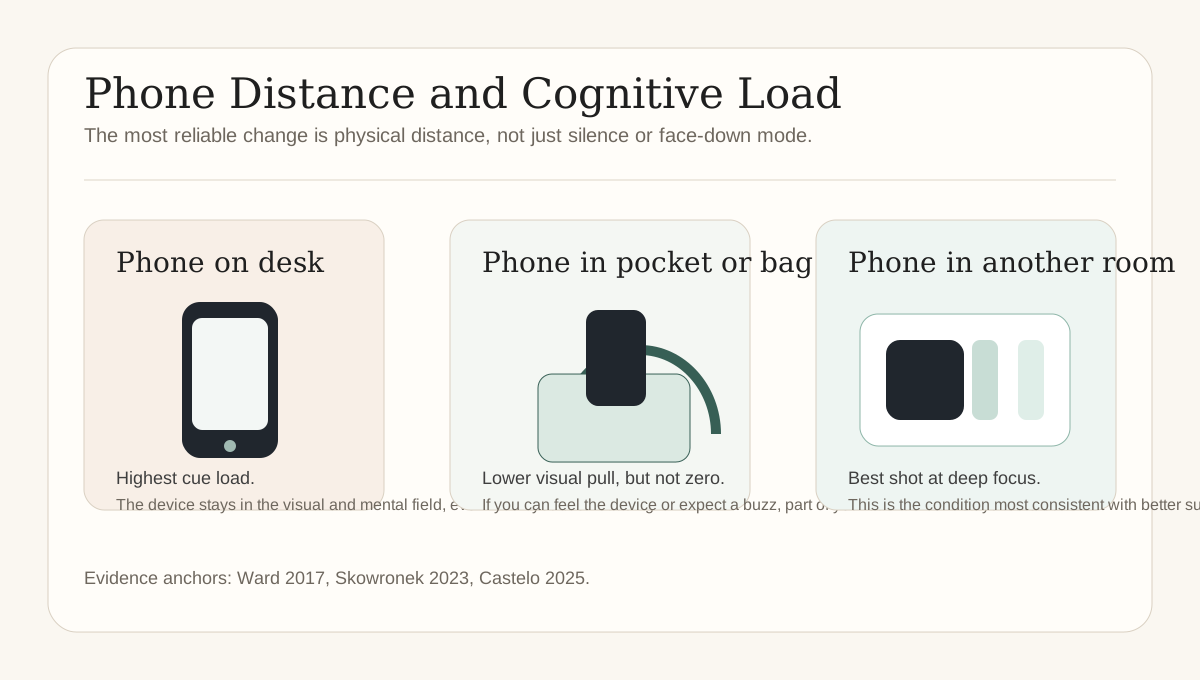
Best used alongside the phone-presence and notification sections, not as proof that every person responds identically.
Recovery guide
Digital Brain Fog Recovery Timeline
A practical timeline for what may improve within hours, days, and 1 to 2 weeks when the environment changes.
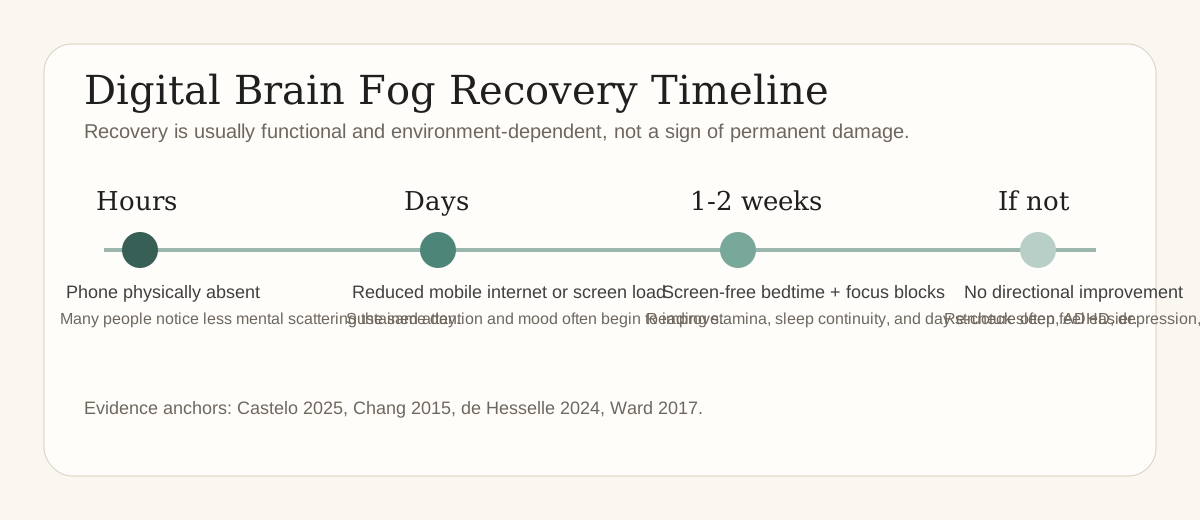
Use this as a practical recovery guide, not a guarantee.
Red Flag
Urgent Warning Signs
STOP - Seek urgent medical evaluation if: sudden onset of cognitive symptoms (hours/days), new focal neurological symptoms (weakness, numbness, vision or speech changes), seizures, fever with confusion, or rapidly progressive decline. These may indicate a medical emergency requiring immediate care, not lifestyle modification.
This information is educational, not medical advice. It does not replace consultation with qualified healthcare professionals. All screening tools are prompts for clinical evaluation, not self-diagnosis. Discuss any medication or supplement changes with your prescribing physician. If you experience red-flag symptoms, seek emergency or urgent medical care immediately.
You're Not Failing
Still Scrolling Despite Wanting to Stop?
If you have tried to reduce phone use multiple times and keep failing despite wanting to, that is not a character problem. These products are built by teams of behavioral scientists using variable-ratio reinforcement, infinite scroll, and notification urgency. The question is not why you lack discipline. The question is whether the pattern has crossed from habit into something that needs structured support.
Assessment
Bergen Social Media Addiction Scale
The Bergen Scale, developed by researchers at the University of Bergen, measures six core features of social media addiction. Each criterion is rated on a scale from "very rarely" to "very often." Scoring "often" or "very often" on at least four of six criteria suggests a compulsive pattern.
- Salience - you spend a lot of time thinking about social media or planning to use it.
- Mood modification - you use social media to forget about personal problems.
- Tolerance - you feel the need to use social media more and more.
- Withdrawal - you become restless or troubled if unable to use social media.
- Conflict - social media use has had a negative impact on your job, studies, or relationships.
- Relapse - you have tried to cut down and failed.
If you score high on 4 or more of these, the pattern has likely crossed from heavy use into compulsive territory.
Key Distinction
High Use vs Compulsive Use
High Use
- Chosen and intentional
- Generally enjoyable
- Can stop when needed
- No significant life impairment
Compulsive Use
- Feels automatic or involuntary
- Used to escape or numb
- Repeatedly fails to stop
- Causing real problems in life
Interactive
Assess Your Digital Load
Practical Tool
Digital Load Assessment
Answer 13 questions across four dimensions to map your digital environment burden. Your answers stay in your browser - nothing is sent anywhere.
0 of 13 answered
How many app notifications do you receive per day (estimate)?
How many apps have push notifications enabled?
Do you check your phone within 5 minutes of notifications, even when busy?
Tracking
Track Screen-Fog Correlation
For 7 to 14 days, log your screen time alongside your fog level each evening. Most people find specific patterns - certain apps, certain times of day, or certain durations - that reliably trigger cognitive decline. The tracker below helps you find yours.
Tracking Tool
Screen-Fog Correlation Tracker
Log your screen habits and fog severity daily for 7-14 days. After 5+ entries, the dashboard shows which digital variables correlate with your fog. All data stays in your browser.
Intervention
Harm Reduction, Not Cold Turkey
- Phone distance - phone in another room during focus blocks. Physical distance beats willpower every time.
- Notification audit - turn off everything except calls and texts from key people. Every notification is a context switch.
- Screen-free zones - bedroom and dining table. These two changes protect sleep and relationships simultaneously.
- Replacement activities - one 30-minute block of reading, instrument, puzzle, or conversation daily. The phone fills a vacuum. Fill it with something better first.
Treatment
When Self-Help Is Not Enough
If harm reduction steps have not worked after 4-6 weeks of honest effort, structured therapy may be the next step.
Look for therapists trained in behavioral addiction or CBT for internet use. Not generic talk therapy - structured, skills-based, with specific digital behavior goals. A meta-analysis found psychological interventions can reduce compulsive use (Winkler et al., Clin Psychol Rev 2013).
[Source]Root Cause
What the Scrolling Might Be Masking
Anxiety
Doomscrolling as anxiety coping creates a feedback loop: more anxiety leads to more scrolling leads to more anxiety.
Depression
Passive consumption worsens mood, which drives more passive consumption. The phone becomes the lowest-effort activity available.
Loneliness
Parasocial relationships replace real connection. Following someone's life is not the same as being in someone's life.
Boredom / Avoidance
Digital stimulation fills gaps that need different solutions. If you are scrolling because nothing else feels interesting, the intervention is not phone rules - it is rediscovering what you actually enjoy.
If scrolling is coping, the intervention is not just phone rules. It is addressing what the phone is replacing.
When to Act
When to Talk to a Professional
- Repeated failed cutbacks - you have genuinely tried multiple times and keep reverting.
- Relationships affected - partner, family, or friends have raised concerns about your phone use.
- Dangerous use - using phone while driving, crossing streets, or in other situations requiring full attention.
- Mood or anxiety central - the phone use is clearly tied to an underlying mood or anxiety pattern that needs its own treatment.
Clinician Prep
What to Say
Opening line
"I have been trying to reduce my phone use for [duration] and I keep failing despite wanting to stop. I think the pattern may have crossed from habit into something compulsive. I want to discuss whether structured behavioral support would help."
Community
What People Who Couldn't Stop Report
What Helped
- CBT with a behavioral addiction specialist
- Accountability partner with check-ins
- Physical phone locks (timed lockboxes)
- Deleting the worst apps entirely
- Getting diagnosed for underlying anxiety or depression
What Didn't Help
- App timers they just override
- Willpower alone
- Shame from others
- Grayscale mode after the first few days
For Partners, Parents, and Managers
Supporting Someone With Digital Brain Fog
If someone you care about seems more scattered, irritable, or mentally absent after screen-heavy periods, this section is for you. The most useful first step is curiosity, not criticism.
Perspective
What You See vs What They Experience
What you see
- Constant phone checking
- Ignoring conversations
- Staying up late scrolling
- Inability to focus on shared activities
- Irritability when asked to put phone down
What they experience
- Attention pulled involuntarily
- Genuine difficulty stopping
- Guilt about the habit
- Phone feels like the only thing that works to quiet the noise
- Exhaustion from the constant stimulation
For Parents
Helping a Teenager
The ABCD Study (11,000+ adolescents) found screen time patterns - not total hours - predict outcomes. A 2025 JAMA study found addictive patterns of use, not total screen time, were linked to mental health decline. Active screen use can be beneficial. The question is what kind of use dominates.
- Start with data, not lectures - ask them to check their own Screen Time. Let the numbers start the conversation instead of your opinion.
- Focus on pattern not hours - "What do you do after 30 minutes of scrolling?" is a better question than "You're on your phone too much."
- Model the behavior - your own phone habits set the environment. If you are scrolling at dinner, the rule feels hypocritical.
When to Involve a Professional
If you see withdrawal-like reactions (anger, panic when phone is taken), declining school performance, social withdrawal from real relationships, or sleep disruption lasting weeks - this has likely moved beyond a parenting conversation.
For Partners
Addressing It Without Nagging
- Lead with observation - "I noticed you seem sharper when we're offline together. Want to test that?"
- Propose experiments, not rules - "What if we try phone-free dinners for a week?"
- Check your own habits - if you are also on your phone during downtime, the ask feels unfair.
- Make offline alternatives available - suggest walks, games, cooking together - not just "put the phone down."
For Managers
Workplace Digital Wellness
- Meeting-free focus blocks - 2-3 hours where Slack and Teams notifications are expected to be off. Protect deep work time structurally.
- Batch communication - email and chat checked 2-3 times daily, not continuously. Set the expectation organizationally, not individually.
- Model deep work - if leadership is often-on, the team will be too. Culture flows from the top.
Avoid These
What Not to Say
"Just put the phone down"
If they could, they would have. This frames a design-engineered attention problem as simple laziness.
"You're addicted to your phone"
Labels create shame, not change. Describe the pattern you see instead of diagnosing.
"We didn't have this problem in my day"
The attention economy didn't exist then. These products are built to be compulsive.
"It's not that hard to stop"
For some people, it genuinely is. That is when behavioral support matters more than willpower.
Environment
Household-Level Changes That Help Everyone
- Screen-free dining table - everyone, not just the person with the problem. Shared rules feel fair.
- Device-free bedroom - charge phones outside the bedroom. Helps sleep for everyone.
- One screen-free evening per week - board games, walks, cooking, conversation. Protect one evening completely.
- Family digital agreement - written expectations that apply to adults too. Rules only for kids breed resentment.
Community
What Supporters Say
"I stopped nagging and started joining him for walks. His screen time dropped and we actually talk now."
"My daughter's therapist said the phone wasn't the problem - it was anxiety. Once we treated that, the scrolling calmed down on its own."
"As a manager, blocking Slack for 2 hours every morning was the single most effective productivity change we made." (community report)
Related Pages
Keep Going
Quiet next step
Get the Digital Overload doctor handout
The printable handout is available right now without an account. Email is optional if you want the link sent to yourself and one quiet follow-up reminder.
References
Primary Sources
- Ward et al., JACR, 2017 - Brain Drain: smartphone presence reduces cognition [Link]
- Castelo et al., PNAS Nexus, 2025 - Blocking mobile internet improves sustained attention and well-being [Link]
- Bottger et al., Behav Sci, 2023 - Meta-analysis of the brain-drain effect [Link]
- Skowronek et al., Sci Rep, 2023 - Smartphone presence reduces basal attention performance [Link]
- Mark et al., CHI, 2008 - interruptions create meaningful refocus costs in knowledge work [Link]
- Chang et al., PNAS, 2015 - Evening e-reader use impairs sleep and next-morning alertness [Link]
- Wilmer et al., Front Psychol, 2017 - Smartphones and cognition review [Link]
Claim-Level Evidence
Each claim below links to its supporting evidence.
Published: 2025
Last reviewed: 2026-03-23
This content is for informational purposes only and does not constitute medical advice. Consult a qualified healthcare provider for diagnosis and treatment decisions.