Endocrine · lab
TSH (Thyroid Stimulating Hormone) for Brain Fog
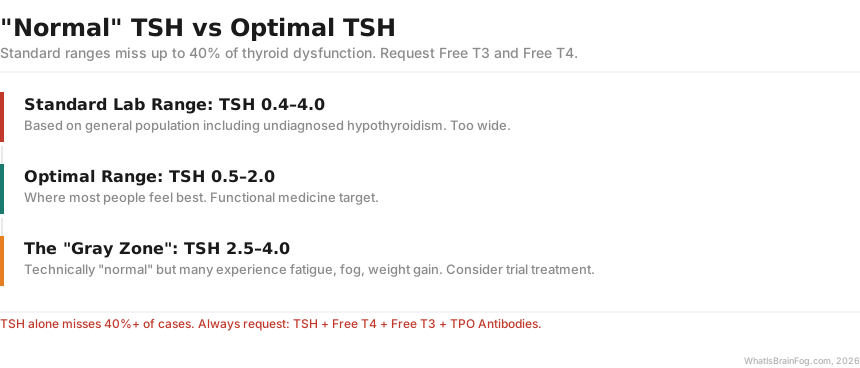
Primary thyroid screening marker. Values >2.5 may cause fog even if 'normal'
Quick Answer
Primary thyroid screening marker. Values >2.5 may cause fog even if 'normal'
Availability
request through clinician
Result Context Range
1.0–2.0 mIU/L (optimal)
What This Helps Measure
Primary thyroid screening marker. Values >2.5 may cause fog even if 'normal'
Which theories this can evaluate
This measurement is most useful when your pattern already suggests why it belongs in the workup.
What It Does Not Prove
One biomarker rarely settles the full question on its own. It is most useful when the pattern already suggests why it matters.
Test Visual
TSH (Thyroid Stimulating Hormone) Decision Map
Preparation, interpretation, and clinician next step for TSH (Thyroid Stimulating Hormone).
Visual Guide
How To Prepare
- •Confirm timing (fasting vs non-fasting) with your clinician or lab before the draw.
- •Bring your medication/supplement list and note recent illnesses.
- •Use the same lab when possible for trend consistency.
How To Use This Test Well
Step 1
Book correctly
Request TSH (Thyroid Stimulating Hormone) with required timing/prep (fasting and time-of-day when relevant).
Step 2
Capture the result exactly
Save numerical value, units, lab reference interval, and collection time.
Step 3
Interpret with pattern context
Compare results against symptom timing and related markers before changing plan.
What To Watch For
- →Lab reference ranges and optimal targets are not the same concept.
- →Recent illness, menstrual phase, sleep disruption, and medications can shift values.
- →Trend over time often matters more than one isolated value.
Result Context
normal
Within lab range; compare with your target context (1.0–2.0 mIU/L (optimal)).
Result may be acceptable but still needs symptom correlation and trend review.
borderline
Near thresholds or inconsistent with symptoms.
Consider repeat testing, timing factors, and related markers before conclusions.
abnormal
Outside expected range or clearly discordant with baseline.
Use clinician-guided follow-up and structured differential workup.
What To Do Next
- •Save the result with date and symptoms from the same week.
- •Review alongside related tests instead of interpreting in isolation.
- •Use one concrete next step in your panel plan.
Potentially Related Causes
Abnormal results may indicate involvement of these underlying conditions:
Thyroid Dysfunction
Primary diagnostic marker
Postpartum
Postpartum thyroiditis screening
Autoimmune Conditions
Hashimoto's/Graves'
Pregnancy
Gestational thyroid screening
Sleep Apnea
Rule out thyroid as fog cause
Fibromyalgia
Thyroid mimics fibromyalgia
Click any cause above to learn about symptoms, tests, and evidence-based interventions.
This information is for educational purposes only. Typically, consult with a qualified healthcare professional.